
TRW & Co · UK–Bangladesh corridor
Bangladesh-Linked Asset Recovery in the UK: Freezing Orders, UWOs and Owner Options
Bangladesh asset recovery UK cases run on two tracks: private claimants use High Court freezing injunctions and tracing claims, while UK agencies use the Proceeds of Crime Act 2002 to freeze property, demand explanations of wealth and freeze bank accounts. This guide explains each tool, how they interact with proceedings in Bangladesh, and what owners of frozen assets can do.
Key pointThe decisive evidence in most Bangladesh-linked cases sits in Bangladesh: bank records, tax returns and land sale deeds. Whether you are recovering money or defending an asset, the side that gathers certified Bangladeshi documents first usually controls the case.
At a glance
Two parallel toolkits
Private claimants use High Court freezing injunctions and tracing claims; the NCA, SFO and HMRC use Proceeds of Crime Act 2002 freezing and civil recovery powers.
No conviction needed
Civil recovery under Part 5 of POCA works on the balance of probabilities, so conduct in Bangladesh can found UK recovery without a criminal conviction anywhere.
UWO threshold
An unexplained wealth order needs property worth over £50,000 and a respondent who is a politically exposed person or suspected of serious crime, or connected to one.
Accounts frozen quickly
Account freezing orders are made by magistrates on reasonable suspicion for balances of at least £1,000, and frozen money can later be forfeited.
Owners can respond
Owners can vary or challenge orders and rebut suspicion with documented evidence of lawful income, much of which must be obtained and certified in Bangladesh.
Swipe or scroll →
Bangladesh asset recovery UK: the short answer
Bangladesh asset recovery UK work uses two very different toolkits. Private claimants, such as a Bangladeshi bank, company or family member, use English civil litigation: freezing injunctions, disclosure orders and proprietary claims in the High Court. UK law enforcement agencies use the Proceeds of Crime Act 2002: property freezing orders, unexplained wealth orders, account freezing orders and, where Bangladesh asks for help, restraint through mutual legal assistance.
Both toolkits can bite on London property, UK bank accounts and shares in UK or offshore companies, whoever holds the legal title. Neither needs a conviction in Bangladesh first. What decides the outcome is evidence: tracing the money from Bangladesh to the asset, showing a real risk of dissipation, and, for owners, showing a lawful source of funds.
This guide explains how each tool works, how they compare, what affected owners can do, and how the Bangladeshi side of a case fits with English proceedings. It reflects the position in England and Wales as of October 2026; Scotland and Northern Ireland have parallel but separate procedures.
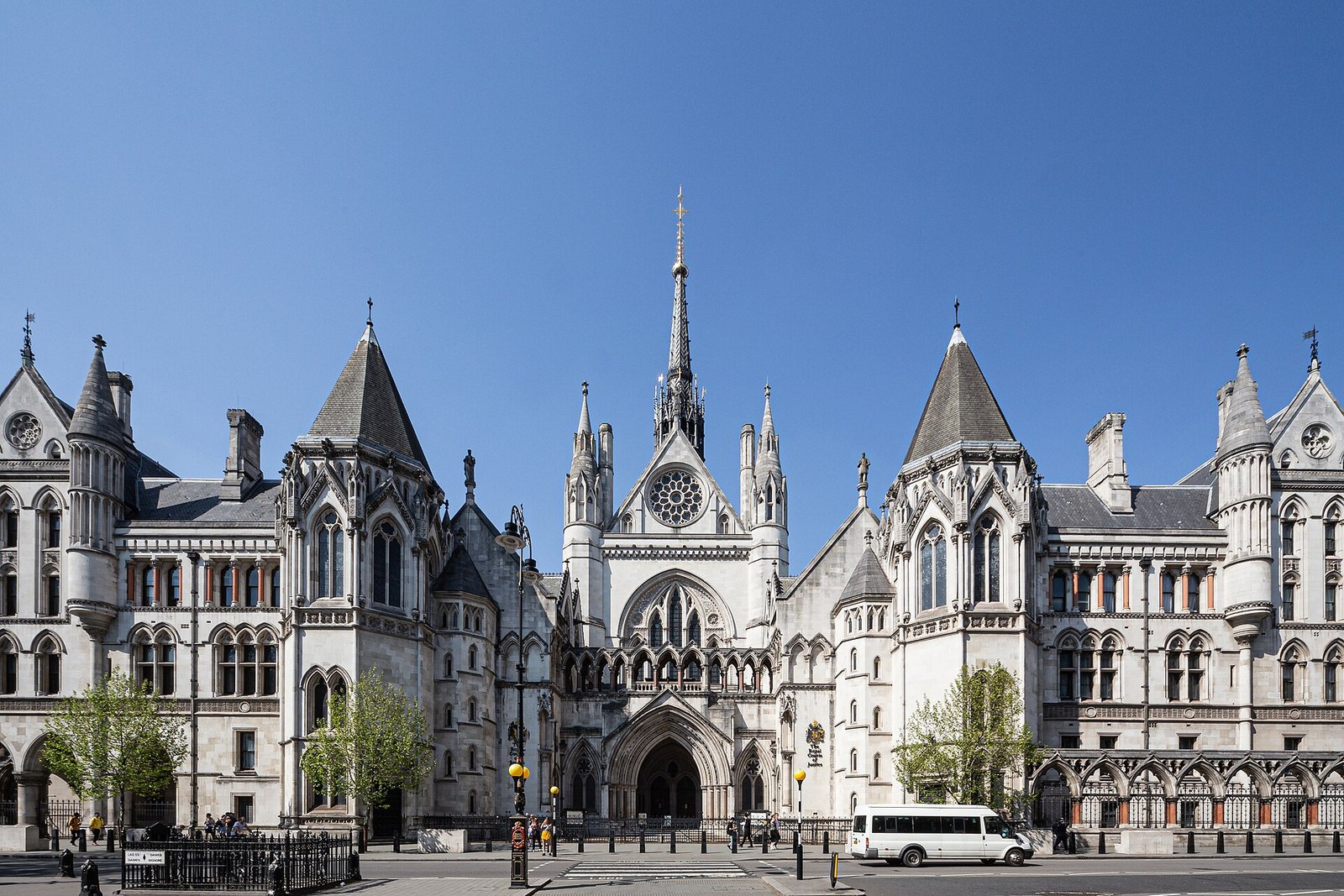
Why Bangladesh-linked assets are under scrutiny
Since the change of government in Bangladesh in August 2024, the Bangladeshi authorities have made the recovery of assets moved abroad a stated priority and have sent legal requests to the UK. In 2025 the National Crime Agency publicly confirmed that it had secured freezing orders over a number of UK properties as part of civil investigations connected to former Bangladeshi office-holders and their families.
Those cases have changed the risk picture for anyone holding UK assets with Bangladeshi connections. Banks, conveyancers and lenders now ask harder source-of-funds questions. Title restrictions appear on the Land Register when a freezing order is registered. And private creditors, including Bangladeshi banks pursuing defaulted loans, are looking at London as a place to find and freeze assets.
A freezing order is not a finding of wrongdoing. It holds the position while an investigation or claim proceeds. But the practical effect on an owner is immediate: the property cannot be sold, refinanced or transferred without permission. That is why the first days after an order is served matter so much.
The legal framework: civil claims and the Proceeds of Crime Act
Private civil remedies
The High Court has power under section 37 of the Senior Courts Act 1981 to grant an injunction where it is just and convenient. The freezing injunction is the best-known example. Procedure is in CPR Part 25. The applicant must show a good arguable case on the merits, assets within reach of the order, and a real risk that a judgment would go unsatisfied because assets would be dissipated. The applicant must give full and frank disclosure and, usually, an undertaking to pay damages if the order turns out to be wrongly granted.
A freezing injunction can be domestic (over assets in England and Wales) or worldwide. It operates against the person, not the asset, so a respondent who breaches it risks contempt proceedings. It is normally accompanied by an order to disclose assets on affidavit. Our guide to the freezing injunction covers the test in more detail.
Alongside freezing relief, claimants use Norwich Pharmacal and Bankers Trust orders to obtain documents from banks and other innocent parties caught up in a wrongdoing, and proprietary claims where money can be traced into a specific asset. A proprietary claim can give priority over other creditors if the defendant is insolvent, which is often decisive in Bangladesh asset recovery UK cases.
Civil recovery under Part 5 of POCA
Part 5 of the Proceeds of Crime Act 2002 lets an enforcement authority, such as the NCA, the SFO or HMRC, recover property obtained through unlawful conduct without a criminal conviction. The standard is the civil balance of probabilities. Unlawful conduct abroad counts if it would also be unlawful in the UK, which is how corruption or embezzlement in Bangladesh can found a UK recovery claim.
To hold the property while it investigates, the authority can apply to the High Court for a property freezing order under section 245A. The court must be satisfied that there is a good arguable case that the property is recoverable property or associated property. Applications can be made without notice where notice would prejudice recovery, so owners often learn of the order only when it is served or appears on the title register.
Unexplained wealth orders
An unexplained wealth order requires a respondent to explain the nature and extent of their interest in property and how it was obtained. The High Court must be satisfied that the respondent holds property worth more than £50,000, and that there are reasonable grounds to suspect that the respondent's known lawful income would not have been enough to acquire it, or that it was obtained through unlawful conduct. The respondent must also be a politically exposed person or reasonably suspected of involvement in serious crime, or connected to such a person.
The politically exposed person limb matters for Bangladesh. It covers individuals entrusted with prominent public functions by a foreign state, together with their family members and close associates. Failing without reasonable excuse to respond creates a presumption that the property is recoverable in later civil recovery proceedings. An interim freezing order can be made alongside the UWO. Our guide to unexplained wealth orders explains the response process.
Account freezing orders
For money in bank and building society accounts, an enforcement officer can apply to a magistrates' court for an account freezing order where there are reasonable grounds to suspect the money is recoverable property or intended for use in unlawful conduct. The minimum amount is £1,000. A frozen balance can then be forfeited, so account holders need to respond quickly and with documents.
Mutual legal assistance and overseas requests
Bangladesh can ask the UK to restrain assets linked to a Bangladeshi criminal investigation or to enforce a Bangladeshi confiscation order. Requests for England, Wales and Northern Ireland go to the UK Central Authority at the Home Office, and HMRC handles tax matters; the UK government MLA guidance also notes that non-conviction civil asset recovery can be requested through these channels. On the Bangladeshi side, outgoing requests are governed by the Mutual Legal Assistance in Criminal Matters Act 2012, with the Anti-Corruption Commission and the Bangladesh Financial Intelligence Unit typically involved.
The main tools compared
The right tool depends on who is acting and what they need to achieve. The table below summarises the main options in Bangladesh asset recovery UK proceedings.
| Tool | Who applies | Court and test | Effect |
|---|---|---|---|
| Freezing injunction | Private claimant (bank, company, investor, family member) | High Court; good arguable case plus real risk of dissipation | Respondent barred from dealing with assets up to a stated value; asset disclosure |
| Proprietary injunction and tracing | Private claimant with a proprietary claim | High Court; serious issue to be tried that the asset represents the claimant's money | Preserves the specific asset; can give priority in insolvency |
| Property freezing order | NCA, SFO, HMRC, CPS or FCA | High Court; good arguable case that property is recoverable | No dealing with the property pending civil recovery |
| Unexplained wealth order | Same enforcement authorities | High Court; property over £50,000, income or unlawful-conduct suspicion, PEP or serious crime limb | Statement and documents on source of wealth; presumption if no response |
| Account freezing order | Police, HMRC, SFO or accredited financial investigators | Magistrates' court; reasonable grounds to suspect | Account frozen; forfeiture can follow |
| Restraint on an overseas request | UK authorities acting for Bangladesh | Crown Court on a mutual legal assistance request | Assets restrained for a Bangladeshi criminal case or order |
These routes can run in parallel. A Bangladeshi bank pursuing a defaulted borrower may obtain a freezing injunction while the same assets are already subject to a law enforcement order. The interaction needs managing: competing orders over the same asset raise questions about priority, costs and who controls any sale.
How a private recovery claim works in practice
For a claimant, a London recovery action is front-loaded. Most of the work happens before the first hearing, because freezing relief is usually sought without notice and the evidence must stand up to scrutiny on the return date.
- Map the money. Trace funds from Bangladeshi accounts, letters of credit or loan disbursements through intermediary jurisdictions into UK assets, using bank records, Land Registry titles, Companies House filings and the Register of Overseas Entities.
- Identify the cause of action. Decide whether the claim is in contract, breach of fiduciary duty, knowing receipt, dishonest assistance or deceit, and which law governs it. This shapes jurisdiction and whether a proprietary claim is available.
- Assess dissipation risk. Assemble concrete evidence that assets may be moved: past transfers, use of nominees, offshore structures or attempts to sell.
- Apply without notice. Prepare the affidavit with full and frank disclosure, a draft order based on the court's standard form, and a cross-undertaking in damages, supported if needed by security.
- Serve and police the order. Serve the respondent and notify banks and other third parties holding assets. Review the asset disclosure affidavit and pursue gaps.
- Return date. Defend the order at the inter partes hearing, where the respondent can argue non-disclosure, lack of dissipation risk or a weak case.
- Judgment and enforcement. Pursue the claim to judgment, then convert frozen assets into recoveries through charging orders, third party debt orders or receivership.
Many claims include defendants in Bangladesh. Service out of the jurisdiction will need permission or a contractual jurisdiction clause, and service in Bangladesh takes time. Plan for that at the outset, together with any parallel steps in Dhaka. Our civil fraud and asset recovery team runs both sides of that timetable.
Options for owners of frozen assets
Owners are not powerless, and the defensive side of Bangladesh asset recovery UK work is as important as the offensive side. A freezing order or UWO is the start of a process in which evidence of lawful acquisition can carry real weight. The steps below apply whether the order comes from a private claimant or a UK agency.
The first days after service
Read the order closely: what is frozen, which acts are prohibited, the exceptions, the return date and the deadlines for disclosure or a UWO statement. Comply strictly. Breach of a freezing injunction is contempt of court, and dealing with property subject to a POCA order can lead to further proceedings and adverse inferences.
Instruct solicitors immediately, because time limits are tight. Standard orders usually permit reasonable living expenses and legal costs, but often only up to a stated amount or with notice. If the order is too narrow for ordinary business, apply to vary it rather than acting first.
Challenging, varying or answering the order
Grounds to discharge a without-notice civil freezing order include material non-disclosure by the applicant, no real risk of dissipation, and a claim with no good arguable case. For POCA orders, the owner can apply to vary or set aside and can show that the property was lawfully acquired. In a UWO, a full, documented response is the best defence: income records, tax filings in Bangladesh and the UK, bank statements, sale and purchase contracts, and evidence of loans used to buy the asset.
Evidence of lawful source usually sits in Bangladesh: salary certificates, tax returns, land sale deeds, bank statements and remittance records. Obtaining certified copies and translations can take weeks. Owners who start gathering this material before an order arrives are in a far stronger position than those who start after it.
Owners should also consider self-incrimination and parallel criminal risk. Statements made in a UWO response have limited use in criminal proceedings, but statements in civil proceedings and in Bangladesh may be used differently. Coordinated advice across both jurisdictions is essential; our white-collar crime team advises on that overlap.
An illustrative scenario
This scenario is illustrative only. The parties and facts are generic, but the sequence is typical of a Bangladesh asset recovery UK claim brought by a lender.
A Bangladeshi commercial bank lent heavily to a trading group whose loans later defaulted. Its investigators find that, around the time of the drawdowns, a company owned by a director's relative bought two London flats through an offshore vehicle registered on the Register of Overseas Entities. The bank brings a claim in London alleging breach of fiduciary duty and knowing receipt, and seeks a without-notice proprietary injunction and a domestic freezing injunction against the vehicle and the relative.
When the bank's solicitors check the titles, they find a restriction indicating that one flat is already subject to a property freezing order obtained by a UK agency. The bank's order is still useful: it covers the second flat and the respondents' bank accounts, and the asset disclosure exposes a further property. The bank then engages with the agency on how civil recovery and its own claim will interact, including who will benefit from any sale.
For the relative, the right response is a documented account of the funding of each purchase, prepared with Bangladeshi counsel. If that evidence holds up, there is a basis to argue that the property is not recoverable and that the bank's proprietary claim fails.
Risks and common mistakes
Applying for a freezing order without full and frank disclosure
A without-notice applicant must tell the court about every material fact, including points that help the respondent, such as weaknesses in the tracing, delay in bringing the claim, or parallel proceedings in Bangladesh. Failure to do so is one of the most common reasons freezing orders are discharged on the return date. The court can also refuse to re-grant the order and make the applicant pay the costs. In politically sensitive Bangladesh cases, claimants should be especially careful to present the evidence neutrally and to disclose any connection between the claim and wider political events.
Moving or restructuring assets after an investigation starts
Owners sometimes transfer property to family members, refinance it or move it into new companies once they hear of press reports or inquiries. Those steps can be treated as evidence of dissipation risk and can support exactly the orders the owner hoped to avoid. They may also trigger money laundering reporting by banks and conveyancers. Where a restructuring is genuinely needed for commercial reasons, it should be documented and advised on before it happens, with a clear explanation of the purpose.
Treating a UWO response as a short letter
A UWO response is a formal statement backed by documents, and an incomplete or inconsistent response can be used against the respondent. The statement should cover every asset named, how each was paid for, any trust or nominee arrangements and the source of the funds traced back to lawful income. Where records are held in Bangladesh, request extensions early and explain the steps taken. Respondents should also check for inconsistencies with earlier filings, mortgage applications and immigration records, which agencies will compare.
Ignoring the Bangladeshi proceedings
English courts and agencies pay attention to what is happening in Bangladesh: criminal cases, Anti-Corruption Commission inquiries, attachment orders and bank recovery suits. A finding or admission in Dhaka can affect the London case, and a weak Bangladeshi case can undermine a UK claim. Both claimants and owners need a joined-up strategy, including consistent evidence and careful handling of documents disclosed in one forum and used in another.
The cross-border angle: Bangladesh and beyond
Most Bangladesh asset recovery UK matters involve more than two countries. Funds often pass through Singapore, the UAE or offshore financial centres before reaching London, and each step may need its own disclosure order or local proceedings. Worldwide freezing orders can help, but enforcing them abroad depends on local law and on persuading banks in other jurisdictions to respect them.
Judgments travel in both directions. A creditor who wins in London may need to enforce in Bangladesh, which our guide on how to enforce a UK judgment in Bangladesh explains. A Bangladeshi decree may need to be recognised in England before it can be enforced against UK assets, and whether that is possible by registration or only by fresh proceedings needs checking case by case.
Anti-money laundering duties apply throughout. Banks, estate agents and solicitors in the UK must report suspicions, and a report can lead to a frozen transaction. Our anti-money laundering team advises institutions on handling Bangladesh-linked customers and on responding to production orders.
What to do next: a checklist
Whether you are trying to recover money or protect assets you own, early structured advice on Bangladesh asset recovery UK issues makes a measurable difference to cost and outcome. Start with these steps:
- List every UK asset with a Bangladesh connection: property, accounts, company shares and interests held through nominees or trusts.
- Collect source-of-funds evidence from Bangladesh now, with certified copies and translations.
- Check Land Registry titles, Companies House records and the Register of Overseas Entities for each asset.
- For claimants: build the tracing analysis and dissipation evidence before applying, and prepare for full and frank disclosure.
- For owners: diarise every deadline in an order, comply strictly and apply to vary rather than act unilaterally.
- Coordinate with Bangladeshi counsel on parallel criminal, ACC or bank recovery proceedings.
- Consider whether a UK agency is already involved, and how private and public proceedings will interact.
TRW & Co's London office is authorised and regulated by the Solicitors Regulation Authority and works with our Dhaka team on matters on both sides of the corridor, through our UK–Bangladesh disputes practice and our injunctions team. Where advocacy in the higher courts is required, we instruct specialist counsel. To discuss a matter in confidence, contact our London office.
Frequently asked questions
01Can UK authorities freeze property because of allegations in Bangladesh?
Yes. Part 5 of the Proceeds of Crime Act 2002 allows enforcement authorities to recover property obtained through unlawful conduct, including conduct abroad that would also be unlawful in the UK. The High Court can make a property freezing order while the authority investigates, if there is a good arguable case that the property is recoverable. No criminal conviction is needed in Bangladesh or the UK. The owner can apply to vary or discharge the order and can defend the recovery claim with evidence of lawful acquisition.
02What is an unexplained wealth order and who can receive one?
An unexplained wealth order requires a respondent to explain their interest in specified property and how it was obtained. The High Court must be satisfied that the property is worth more than £50,000 and that there are reasonable grounds to suspect the respondent's lawful income was insufficient or that the property came from unlawful conduct. The respondent must be a politically exposed person, including a family member or close associate of one, or reasonably suspected of serious crime. Failing to respond without reasonable excuse creates a presumption that the property is recoverable.
03Can a Bangladeshi bank get a freezing injunction in London?
Yes, if it has a claim the English court can hear and the defendant has assets within reach. The bank must show a good arguable case, assets, and a real risk that the defendant will dissipate them so that a judgment goes unpaid. It must give full and frank disclosure and usually an undertaking in damages. Where funds can be traced into a specific London asset, a proprietary injunction may also be available and can give priority if the defendant becomes insolvent.
04What should I do if my UK bank account has been frozen?
Read the order or notice carefully and note the court, the applicant and the hearing or response dates. Do not try to move money through other accounts. Instruct solicitors promptly, because account freezing orders can lead to forfeiture of the balance. Gather documents showing where the money came from, such as payslips, tax returns, sale contracts and remittance records from Bangladesh. You may also be able to apply for the release of funds for reasonable living or business expenses and legal costs.
05Can Bangladesh ask the UK to restrain assets in a criminal case?
Yes. Bangladesh can send a mutual legal assistance request asking the UK to restrain assets linked to a Bangladeshi criminal investigation or to enforce a confiscation order. For England, Wales and Northern Ireland, requests go to the UK Central Authority at the Home Office, with HMRC handling tax matters. UK government guidance also notes that non-conviction civil recovery can be requested through these channels. On the Bangladeshi side, the Mutual Legal Assistance in Criminal Matters Act 2012 governs outgoing requests.
06Does a freezing order mean I have been found guilty of wrongdoing?
No. Freezing orders and unexplained wealth orders are interim measures that preserve assets while a claim or investigation continues. They do not decide whether the property was obtained unlawfully. That said, they have serious practical effects: you cannot sell, transfer or refinance the frozen asset without permission, and breaching an order can be contempt of court. How you respond, especially the quality of your evidence of lawful source, often shapes what happens next.
Sources and official materials
- Proceeds of Crime Act 2002, section 362A — Unexplained wealth orders: application and content
- Proceeds of Crime Act 2002, section 245A — Property freezing orders in civil recovery
- Proceeds of Crime Act 2002, section 303Z1 — Account freezing orders
- Senior Courts Act 1981, section 37 — High Court power to grant injunctions
- Civil Procedure Rules Part 25 — Interim remedies including freezing injunctions
- Mutual legal assistance (MLA) requests — UK central authorities and asset restraint requests
- Register an overseas entity — Beneficial ownership of overseas entities holding UK land
General information only, current as at 21 October 2026. It is not legal advice and does not create a solicitor–client relationship. It reflects the law of England and Wales unless stated otherwise; Scotland and Northern Ireland have separate legal systems, and the law changes frequently. Check current official sources and take advice on the facts of your matter.