
TRW & Co · Disputes & Arbitration
Commercial Litigation Solicitors in London
Commercial litigation solicitors London businesses instruct resolve contract, payment, shareholder, fraud and finance disputes in the English courts. With judges now able to order mediation, litigation funding still unsettled after PACCAR, and enforcement abroad shaping every strategy, early advice on evidence, limitation and forum decides how much a dispute costs and what it recovers.
Key pointCourts can now order parties into ADR and penalise unreasonable refusal in costs, so a settlement strategy is part of the litigation plan from day one, not a fallback. Enforcement prospects should decide the forum before the first letter is sent.
At a glance
Where claims are heard
Substantial business disputes are usually issued in the Business and Property Courts at the Rolls Building, including the Commercial Court and the Business List.
Pre-action rules apply
The Practice Direction on Pre-Action Conduct requires a reasoned letter before claim, document exchange and genuine consideration of settlement before proceedings are issued.
Six-year general limitation
Under the Limitation Act 1980 most contract and tort claims must be issued within six years, but contracts often impose shorter notice periods.
ADR can be ordered
Since Churchill and the October 2024 CPR amendments, courts may order parties to engage in ADR and penalise unreasonable refusal in costs.
Funding remains uncertain
PACCAR still affects funding agreements based on a share of damages; the government has promised reversing legislation but none is yet in force.
Swipe or scroll →
What commercial litigation covers in England and Wales
Commercial litigation is the resolution of business disputes through the civil courts: claims about contracts, payments, warranties, shareholdings, professional services, finance, fraud and the many other ways in which commercial relationships break down. Businesses instruct commercial litigation solicitors London practitioners when a dispute has moved beyond negotiation and needs a strategy that combines the law, the evidence and the commercial objective.
The subject matter is wide. A typical caseload includes breach of contract and termination disputes, unpaid invoices and guarantees, sale-and-purchase warranty claims, joint venture and shareholder deadlock, misrepresentation, claims against advisers, banking and finance disputes, and claims involving fraud or asset dissipation. Many matters have an international element, because English law and the London courts are chosen in contracts between parties with no other connection to England.
A dispute becomes a legal question earlier than most boards assume. The moment a counterparty disputes performance, withholds payment or alleges a breach, decisions about correspondence, document preservation and limitation start to affect the eventual outcome. Good commercial litigation solicitors London clients rely on will spend as much effort on that early positioning as on the court process itself.
Not every disagreement should become a claim. Litigation is expensive, public and slow compared with a negotiated outcome, and English procedure expects parties to explore settlement throughout. The aim is to give a business a clear view of its legal position, its realistic recovery and the cost of getting there, so that it can decide whether to litigate, settle or walk away.
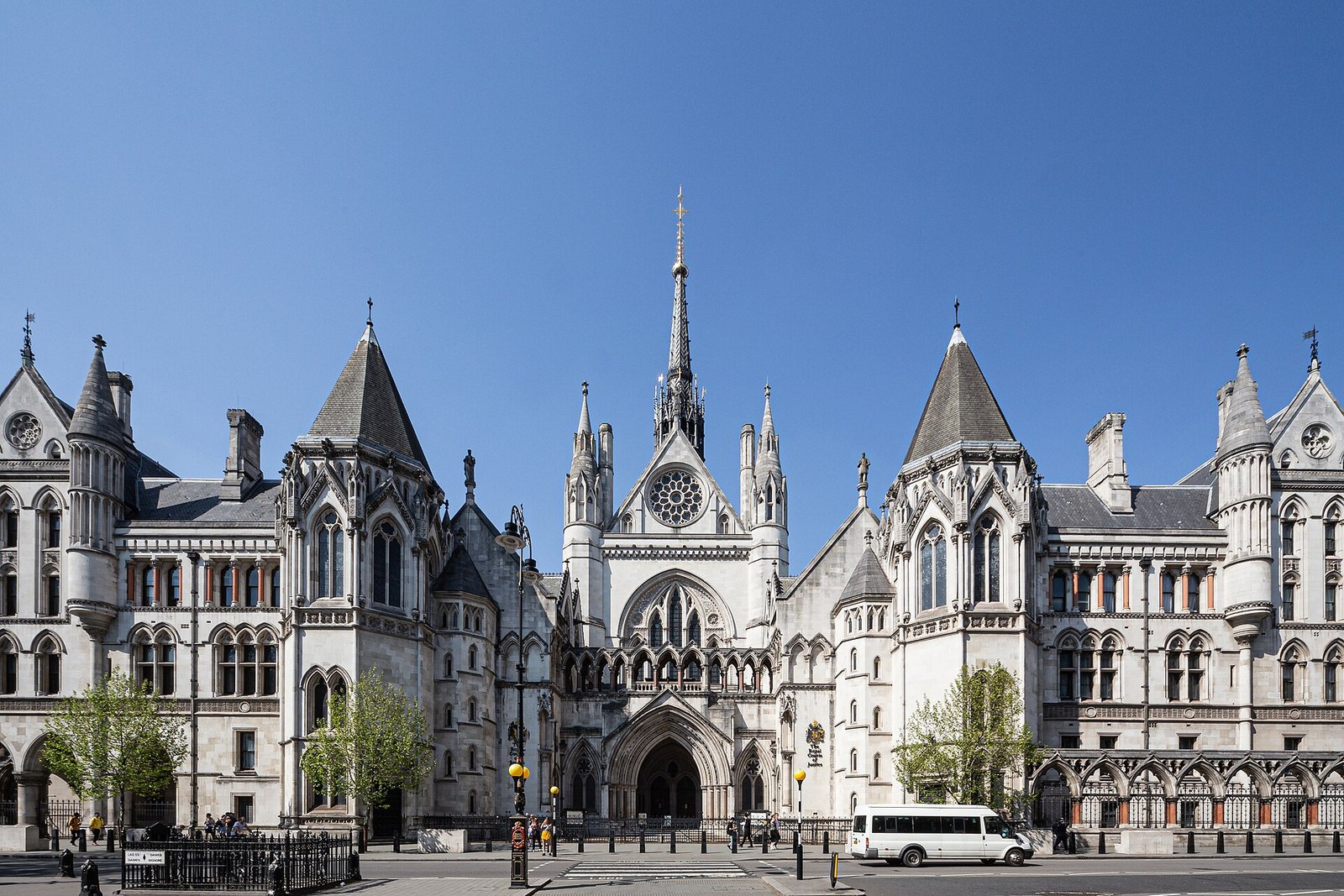
The legal and procedural framework
Civil litigation in England and Wales is governed by the Civil Procedure Rules (CPR) and their practice directions. The CPR begin with the overriding objective of dealing with cases justly and at proportionate cost, and every case management decision is taken through that lens. Since amendments that took effect in October 2024, the rules expressly include promoting or using alternative dispute resolution as part of that objective.
The courts that hear commercial claims
Higher-value and complex business disputes are usually issued in the Business and Property Courts, a group of specialist High Court lists based at the Rolls Building in London and in regional centres. They include the Commercial Court, the London Circuit Commercial Court, the Technology and Construction Court, the Financial List, the Insolvency and Companies List, and the Business List and other Chancery lists. Smaller claims proceed in the County Court, often through the County Court at Central London.
Appeals go to the Court of Appeal with permission, and on points of general public importance to the Supreme Court. Where advocacy in the higher courts is required, we instruct specialist counsel and work with them as an integrated team.
Pre-action conduct and limitation
Before issuing, parties are expected to follow the Practice Direction on Pre-Action Conduct and Protocols, or a specific protocol where one applies. That means a reasoned letter before claim, a proper response, an exchange of key documents and genuine consideration of settlement. Failure to engage can be penalised in costs later.
Time limits come from the Limitation Act 1980. The general period for claims in simple contract and in tort is six years, with a longer period for deeds and special rules for latent damage, fraud, concealment and mistake. Contract wording can shorten the time for bringing warranty claims, so the agreement must be checked alongside the statute.
Recent developments that change the advice
In Churchill v Merthyr Tydfil County Borough Council the Court of Appeal confirmed that courts can order parties to engage in a non-court dispute resolution process, provided the order is proportionate and does not impair the right to a hearing. The CPR were then amended to reflect that power.
The Supreme Court's decision in PACCAR treated many litigation funding agreements based on a share of damages as damages-based agreements, affecting their enforceability. The Civil Justice Council recommended reversing that effect, and the government has said it intends to legislate, but at the time of writing no reversing legislation has been enacted. Funding terms therefore still need careful structuring.
Key decisions: forum, strategy and funding
The most valuable work in a dispute often happens before the claim form is issued. The decisions below shape cost, speed and leverage, and they should be taken deliberately rather than by default. A first meeting with commercial litigation solicitors London clients trust should end with a clear recommendation on route, not just a list of options.
| Route | Best suited to | Main advantages | Main drawbacks |
|---|---|---|---|
| Negotiation with a reasoned position | Disputes where the relationship has value or the facts are clear | Cheapest and fastest; private; preserves options | No compulsion; depends on willingness of the other side |
| Mediation or other ADR | Most commercial claims, at any stage | Confidential; flexible outcomes; courts now actively encourage it | Non-binding unless settlement is reached; costs of the process |
| High Court proceedings in the Business and Property Courts | High-value, complex or urgent claims, and claims needing interim relief | Specialist judges; strong disclosure and injunction powers; judgments widely respected | Public; costly; timetable can run to a year or more for a contested trial |
| County Court proceedings | Lower-value contractual and debt claims | Lower court fees; fixed recoverable costs for many claims up to the intermediate track ceiling | Less specialist case management; limited costs recovery |
| Arbitration | Contracts with an arbitration clause, often cross-border | Private; enforceable in New York Convention states; party choice of tribunal | Limited appeal; tribunal fees; interim relief may still need a court |
Funding and costs risk
In England the loser usually pays a substantial part of the winner's costs, assessed by the court. That shifts the economics: a strong claim can recover much of its cost, while a weak one can double the loss. Options include paying privately, conditional fee or damages-based arrangements, third-party funding, after-the-event insurance, or a combination. Each has regulatory conditions and the funding decision should be modelled against realistic recovery, not the headline claim.
Settlement leverage
Offers made under CPR Part 36 carry specific costs and interest consequences if the other side fails to beat them at trial. Well-timed Part 36 offers, and calderbank offers made without prejudice save as to costs, are among the most effective tools available to commercial litigation solicitors London clients instruct, because they put cost pressure on an opponent that refuses a reasonable deal.
The litigation process step by step
Every case is different, but substantial claims in the Business and Property Courts follow a broadly predictable sequence. Understanding it helps a business plan internal resources and budget across what may be a long matter.
- Early case assessment. We review the contract, correspondence and key documents, identify the causes of action, check limitation, and test the evidence against the likely defence. The output is a written view on merits, quantum, recoverability and cost.
- Preservation and pre-action correspondence. A document hold notice goes out internally. A letter before claim sets out the claim and invites a response within a reasonable period, and the parties exchange key documents.
- Interim relief if needed. Where assets may be moved or confidential information misused, an application for an injunction may be made urgently, sometimes without notice to the other side, before or alongside the claim.
- Issue and statements of case. The claim form and particulars of claim are issued and served, followed by the defence, any counterclaim and a reply. Each must be verified by a statement of truth.
- Case management and costs budgeting. The court gives directions to trial. In most multi-track cases the parties file costs budgets, which the court can approve or limit, and the court will expect the parties to have considered ADR.
- Disclosure, witness and expert evidence. In the Business and Property Courts, disclosure follows Practice Direction 57AD, with models ranging from limited to extended disclosure. Witness statements follow strict rules on content, and experts owe their duty to the court.
- Trial and judgment. Pre-trial reviews, skeleton arguments and bundles lead to a trial, typically before a single judge. Judgment may be given at the end of the hearing or reserved and handed down later.
- Costs, appeal and enforcement. The court decides who pays costs and in what proportion. Any appeal needs permission. If the judgment is not paid, enforcement tools include charging orders, third-party debt orders, writs of control and insolvency proceedings.
For a plain-English walk through each stage, see our guide to how civil litigation works in England and Wales and our note on preparing a compliant letter before claim.
Documents and evidence to assemble
English litigation is document-heavy. Disclosure obligations extend to documents that harm your own case, and the duty to preserve arises once litigation is in reasonable contemplation. Gathering the right material early reduces cost and avoids unpleasant surprises.
- The signed contract, all amendments, side letters and the standard terms actually incorporated, together with drafts and negotiation history where interpretation is in issue.
- Correspondence, emails, messaging app conversations and meeting notes between the parties, including informal channels such as WhatsApp used by senior staff.
- Invoices, payment records, delivery notes, acceptance certificates and any audit trail showing performance or default.
- Board minutes and internal reports that discuss the dispute, recognising that many will be disclosable unless privileged.
- Evidence of loss: management accounts, lost-profit calculations, mitigation steps and quotations for replacement performance.
- A list of the people who know the facts, with their current roles and whether they still work for the business.
Legal advice privilege and litigation privilege protect communications with lawyers in defined circumstances, but internal documents created by non-lawyers are often not protected. Our guide to legal professional privilege explains how to keep sensitive analysis within privilege from the start.
Issue a written document preservation notice as soon as a dispute is in prospect, and suspend any automatic email or chat deletion for relevant custodians. Courts take a dim view of lost evidence, and a well-run preservation exercise is one of the cheapest ways to protect a claim.
Urgent and interim remedies
Some disputes cannot wait for trial. The High Court can grant interim injunctions to hold the position, and its powers are among the strongest available in any jurisdiction. Experienced commercial litigation solicitors London businesses turn to in a crisis will know how to prepare these applications quickly and with full and frank disclosure.
Freezing injunctions restrain a defendant from dissipating assets up to the value of the claim, and can operate worldwide in appropriate cases. Search orders permit the preservation of evidence at a defendant's premises. Prohibitory injunctions can stop breaches of restrictive covenants or misuse of confidential information. Each requires a credible case, evidence of risk, and usually a cross-undertaking in damages.
Applications made without notice impose a heavy duty of candour on the applicant: a failure to disclose material facts can lead to the order being discharged and costs penalties. Read more in our guides to injunctions and freezing injunctions.
Risks and common mistakes
Most avoidable losses in commercial litigation come from early errors rather than the trial itself. The points below are the ones we see most often.
Missing a limitation or contractual notice deadline
The Limitation Act 1980 sets statutory periods, but many commercial contracts impose shorter windows for notifying warranty or indemnity claims, often with detailed requirements about content and the method of service. A notice that is late, sent to the wrong address or insufficiently particularised can extinguish an otherwise strong claim. Diarise every relevant date the moment a dispute surfaces, check the notices clause line by line, and if in doubt serve a protective notice that complies with the strictest reading. Standstill agreements can pause limitation by consent while the parties negotiate, but they must be drafted precisely to work.
Treating mediation as optional
Following Churchill and the October 2024 rule changes, an unreasonable refusal to engage in ADR is a real costs risk, and the court can now order parties to engage. Refusing to mediate because "the other side is acting in bad faith" or "our case is strong" rarely satisfies a judge. The better approach is to propose a process and timing that suits your strategy, for example mediating after key documents are exchanged, so that you control the narrative rather than being ordered into it on less favourable terms.
Suing a defendant who cannot pay
A judgment is only as valuable as the assets behind it. Before committing to litigation, investigate the defendant's financial position, group structure, security already granted to lenders and the location of assets. If assets are offshore, consider where any judgment would need to be enforced and whether that country will recognise it. Asset tracing at the outset can transform strategy, whether by supporting a freezing injunction or by showing that a quick settlement is the better outcome.
Creating unprivileged damaging documents
Internal emails speculating about the dispute, board papers assessing liability, and messages between managers are frequently disclosable. Once disclosed, they can undermine a case more than any witness. Route analysis through lawyers where appropriate, keep internal commentary factual, and brief the management team on how privilege works before the dispute escalates. Instant messaging is a particular risk because it is informal and often retained on personal devices.
Underestimating cost and management time
Contested High Court litigation absorbs senior management time for witness statements, disclosure reviews and trial preparation, often over many months. Budgets should include internal cost as well as legal fees, and should be updated at each stage. Costs budgeting in the multi-track caps what can be recovered from the other side, so overspending beyond an approved budget is unlikely to be recoverable even if you win.
Cross-border disputes and enforcement
London is a leading centre for international commercial litigation, and many claims before the Business and Property Courts involve foreign parties. Overseas companies often appoint commercial litigation solicitors London-based even where they have no UK presence, because their contracts choose English law. That raises questions about jurisdiction, service abroad, foreign law and, critically, enforcement.
Where a defendant is outside England, the court's permission to serve the claim abroad is often needed, and the claimant must show a sufficient connection with England under the jurisdictional gateways. Exclusive English jurisdiction clauses make this easier. Since Brexit, enforcement in EU states relies on national law and international conventions rather than the Brussels regime. The UK applies the Hague Choice of Court Convention 2005, and the Hague Judgments Convention 2019 entered into force for the UK on 1 July 2025 for judgments in proceedings begun after that date, between contracting states.
Disputes linked to Bangladesh are a particular focus for TRW & Co, given our Dhaka headquarters. Enforcing an English judgment in Bangladesh, or a Bangladeshi judgment in England, involves distinct procedures and timescales; see our pages on UK–Bangladesh disputes and enforcement and enforcement of judgments. Matters touching the Gulf, Singapore or China raise similar questions, and the choice between court and international arbitration is often driven by where assets sit.
The right forum is the one where a win can be turned into money. Enforcement should shape strategy from the first letter, not after judgment.
How TRW & Co helps as commercial litigation solicitors London businesses can rely on
TRW & Co's London office is authorised and regulated by the Solicitors Regulation Authority. We advise on, conduct and settle commercial claims for claimants and defendants, and we coordinate with our offices and partner firms abroad where a dispute crosses borders.
Early case assessment
A written analysis of merits, quantum, limitation and recoverability, with a realistic budget. It gives the board a defensible basis to decide whether to pursue, defend or settle.
Pre-action strategy
Letters before claim and responses that comply with the pre-action rules and position the client for costs. We also negotiate standstill agreements and structure without-prejudice discussions.
High Court litigation
Conduct of claims in the Business and Property Courts and the County Court, including disclosure, witness evidence and expert management. Where advocacy in the higher courts is required, we instruct specialist counsel.
Urgent injunctions
Preparation of freezing, search and prohibitory injunction applications at short notice, with the evidence and undertakings the court expects.
Settlement and ADR
Mediation preparation, Part 36 and calderbank strategy, and settlement agreements that actually resolve the dispute, including releases and confidentiality.
Enforcement and recovery
Post-judgment enforcement in England and coordination of recognition proceedings abroad, including in Bangladesh, the Gulf and Asia through our network.
Related services include contract disputes, shareholder disputes, civil fraud and asset recovery and mediation and ADR. You can browse all of our practices, read our analysis of litigation funding after PACCAR, or check limitation periods before you decide.
Checklist for decision-makers
Before you instruct commercial litigation solicitors London or anywhere else, work through these questions with your team. They frame the first conversation and save cost.
- What outcome does the business actually need: payment, performance, an exit, protection of reputation, or a precedent?
- What is the limitation position, and are there contractual notice deadlines running now?
- Which law governs the contract, and does it contain a jurisdiction, arbitration or escalation clause?
- Have relevant documents and messages been preserved, including on personal devices?
- Does the other side have assets, and where are they located?
- What is the realistic recovery after irrecoverable costs, and how will the claim be funded?
- Has a proportionate settlement or ADR proposal been considered and documented?
- Who internally will own the matter, give evidence and approve settlement?
To discuss a dispute in confidence, contact our London office at Holborn Gate, 330 High Holborn, London WC1V 7QH, email info@trw.co or call +880 1779 127165. As commercial litigation solicitors London clients can approach early, we would rather help you shape a dispute than inherit one already compromised.
Frequently asked questions
01How long does commercial litigation take in the High Court?
It depends on complexity, the court's list and how hard the parties fight. Many claims settle within months of a letter before claim. A defended claim that runs to trial in the Business and Property Courts commonly takes a year or more from issue, and complex cases with extensive disclosure and expert evidence take longer. Interim applications, such as injunctions or summary judgment, can be heard much faster. We give a realistic timetable at the outset and update it at each case management stage.
02Will I recover my legal costs if I win?
The general rule is that the unsuccessful party pays the successful party's costs, but recovery is rarely complete. Costs are assessed by the court on the standard basis, which allows only reasonable and proportionate amounts, and in multi-track cases recovery is usually limited by approved costs budgets. Conduct matters too: a winning party that refused reasonable ADR or exaggerated its claim may recover less. Many lower-value claims are subject to fixed recoverable costs. Expect a gap between what you spend and what you recover, and factor it into your decision.
03Do I have to try mediation before going to court?
Mediation is not a mandatory precondition for most commercial claims, but the courts now treat ADR as part of the overriding objective. Following Churchill v Merthyr Tydfil, a court can order parties to engage in a proportionate ADR process, and unreasonable refusal can lead to costs sanctions even for a winning party. In practice you should propose or respond constructively to ADR at sensible points, record your reasons in correspondence, and pick the timing that suits your case, for example after key documents are exchanged.
04What is a letter before claim and why does it matter?
A letter before claim sets out who the claimant is, the basis of the claim, the amount or remedy sought and the key documents relied upon, and gives the defendant a reasonable time to respond. It is required by the Practice Direction on Pre-Action Conduct or by a specific protocol. A clear, accurate letter frames the dispute, often prompts settlement, and protects your costs position. A careless one can create inconsistencies that an opponent will exploit at trial. Responding properly to a letter you receive is equally important.
05Can I stop the other side moving assets before judgment?
Yes, if the evidence supports it. The High Court can grant a freezing injunction preventing a defendant from disposing of assets up to the value of the claim, and in suitable cases the order can have worldwide effect. You must show a good arguable case and a real risk of dissipation, give full and frank disclosure, and usually offer a cross-undertaking in damages. Applications are often made urgently and without notice. Because the consequences of getting it wrong are serious, preparation must be thorough even when time is short.
06Can a foreign company sue or be sued in London?
Yes. The English courts regularly hear claims by and against foreign parties, particularly where the contract chooses English law or English jurisdiction. Serving a foreign defendant may require the court's permission and compliance with the law of the country of service. A foreign claimant may be ordered to provide security for the defendant's costs in some circumstances. The more important question is usually enforcement: whether an English judgment will be recognised where the defendant's assets are, which depends on treaties and local law in that country.
07Should we litigate or arbitrate a cross-border contract dispute?
If the contract contains an arbitration clause, the dispute will normally have to be arbitrated, and English courts will stay court proceedings brought in breach. Where there is a choice, arbitration offers privacy and easier enforcement in New York Convention states, while court litigation offers stronger procedural powers, appeals and joinder of third parties. For new contracts, the right clause depends on where the counterparty's assets are and how a judgment or award would be enforced there. We advise on both routes and on drafting clauses for future contracts.
Sources and official materials
- Civil Procedure Rules and Practice Directions — The procedural code for civil claims in England and Wales
- Practice Direction – Pre-Action Conduct and Protocols — Steps expected before proceedings are issued
- Business and Property Courts — Judiciary guidance on the specialist High Court lists
- Limitation Act 1980 — Statutory time limits for civil claims
- Churchill v Merthyr Tydfil County Borough Council [2023] EWCA Civ 1416 — Court power to order ADR
- R (PACCAR Inc) v Competition Appeal Tribunal [2023] UKSC 28 — Litigation funding agreements and DBAs
- HCCH 2019 Judgments Convention status table — Contracting states and entry into force
General information only, current as at 21 October 2026. It is not legal advice and does not create a solicitor–client relationship. It reflects the law of England and Wales unless stated otherwise; Scotland and Northern Ireland have separate legal systems, and the law changes frequently. Check current official sources and take advice on the facts of your matter.