
TRW & Co · Disputes & Arbitration
International Arbitration Lawyers in London
International arbitration lawyers London businesses instruct help them draft workable arbitration clauses, run and defend claims before LCIA, ICC and ad hoc tribunals, and enforce awards abroad. With the Arbitration Act 2025 now in force for new arbitrations, the law governing the clause, summary disposal and arbitrator disclosure have all changed, so existing contracts deserve a fresh look.
Key pointSince 1 August 2025, the law of the seat governs an arbitration agreement unless the parties expressly choose another law for it, so a general governing-law clause in the main contract no longer decides the question. Review clauses in contracts governed by foreign law.
At a glance
Arbitration Act 2025 in force
Most reforms apply to arbitrations commenced on or after 1 August 2025, whenever the arbitration agreement was made; earlier arbitrations stay under the unamended 1996 Act.
Law of the seat prevails
New section 6A: the arbitration agreement is governed by the law expressly chosen for it or, failing that, by the law of the seat.
Summary disposal available
Tribunals may now dispose of a claim or defence with no real prospect of success under new section 39A, unless the parties agree otherwise.
28 days to challenge
Challenges to an award under sections 67, 68 or 69 must normally be brought within 28 days of the award or of any review or correction.
Enforcement in Bangladesh
Bangladesh is a New York Convention party; foreign awards are enforced under its Arbitration Act 2001 through the District Courts.
Swipe or scroll →
What international arbitration covers in England and Wales
International arbitration lawyers London businesses instruct are usually dealing with one question first: will a private tribunal, rather than a national court, decide this dispute, and will its award actually be paid? Arbitration is a consensual process. It exists only because the parties agreed to it, normally in a clause in a supply, construction, shareholder, energy, shipping or financing contract, or in a separate submission agreement signed after a dispute has arisen.
London is one of the most frequently chosen seats in the world. The "seat" is the legal home of the arbitration: it fixes which national court supervises the process, which procedural law applies and where the award is treated as made. Choosing London as the seat brings the arbitration within the Arbitration Act 1996, as amended by the Arbitration Act 2025, and gives the Commercial Court and other Business and Property Courts a supporting and supervisory role.
Arbitration becomes a live legal question at three points. The first is drafting, when the clause is negotiated and mistakes are cheapest to fix. The second is when a dispute crystallises and a party must decide whether to start proceedings, resist a court claim brought in breach of the clause, or seek urgent interim relief. The third is after the award, when the winner must enforce it, often in a jurisdiction where the loser holds assets, and the loser must decide whether any challenge is realistic.
Disputes that commonly go to arbitration include cross-border sale and purchase agreements, joint venture deadlocks, long-term energy and commodity contracts, construction and infrastructure projects, charterparties and other shipping contracts, licensing arrangements and investment disputes under bilateral investment treaties. Where an arbitration clause is absent, the matter will normally go to court; our commercial litigation team handles those cases.
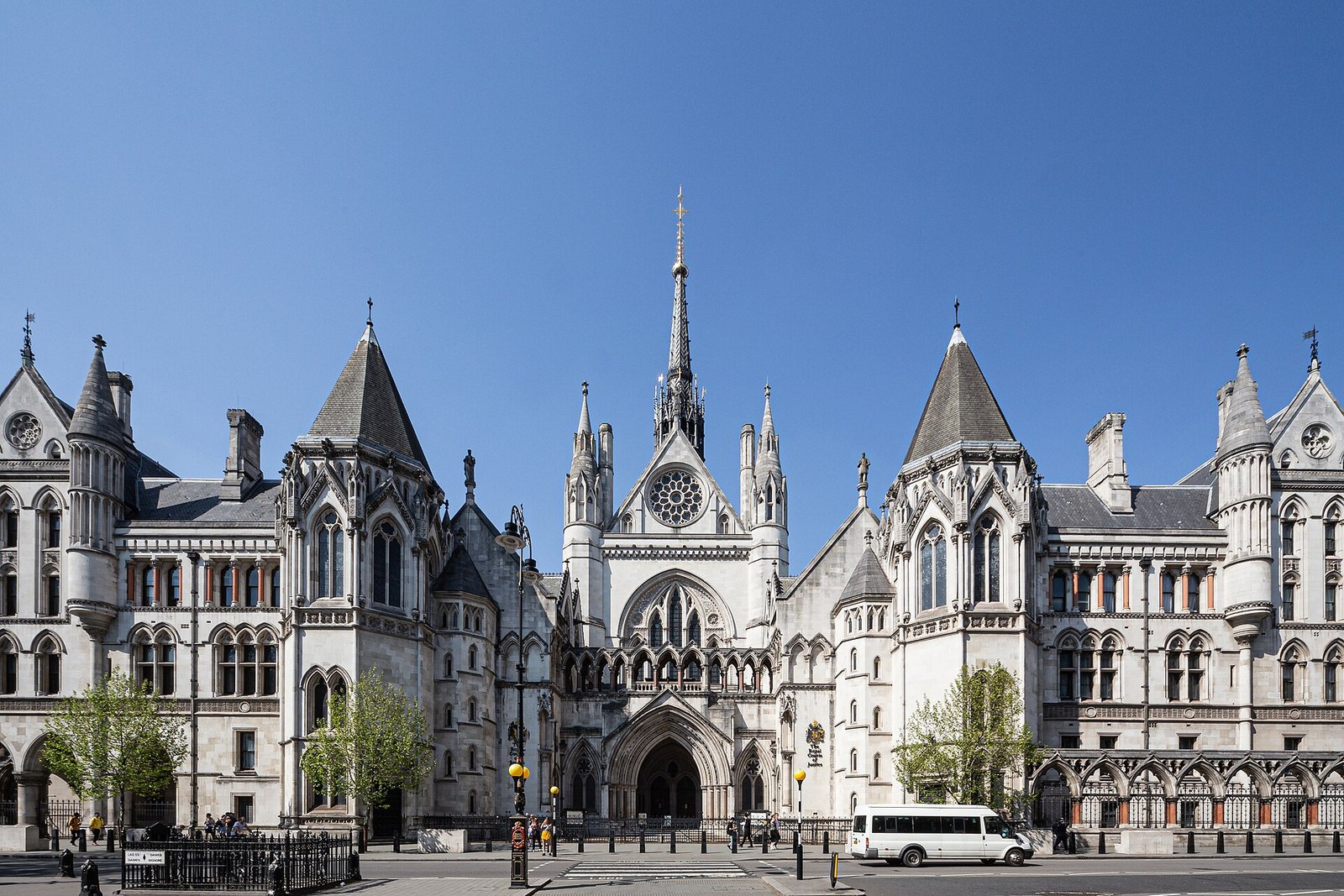
The legal framework: the Arbitration Act 1996 and the 2025 reforms
The Arbitration Act 1996 applies where the seat is in England and Wales or Northern Ireland. Scotland has its own regime under the Arbitration (Scotland) Act 2010, so a clause that simply says "UK" as the seat is an avoidable ambiguity. The 1996 Act divides into mandatory provisions, which parties cannot contract out of, and non-mandatory provisions, which apply unless the parties agree otherwise, for example by adopting institutional rules.
What the Arbitration Act 2025 changed
The Arbitration Act 2025 amends the 1996 Act. Most of its changes took effect on 1 August 2025 and apply to arbitrations, and related court proceedings, commenced on or after that date, regardless of when the arbitration agreement was signed. Arbitrations already under way before that date continue under the unamended Act. The main changes are:
- Law of the arbitration agreement. A new section 6A provides that the arbitration agreement is governed by the law the parties expressly choose for it or, absent such a choice, by the law of the seat. A general governing-law clause in the main contract is not, by itself, an express choice for the arbitration agreement. This reverses the approach the Supreme Court took in Enka v Chubb.
- Arbitrator disclosure. A new section 23A codifies an arbitrator's continuing duty to disclose circumstances that might reasonably give rise to justifiable doubts about impartiality, including matters the arbitrator ought reasonably to be aware of.
- Summary disposal. A new section 39A allows the tribunal, on a party's application and unless the parties have agreed otherwise, to dispose of a claim, defence or issue where a party has no real prospect of succeeding on it.
- Emergency arbitrators and court support. The Act recognises emergency arbitrators appointed under institutional rules and confirms that the court's supportive powers under section 44 can be exercised against third parties, for example to preserve evidence.
- Jurisdiction challenges. Amendments to section 67 are designed to stop a party re-running a jurisdiction objection in court with new grounds or evidence it could have put to the tribunal. Those changes depend on court rules and had not taken effect when the main provisions commenced, so their status should be checked for any challenge.
Institutions, rules and courts
Many London arbitrations are administered by the LCIA under its 2020 Rules, or by the ICC International Court of Arbitration, which administers London-seated cases despite its Paris headquarters. Ad hoc arbitration, often under the UNCITRAL Rules or the LMAA Terms in shipping, is also common. The courts' role is set out in CPR Part 62, and arbitration claims are normally heard in the Commercial Court.
International arbitration lawyers London clients rely on should also understand the court's limited routes of challenge. Section 67 covers substantive jurisdiction, section 68 covers serious irregularity causing substantial injustice, and section 69 permits an appeal on a point of English law, but only with agreement or permission and only if the parties have not excluded it. Under section 70(3) a challenge must normally be brought within 28 days of the award or of the outcome of any arbitral review or correction process.
Key decisions for international arbitration lawyers London clients instruct
The most valuable advice in arbitration is often given before any dispute exists. A clause that names the seat, the institution, the number of arbitrators, the language and the law of the arbitration agreement removes the most common grounds for early satellite litigation. A clause that leaves those points open invites a costly argument about the forum before the merits are reached.
| Factor | London-seated arbitration | English High Court litigation |
|---|---|---|
| Decision-maker | Arbitrators chosen by or for the parties, often with sector expertise | An allocated judge; specialist lists such as the Commercial Court |
| Confidentiality | Private hearings; English law implies a duty of confidentiality, but its limits should be addressed in the clause or rules | Public hearings and judgments, subject to limited exceptions |
| Enforcement abroad | Awards enforceable in New York Convention states, which cover most trading nations | Depends on treaties, the Hague 2019 Judgments Convention or local law in the enforcing state |
| Appeals | Narrow statutory challenges; section 69 appeals can be excluded | Appeal to the Court of Appeal with permission |
| Multi-party claims | Joinder and consolidation depend on consent and the rules chosen | Court can join parties and manage related claims together |
| Interim relief | Tribunal and emergency arbitrator powers, supported by the court under section 44 | Full court powers, including freezing and search orders |
Seat, rules and tribunal
The seat should be a jurisdiction whose courts respect arbitration and whose law the parties understand. The rules should fit the likely dispute: institutional rules offer administrative support, scrutiny and fallback appointment mechanisms, while ad hoc arbitration can suit parties who expect to cooperate. A sole arbitrator saves cost on smaller claims; a three-member tribunal gives each side a party-nominated arbitrator and a chair, which many parties prefer in high-value, cross-cultural disputes.
Tiered clauses and hybrid options
Escalation clauses requiring negotiation or mediation before arbitration are useful but must be drafted with clear time limits; vague "good faith" steps can generate arguments about whether the tribunal has jurisdiction. Asymmetric clauses, often seen in finance documents, give one party a choice of court or arbitration. They can be valuable but need careful drafting so they work across every jurisdiction where enforcement may be sought. Our mediation and ADR team advises on escalation steps.
An arbitration award is only as valuable as the assets it can reach. Enforcement strategy belongs at the start of the case, not the end.
The arbitration process step by step
Every arbitration follows the rules and procedural orders that govern it, so timings vary widely. The steps below describe a typical institutional arbitration seated in London.
- Pre-dispute review. Read the clause, check notice and escalation requirements, identify limitation risks and assess where the counterparty holds assets.
- Request for arbitration. The claimant files a request or notice of arbitration under the chosen rules, which formally commences the arbitration and usually stops time running for limitation purposes under English law.
- Response and constitution of the tribunal. The respondent answers and may counterclaim. Arbitrators are nominated or appointed, give disclosure under section 23A and the rules, and the tribunal is constituted.
- Procedural order and timetable. A case management conference fixes the timetable, document production (often guided by the IBA Rules on the Taking of Evidence), witness and expert phases and the hearing date.
- Written submissions and evidence. The parties exchange statements of case, documents, witness statements and expert reports. Applications for summary disposal under section 39A may be made where appropriate.
- Hearing. An evidential hearing, in person, remote or hybrid, at which witnesses and experts are cross-examined, followed by closing submissions.
- Award. The tribunal issues a reasoned award, typically dealing with costs and interest. Correction under section 57 or the rules must be pursued before any court challenge.
- Challenge or enforcement. Either party may bring a challenge within the strict time limits, and the winner may apply to enforce in England or abroad.
Documents and evidence to assemble
Tribunals decide cases on documents more than on recollection. The earlier relevant material is identified and preserved, the stronger the position, both for running the case and for responding to document production requests. Under English law, communications with lawyers can attract privilege, but privilege rules differ between jurisdictions, and tribunals may need to decide which standard applies. Our article on legal professional privilege explains the distinctions.
Contract set
The signed contract, all amendments, side letters and the full chain of correspondence on formation. Check for competing dispute resolution clauses across related agreements, which often cause jurisdiction fights.
Performance record
Invoices, delivery records, project programmes, minutes and notices served. These usually prove breach, causation and loss more reliably than witness evidence.
Notices and escalation steps
Evidence that any contractual pre-conditions to arbitration were satisfied, including dates of negotiation meetings and mediation offers.
Asset intelligence
Information on where the counterparty and its group hold bank accounts, receivables, ships, shares or property. This shapes interim relief and the eventual enforcement plan.
Issue a document preservation notice internally as soon as a dispute looks likely. Suspend routine deletion of emails, chat messages and project data, and identify the custodians who hold key records. Lost documents can lead a tribunal to draw adverse inferences.
Risks and common mistakes
Most avoidable losses in arbitration flow from a handful of recurring errors. International arbitration lawyers London parties consult are typically asked to repair these after the event, at far greater cost than preventing them.
A pathological or inconsistent clause
Clauses that name a non-existent institution, refer to both courts and arbitration without saying which prevails, or fail to name the seat generate early disputes about whether there is a valid agreement to arbitrate at all. Related contracts with different clauses can split one commercial dispute across several forums. A short review of the whole contract suite before signing, and harmonised clauses across group agreements, avoids most of these problems. Where a defective clause already exists, the parties can sometimes agree a replacement submission agreement once a dispute arises, which is often cheaper than litigating its meaning.
Missing the 28-day challenge window
A challenge under sections 67, 68 or 69 must normally be brought within 28 days of the award, or of the outcome of any arbitral review or correction process. The court can extend time, but it does so sparingly. Parties who spend weeks considering an award before taking advice can lose the right to challenge altogether. The right to object can also be lost under section 73 if a party continues to take part in the arbitration without raising an objection it knew about. Diary the deadline the day the award arrives.
Ignoring the law of the arbitration agreement
Since 1 August 2025, section 6A means the law of the seat governs the arbitration agreement unless the parties expressly choose otherwise. That is generally helpful for London-seated clauses, because English law is supportive of arbitration. But where a contract is governed by another law, or the seat is outside England, parties should check whether the arbitration agreement could be held invalid, or a dispute non-arbitrable, under the law that now applies. An express choice in the clause removes the doubt.
Treating confidentiality as absolute
English law implies a duty of confidentiality in arbitration, but it has exceptions, including where disclosure is reasonably necessary to protect a party's legal rights, and court applications connected with the arbitration may be heard in public. Listed companies may also have disclosure obligations. If confidentiality matters commercially, it should be addressed expressly in the clause or rules, and in any settlement agreement, rather than assumed.
Winning an award against an empty shell
A claimant can spend years obtaining an award only to find the respondent has moved its assets. Early tracing, interim relief from the tribunal or the court, and security for costs where the respondent is the claimant on a counterclaim, all reduce this risk. Where there is evidence of dissipation, the court can grant a freezing injunction in support of arbitration under section 44; our injunctions team handles urgent applications.
Cross-border angle: Bangladesh, the Gulf, Singapore, China and the EU
The value of a London award comes largely from the New York Convention, under which courts in contracting states must recognise and enforce foreign awards subject only to limited refusal grounds. In England, section 101 of the 1996 Act provides for enforcement of New York Convention awards, with the court's permission, as if they were judgments.
Bangladesh
Bangladesh is a party to the New York Convention, and foreign awards are enforced under its Arbitration Act 2001 through the District Courts, with appeals to the High Court Division. Enforcement can be refused on grounds that include public policy, invalidity of the arbitration agreement, lack of proper notice and the award not yet being binding. Practical issues, including the time Bangladeshi proceedings can take and the need for properly authenticated documents, make it sensible to plan enforcement with local counsel from the outset. TRW & Co's Dhaka headquarters works alongside the London office on these matters, and our Bangladesh arbitration in London page covers contract drafting for Bangladesh-facing deals.
The Gulf, Singapore, China and the EU
The UAE, Saudi Arabia, Singapore, mainland China and all EU member states are New York Convention parties, but local practice matters. Some jurisdictions have historically scrutinised awards on public policy or formality grounds, and some parties prefer to seat in Singapore or Dubai for proximity to assets or counterparties. Where a dispute may end up in the courts rather than arbitration, the Hague 2019 Judgments Convention, which entered into force for the United Kingdom on 1 July 2025, now assists with enforcing English judgments in proceedings commenced from that date in the EU (except Denmark), Ukraine and Uruguay.
Whatever the counterparty's home jurisdiction, international arbitration lawyers London clients appoint should map the enforcement path before the first filing. That includes checking whether a state entity can claim immunity from execution, whether any investment treaty applies and whether sanctions affect payment of an award; our sanctions team advises where they do.
How TRW & Co helps
TRW & Co's London office is authorised and regulated by the Solicitors Regulation Authority. We advise on, run and defend arbitrations seated in London and elsewhere, and work with our offices in Dhaka, Singapore, Dubai and other locations on cross-border enforcement. Where advocacy in the higher courts is required, we instruct specialist counsel.
Clause drafting and review
We draft and audit arbitration clauses across contract suites, covering seat, rules, tribunal, language, the law of the arbitration agreement, joinder and consolidation.
Commencing and defending claims
We prepare requests and responses, advise on arbitrator nominations, manage document production and prepare witness and expert evidence through to the hearing.
Interim and emergency relief
We seek or resist emergency arbitrator relief and section 44 court orders, including freezing injunctions and orders to preserve evidence.
Challenges to awards
We assess and bring, or resist, challenges under sections 67, 68 and 69 within the statutory time limits, with counsel where needed.
Enforcement
We enforce awards in England and coordinate enforcement in Bangladesh, the Gulf and Asia, drawing on our enforcement of judgments practice.
Settlement strategy
We advise on without-prejudice negotiations, mediation windows and the drafting of consent awards that are enforceable abroad.
As international arbitration lawyers London businesses can call at an early stage, we would rather review a clause or a dispute before positions harden. See the full list of our practices, or read our guide to the Arbitration Act 2025.
Checklist for decision-makers
Use this list when a dispute is emerging under a contract that contains, or may contain, an arbitration clause. International arbitration lawyers London teams use broadly the same sequence.
- Locate every contract in the relationship and compare the dispute resolution clauses.
- Confirm the seat, institution, rules, number of arbitrators and any escalation steps.
- Check whether the arbitration agreement has an express governing law and, if not, the law of the seat.
- Diary limitation dates and any contractual time bars for notices or claims.
- Issue a preservation notice and identify key custodians and documents.
- Map where the counterparty holds assets and whether interim relief is needed.
- Assess funding options, including insurance and third-party funding, and budget by phase.
- Consider whether a mediation window could resolve the dispute earlier.
- Plan enforcement in the jurisdictions that matter before commencing.
- Take advice early; to discuss a matter, contact our London office.
International arbitration lawyers London clients trust for complex matters should give a clear view on merits, cost, timing and enforceability before the first filing. That clarity is what we aim to provide.
Frequently asked questions
01Why choose London as the seat of arbitration?
A London seat brings the arbitration under the Arbitration Act 1996, as amended in 2025, which limits court intervention and gives the Commercial Court a supportive role, for example granting interim injunctions or preserving evidence. Challenges to awards are narrow, and appeals on points of law can be excluded. English law is widely understood by international counterparties, and London has a deep pool of arbitrators, counsel and experts. The seat does not require hearings to take place in London; they can be held anywhere, or remotely, while the legal home remains England.
02Does the Arbitration Act 2025 apply to my existing contract?
Generally yes, if the arbitration starts on or after 1 August 2025. The amendments apply to arbitrations and related court proceedings commenced from that date, regardless of when the arbitration agreement was made. Arbitrations that had already started before 1 August 2025, and court proceedings connected with them, continue under the unamended 1996 Act. The changes to jurisdiction challenges under section 67 depend on court rules, so their status should be checked when a challenge is being considered.
03What is the difference between the LCIA and ICC?
Both are leading arbitral institutions that administer cases under their own rules and can appoint arbitrators if the parties do not. The LCIA is London-based and its 2020 Rules are commonly used in English-law contracts. The ICC is based in Paris but administers many London-seated cases; its Court scrutinises draft awards before they are issued. The two differ in how fees are calculated and how cases are administered. The right choice depends on the value, the parties and the likely enforcement jurisdictions.
04Can I challenge an arbitration award in the English courts?
Only on limited grounds. Section 67 allows a challenge to the tribunal's substantive jurisdiction. Section 68 covers serious irregularity that has caused or will cause substantial injustice. Section 69 allows an appeal on a point of English law, but only with the other parties' agreement or the court's permission, and many institutional rules exclude it. Any challenge must normally be brought within 28 days, after exhausting arbitral review or correction processes. Disagreeing with the tribunal's findings of fact is not a ground.
05How is a London arbitration award enforced abroad?
Most states are parties to the New York Convention, which obliges their courts to recognise and enforce foreign awards subject to limited refusal grounds such as invalidity of the arbitration agreement, lack of proper notice or public policy. The winner applies to the court where the losing party holds assets, usually with the original or a certified copy of the award and the arbitration agreement, plus translations. Local procedure, timing and attitudes to public policy vary, so enforcement should be planned with local counsel before the arbitration begins.
06Can I get urgent relief before the tribunal is formed?
Yes. Many institutional rules, including the LCIA and ICC rules, provide for emergency arbitrators who can grant urgent interim measures before the tribunal is constituted, and the Arbitration Act 2025 now recognises emergency arbitrators. The court can also act under section 44 in urgent cases, for example granting a freezing injunction or an order to preserve evidence, including against third parties. Which route is quicker and more effective depends on the relief sought and where it must be enforced.
07Is arbitration confidential under English law?
English law implies a duty of confidentiality in arbitration, so documents and hearings are generally private. The duty has exceptions, for example where disclosure is reasonably necessary to protect a party's legal rights, and related court applications may be heard in public. Regulatory and stock exchange disclosure duties can also apply. If confidentiality is commercially important, it is safer to provide for it expressly in the clause, the institutional rules or a separate confidentiality agreement.
Sources and official materials
- Arbitration Act 1996 — Core statute for arbitrations seated in England, Wales and Northern Ireland
- Arbitration Act 2025 — Amendments on governing law, disclosure, summary disposal and court powers
- London Court of International Arbitration — LCIA Rules, fees and arbitrator appointments
- ICC Dispute Resolution Services — ICC Arbitration Rules and administration
- New York Convention — Text of the Convention and list of contracting states
- Commercial Court — Court that hears arbitration claims
- Civil Procedure Rules Part 62 — Procedure for arbitration claims in court
General information only, current as at 21 October 2026. It is not legal advice and does not create a solicitor–client relationship. It reflects the law of England and Wales unless stated otherwise; Scotland and Northern Ireland have separate legal systems, and the law changes frequently. Check current official sources and take advice on the facts of your matter.