
TRW & Co · Technology, Data & IP
IP Litigation Solicitors in London
IP litigation solicitors in London enforce and defend patents, trade marks, copyright, designs and trade secrets in the Patents Court, the Intellectual Property Enterprise Court and the wider High Court. Choosing the right forum, acting quickly, managing validity risk and coordinating cases abroad decide most outcomes, and the UK's position outside the Unified Patent Court makes strategy more important than ever.
Key pointEnforcing a registered IP right almost always triggers a counterclaim to revoke it, so a rights holder should test validity before suing, not after the defence arrives.
At a glance
IPEC costs are capped
In the IPEC multi-track, recoverable costs on liability are capped at £60,000 and claims are limited to £500,000, giving both sides cost certainty.
Small claims for IP
Copyright, trade mark, passing off and unregistered design claims worth £10,000 or less can use the IPEC small claims track.
Threats rules apply
The Intellectual Property (Unjustified Threats) Act 2017 restricts infringement warnings about patents, trade marks and designs, especially to retailers and customers.
Six-year limitation period
Most infringement claims must be brought within six years of the infringing act under the Limitation Act 1980, but delay undermines interim relief.
Hague 2019 excludes IP
The 2019 Hague Judgments Convention applies to the UK from July 2025 but excludes intellectual property, so foreign enforcement depends on local law.
Swipe or scroll →
What IP litigation solicitors in London handle
IP litigation solicitors in London act for businesses that need to enforce or defend intellectual property rights: patents, trade marks, passing off, copyright, registered and unregistered designs, database rights, trade secrets and confidential information. The work ranges from urgent action against counterfeits or a former employee taking data, through infringement trials in the High Court, to multi-jurisdictional licensing disputes worth very large sums.
IP disputes are rarely only about law. They turn on technical and commercial evidence, on timing, and on the relationship between the parties. A competitor launching a lookalike product, a distributor continuing to sell after termination, a licensee under-reporting royalties and a rival alleging that your new product infringes its patent all call for different strategies, even where the legal tests are similar.
The decision to litigate is also a decision about cost, publicity and risk. Enforcing a right invites a challenge to its validity, and a registered right that is revoked cannot be used against anyone. Good early advice weighs those risks against the cost of doing nothing.
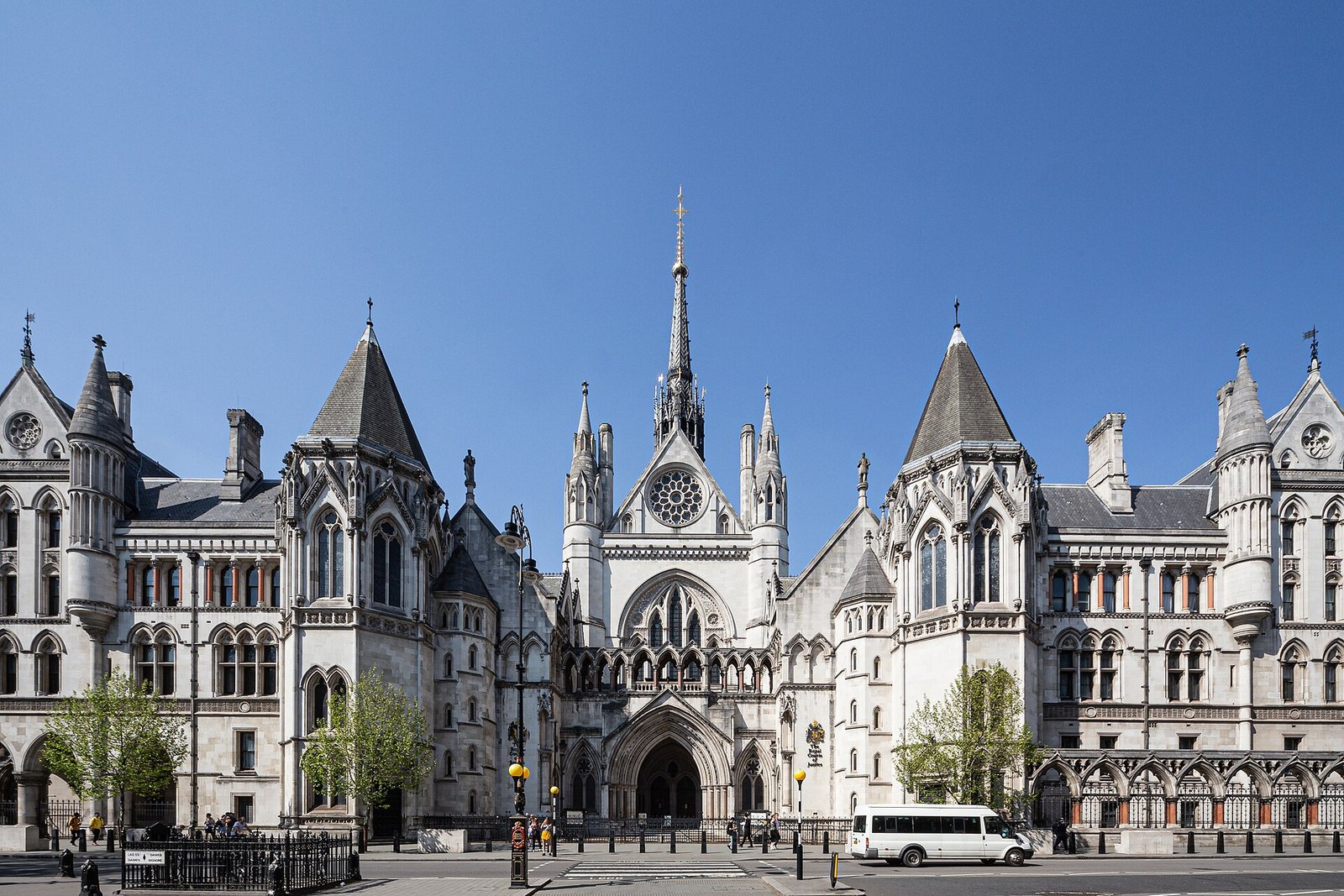
Courts and forums for IP disputes
In England and Wales, IP claims are governed by Part 63 of the Civil Procedure Rules and are heard in the Business and Property Courts in London. Choosing the right forum is one of the first strategic decisions.
| Forum | Typical cases | Key features |
|---|---|---|
| Patents Court | Patents, registered designs, SEP and FRAND disputes | Specialist judges, technical trials, expert evidence, no general cap on costs or damages |
| Chancery Division (Intellectual Property List) | Larger trade mark, passing off, copyright, design and trade secret claims | Full High Court procedure, suited to complex or high-value claims |
| IPEC multi-track | Smaller and simpler claims across all IP rights | Recoverable costs capped at £60,000 on liability, claim value limited to £500,000, trials usually two days or less |
| IPEC small claims track | Lower-value copyright, trade mark, passing off and unregistered design claims | Claims worth £10,000 or less, limited costs recovery, no patents or registered designs |
| IPO tribunal | Trade mark oppositions and invalidity, design invalidity, some patent entitlement disputes | Cheaper administrative route, appeals to the Appointed Person or the High Court |
| Arbitration or mediation | Licensing, technology transfer and joint venture disputes | Private, flexible, enforceable internationally, but cannot bind third parties on validity |
IPEC is often the right choice for SMEs and for disputes where both sides want cost certainty. The Patents Court and the wider High Court suit cases needing more extensive evidence, cross-examination and disclosure, or where the value at stake justifies the cost. Cases can be transferred between them.
The legal framework by right
Each right has its own statute and its own tests for infringement. Patent infringement under the Patents Act 1977 turns on whether the product or process falls within the claims, read purposively and, since 2017, with a doctrine of equivalents. Trade mark infringement under the Trade Marks Act 1994 asks whether a sign is identical or similar, whether the goods or services overlap, and whether there is a likelihood of confusion or unfair advantage. Passing off protects unregistered goodwill against misrepresentation causing damage.
Copyright infringement under the Copyright, Designs and Patents Act 1988 requires copying of a substantial part of a protected work, while registered designs are infringed by any design that does not produce a different overall impression on the informed user, even without copying. Trade secrets are protected by the law of confidence and the Trade Secrets (Enforcement, etc.) Regulations 2018.
Unjustified threats
The Intellectual Property (Unjustified Threats) Act 2017 allows a person threatened with infringement proceedings for patents, trade marks or designs to sue for a declaration, an injunction and damages if the threat is unjustified. Threats to manufacturers and importers are generally safe, but threats to retailers and customers carry risk. Copyright is not covered, but defamation and malicious falsehood can still arise from careless allegations. IP litigation solicitors in London draft warning letters with these rules in mind.
Limitation
Most IP infringement claims are treated as statutory torts subject to the six-year limitation period in the Limitation Act 1980, so damages can usually be recovered for infringing acts in the six years before proceedings are issued. Delay can, however, weaken a claim for interim relief and, in trade mark cases, acquiescence can bar a claim after a period of knowing toleration.
Speed matters most where you want an interim injunction. Courts look carefully at how quickly the claimant acted once it knew of the infringement. Waiting several months to see how sales develop can be the reason an injunction is refused, leaving you to wait until trial for any relief.
Remedies and urgent relief
The courts have a wide toolkit. Final remedies include injunctions, damages or an account of the infringer's profits (the claimant must elect between them), delivery up or destruction of infringing goods, publication of the judgment and declarations. Additional damages are available for flagrant copyright infringement, and costs usually follow the event.
Interim and pre-action orders
- Interim injunctions stop the infringing conduct until trial. The court asks whether there is a serious question to be tried and where the balance of convenience lies, and the claimant normally gives a cross-undertaking to compensate the defendant if the injunction proves wrong.
- Search orders allow supervised entry to premises to preserve evidence where there is a real risk it will be destroyed.
- Norwich Pharmacal orders require innocent third parties, such as platforms or banks, to disclose the identity of wrongdoers.
- Blocking injunctions require internet service providers to block access to infringing websites.
- Freezing injunctions prevent a defendant from dissipating assets where there is a risk a judgment will go unpaid.
Our injunctions team works with the IP group on urgent applications, which can be heard within days, or without notice to the defendant where secrecy is justified. Our guide to freezing injunctions explains asset preservation in more detail.
Criminal and border routes
Civil litigation is not the only tool. Commercial-scale counterfeiting and piracy can be criminal offences under the Trade Marks Act 1994 and the Copyright, Designs and Patents Act 1988, investigated by Trading Standards and the police, and rights holders can bring private prosecutions in appropriate cases. At the border, a rights holder can apply to HMRC so that Border Force detains suspected infringing goods and notifies the rights holder, who can then seek their destruction. These routes are often cheaper than a civil claim against an anonymous overseas seller and can be combined with platform takedowns and Norwich Pharmacal applications.
The strongest IP claim can still fail if the claimant waits too long, writes to the wrong person, or overlooks the counterattack on validity.
How an IP dispute runs
The timetable varies widely between an IPEC claim and a complex patent action, but IP litigation solicitors in London follow a broadly consistent sequence.
- Investigate and preserve. Gather evidence of the infringement, test purchases and the rights relied on; issue internal litigation holds and check ownership and licences.
- Assess merits and risk. Analyse infringement, likely defences and validity, quantify the commercial impact and consider insurance, funding and budget.
- Pre-action correspondence. Send a letter before claim that complies with the pre-action rules and the unjustified threats regime, and consider early settlement or mediation.
- Urgent relief if needed. Apply for interim injunctions, search orders or disclosure orders, usually supported by detailed witness evidence.
- Pleadings and case management. File particulars of claim and defence, often with a validity counterclaim, then agree a timetable at the case management conference.
- Disclosure and evidence. Exchange documents or, in patent cases, product and process descriptions; prepare witness statements, experiments and expert reports.
- Trial and judgment. Present the case at trial, with specialist counsel instructed for advocacy, and receive a reserved written judgment.
- Remedies, costs and appeal. Pursue an inquiry as to damages or account of profits, recover costs and consider appeal or enforcement.
Defending an infringement claim
For defendants, the early weeks matter just as much. IP litigation solicitors in London acting for a defendant will check whether the claimant owns the right and has standing to sue, test validity, analyse non-infringement and consider statutory defences, such as prior use in patent cases or honest concurrent use and own-name defences in trade mark cases. It may be possible to design around the right, limiting exposure to past sales. Where the claimant has sent threats to customers, a counterclaim for unjustified threats can change the dynamics of the case.
Many cases settle along the way, often after the defence or expert evidence reveals the strength of each side's position. Settlement terms commonly include undertakings, a licence, a sell-off period, payment and agreed public statements.
Documents and evidence
IP cases are won on evidence. Claimants need proof of the right and its ownership, including registration certificates, assignments, licence agreements, creation records and evidence of reputation and goodwill. They also need evidence of the infringement, such as dated screenshots, test purchases, product samples, technical analysis and sales data.
Defendants need their own design and development history to show independent creation, prior art for validity attacks, and records of when they first used a sign or launched a product. In trade mark and passing off cases, survey evidence and evidence of actual confusion can be decisive but must be gathered carefully to be admissible. In patent cases, the views of independent technical experts on the skilled person's common general knowledge are central, and experiments may be needed to prove a point. Early preservation of documents, including emails, messaging apps and source code repositories, avoids disputes later.
Risks and common mistakes
Exposing your right to a validity attack
Suing on a patent, registered trade mark or registered design almost always triggers a counterclaim for revocation or invalidity. A patent can be attacked for lack of novelty, obviousness or insufficiency; a trade mark for non-use, descriptiveness or bad faith, an issue sharpened by the Supreme Court's 2024 decision in SkyKick on overbroad specifications. Losing the right affects every licence and every other enforcement action. Before suing, commission an objective validity review and consider whether to assert narrower claims or particular registrations.
Writing the wrong kind of warning letter
Letters to customers, retailers or distributors alleging infringement of a patent, trade mark or design can be actionable unjustified threats. Letters can also damage commercial relationships and trigger a pre-emptive declaratory claim in a forum the rights holder would not have chosen. Decide who to write to, what to say and what you want before sending anything. Where the infringer is overseas, consider whether a letter is useful at all or whether proceedings or platform takedowns are better.
Underestimating costs and adverse costs risk
High Court IP litigation is expensive, and the loser usually pays a substantial part of the winner's costs. Budget for expert evidence, experiments and specialist counsel as well as solicitors' fees. IPEC's costs caps reduce this risk for suitable cases. After-the-event insurance and third-party funding may be available for strong claims, and a well-judged settlement offer can shift the costs risk onto the other side.
Neglecting the commercial endgame
Winning a judgment is not always the goal. A licence on good terms, a rebrand by the other side, a supply agreement or an agreed exit from a market may be worth more than damages. Many IP disputes are between businesses that will continue to compete or cooperate. Define the commercial outcome you want at the start, and revisit it as the evidence develops, so that litigation serves the business rather than the other way round.
Trade secrets, confidential information and departing employees
Some of the most urgent cases IP litigation solicitors in London handle involve confidential information rather than registered rights. A senior employee leaves for a competitor, or a former distributor or joint venture partner starts selling a suspiciously similar product, and the business suspects that customer lists, pricing models, source code or technical know-how have gone with them.
Claims can be brought for breach of confidence, under the Trade Secrets (Enforcement, etc.) Regulations 2018, for breach of contractual confidentiality and restrictive covenants, and sometimes for copyright or database right infringement. Remedies include springboard injunctions, which stop a defendant benefiting from a head start gained through misuse, delivery up of documents, and orders for forensic inspection of devices and accounts.
The evidence is usually digital. Forensic review of the departing employee's laptop, email and cloud storage activity in the weeks before departure is often the turning point, so devices should be preserved, not wiped and reissued. Employment contracts, confidentiality policies and exit certificates are also key. Our guide to protecting trade secrets covers the preventive steps that make enforcement easier.
Cross-border angle: Europe, Bangladesh, China, Singapore and the Gulf
IP rights are territorial, so a global dispute usually becomes a set of national cases. Since Brexit, UK judgments no longer benefit from EU recognition rules, and the UK is outside the Unified Patent Court. The 2019 Hague Judgments Convention, in force for the UK since July 2025, excludes intellectual property from its scope, so enforcing IP judgments abroad still depends largely on local law. Coordinating UK, EU and UPC proceedings is now a core skill for IP litigation solicitors in London.
For clients connected with Bangladesh, TRW & Co's home jurisdiction, the practical issues are counterfeits in supply chains, misuse of designs by manufacturers and enforcing judgments or awards. Bangladesh has updated its patent and copyright laws, and enforcement often requires local proceedings through our Dhaka colleagues. Our article on enforcing a UK judgment in Bangladesh explains the options. For licensing disputes, arbitration seated in London can produce an award enforceable in Bangladesh, China, Singapore and the Gulf under the New York Convention, which is often more effective than a court judgment.
Where counterfeits are made in China or pass through Gulf free zones, customs measures and local enforcement with our offices in China and Dubai can be faster than litigation in London.
How TRW & Co helps
Our IP litigation solicitors in London combine the firm's intellectual property and commercial litigation practices, working with our patent and trade mark lawyers on the underlying rights.
Pre-action strategy
We assess infringement, validity and commercial impact, prepare compliant letters before claim, and advise on whether litigation, mediation or a negotiated licence best serves the business.
Urgent relief
We prepare and run applications for interim injunctions, search orders, Norwich Pharmacal orders and freezing injunctions, often on short notice.
Trials in IPEC and the High Court
We conduct IP litigation from issue to trial and appeal, managing experts, disclosure and evidence. Where advocacy in the higher courts is required, we instruct specialist counsel.
International coordination
We coordinate parallel proceedings, customs actions and arbitration across the EU, Bangladesh, China, Singapore and the Gulf, working with our offices and local counsel.
If you are facing or considering an IP dispute, contact our London office or see all our practices. Our guide on trade mark infringement and passing off offers further background.
Checklist for decision-makers
- Have we confirmed which rights we hold, who owns them and whether any licence affects our right to sue?
- Have we preserved evidence of the infringement and our own creation and development records?
- Have we assessed the risk of a validity counterclaim before relying on a registered right?
- Are we acting quickly enough to keep interim relief available?
- Is our warning letter addressed to the right party and compliant with the unjustified threats rules?
- Is IPEC, the High Court, the IPO or arbitration the right forum for this dispute?
- Do we have a realistic budget, and have we considered insurance, funding and settlement offers?
- What commercial outcome do we actually want, and in which countries do we need it?
Engaging IP litigation solicitors in London early, before letters are sent or deadlines pass, is usually the most cost-effective decision in any IP dispute.
Frequently asked questions
01Should my IP claim go to IPEC or the High Court?
IPEC suits smaller and less complex disputes, especially where one or both parties want cost certainty. On the multi-track, recoverable costs on liability are capped at £60,000 and the value of the claim is limited to £500,000, and trials are usually two days or less. Its small claims track handles copyright, trade mark, passing off and unregistered design claims worth £10,000 or less. The High Court suits higher-value, technically complex or evidence-heavy cases. The choice affects costs exposure, timetable and procedure, so take advice before issuing.
02How quickly can we get an injunction to stop infringement?
An urgent interim injunction application can be heard within days, and in exceptional cases on the same day or without notice to the defendant. The court considers whether there is a serious issue to be tried, whether damages would be an adequate remedy, and where the balance of convenience lies. The claimant usually has to give a cross-undertaking in damages. Delay is often fatal: if you have known about the infringement for months without acting, the court may refuse interim relief.
03What can we recover if we win?
The main remedies are a final injunction, and either damages or an account of the infringer's profits, at the claimant's election. Damages are commonly assessed on lost profits or a reasonable royalty. Courts can also order delivery up or destruction of infringing goods, publication of the judgment and, in flagrant copyright cases, additional damages. The successful party usually recovers a substantial part of its legal costs, subject to the IPEC caps where that court is used.
04We have been accused of infringement. What should we do first?
Take the allegation seriously but do not respond hastily. Identify the right relied on, check that it is valid and in force in the UK, and analyse whether your product or activity actually falls within it. Preserve relevant documents and design history. Check insurance and supplier indemnities. Consider whether the letter is an unjustified threat, which may give you a claim. A measured reply within the deadline, possibly with a counter-offer or a request for further information, keeps options open while you assess the merits.
05Can an IP dispute be resolved by arbitration?
Yes, particularly where the dispute arises from a licence, technology transfer or joint venture with an arbitration clause. Arbitration is private, allows the parties to choose arbitrators with technical expertise, and produces awards enforceable in most countries under the New York Convention. An arbitral tribunal can decide validity issues between the parties, but its decision does not revoke a registered right against the world. Mediation is also widely used and can be combined with litigation at any stage.
06How do we deal with counterfeits sold online?
Start with evidence: dated screenshots, test purchases and seller details. Most marketplaces and payment providers operate notice-and-takedown procedures for trade mark, copyright and design infringements, which can remove listings quickly. Where sellers are anonymous, a Norwich Pharmacal order can compel platforms or banks to identify them. Blocking injunctions can require internet service providers to block infringing websites. Rights holders can also lodge an application with HMRC so that Border Force can detain suspected counterfeit goods at the UK border.
07Can we enforce a UK IP judgment abroad?
It depends on the country. Since Brexit, EU recognition rules no longer apply to UK judgments, and the 2019 Hague Judgments Convention, which the UK joined in July 2025, excludes intellectual property. Enforcement therefore depends on each country's own rules, and because IP rights are territorial, a UK judgment usually concerns UK rights only. For international disputes, parallel proceedings in key markets, or arbitration where there is a contract, are often more effective. We coordinate with local counsel and our overseas offices.
Sources and official materials
- Civil Procedure Rules Part 63: Intellectual Property Claims — Procedure for IP claims
- Intellectual Property Enterprise Court (GOV.UK) — Court for smaller IP claims
- Patents Court (GOV.UK) — Specialist patent and registered design court
- Intellectual Property (Unjustified Threats) Act 2017 — Rules on infringement warnings
- Trade Secrets (Enforcement, etc.) Regulations 2018 — Statutory trade secret remedies
- Limitation Act 1980 — Time limits for claims
- HCCH 2019 Judgments Convention — Recognition of foreign judgments (excludes IP)
General information only, current as at 21 October 2026. It is not legal advice and does not create a solicitor–client relationship. It reflects the law of England and Wales unless stated otherwise; Scotland and Northern Ireland have separate legal systems, and the law changes frequently. Check current official sources and take advice on the facts of your matter.