
TRW & Co · Competition, Regulatory & Investigations
Public Law and Judicial Review Solicitors in London
Judicial review solicitors in London help businesses and individuals challenge, or defend, decisions of government departments, regulators and local authorities. Claims must be brought promptly and within three months, or six weeks or 30 days in planning and procurement cases, so early analysis of the decision, the record and alternative remedies is essential.
Key pointThe judicial review time limit runs from the decision, not from receipt of full reasons, and the parties cannot extend it by agreement. Pre-action correspondence and settlement talks do not stop the clock.
At a glance
Short time limits
Claims must be filed promptly and within three months; six weeks applies to certain planning decisions and 30 days to certain procurement decisions.
Pre-action protocol
A letter before claim is expected, and the protocol treats 14 days as a reasonable period for the public body to respond in most cases.
Permission filter
A judge must grant permission before a claim proceeds; claims certified totally without merit on the papers cannot be renewed orally.
Flexible quashing orders
Since the Judicial Review and Courts Act 2022, courts can suspend quashing orders or limit their retrospective effect.
Infrastructure reforms
The Planning and Infrastructure Act 2025 removes the paper permission stage for challenges to nationally significant infrastructure decisions.
Swipe or scroll →
What public law and judicial review cover in England and Wales
Judicial review solicitors in London help businesses, charities, investors and individuals challenge the lawfulness of decisions made by public bodies: government departments, regulators, local authorities, licensing bodies, tribunals in some cases, and private bodies performing public functions. Judicial review asks whether a decision was made lawfully, fairly and rationally. It is not an appeal on the merits, and the court will not simply substitute its own view.
Public law reaches commercial life more often than many expect. A licence refused, a contract award to a competitor, a planning consent granted next door, a regulator's policy that changes the economics of a sector, a funding decision withdrawn without consultation, or a designation that freezes assets can each raise a public law question. So can a public body's failure to act when it has a legal duty to do so.
The difficulty is time. The deadlines are short, the procedure is front-loaded and the court expects the claimant to have engaged with the decision-maker before issuing. Judicial review solicitors London clients instruct early can shape the record, test whether a challenge is viable and keep alternative routes, such as statutory appeals, complaints or negotiation, open at the same time.
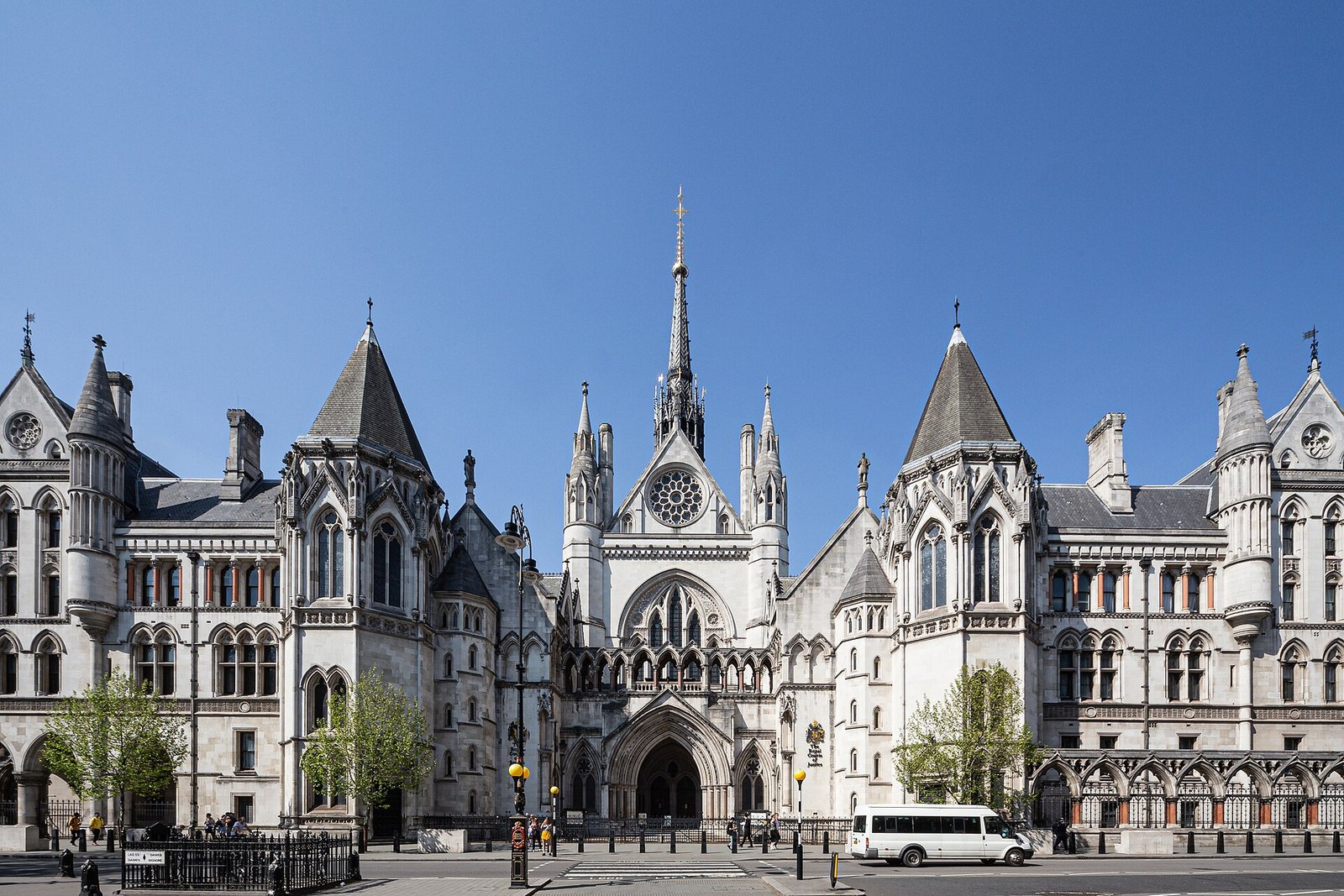
The legal framework for judicial review
Statute and procedure
The High Court's power to grant judicial review remedies is found in section 31 of the Senior Courts Act 1981. The procedure is in Part 54 of the Civil Procedure Rules and its practice directions, supported by the Pre-Action Protocol for Judicial Review. Claims are issued in the Administrative Court; planning cases go to the specialist Planning Court, and most immigration and asylum judicial reviews are dealt with by the Upper Tribunal.
The Judicial Review and Courts Act 2022 gave the court power to make suspended quashing orders and quashing orders with prospective-only effect, and largely excluded judicial review of Upper Tribunal decisions refusing permission to appeal. Earlier reforms under the Criminal Justice and Courts Act 2015 require the court to refuse relief where it is highly likely that the outcome for the claimant would not have been substantially different had the conduct complained of not occurred, unless there is an exceptional public interest reason.
Grounds of review
The classic grounds are illegality, irrationality and procedural impropriety. In practice these break down into more specific complaints:
- Error of law. The body misunderstood or misapplied its legal powers or duties, or acted for an improper purpose.
- Irrelevant or ignored considerations. It took into account something it should not have, or failed to take into account something it was obliged to consider.
- Irrationality. The decision was outside the range of reasonable responses, or the reasoning had a demonstrable flaw.
- Procedural unfairness. Failure to consult properly, to give reasons, to allow a fair hearing or to follow a mandatory procedure.
- Legitimate expectation. The body departed without justification from a clear promise or established practice.
- Human rights. A public authority acted incompatibly with Convention rights under the Human Rights Act 1998.
- Equality duty. It failed to have due regard to the matters in the public sector equality duty in section 149 of the Equality Act 2010.
The courts' role in reviewing even the highest exercises of executive power was illustrated by the Supreme Court's 2019 decision in R (Miller) v The Prime Minister, which held the prorogation of Parliament unlawful. Most commercial claims are far narrower, but the same principles apply.
Scotland and Northern Ireland
Scotland has its own procedure in the Court of Session, with a three-month time limit and a requirement for permission; the test for standing and some remedies differ. Northern Ireland's procedure is in the High Court in Belfast under its own rules. A decision of a UK-wide body may be challengeable in more than one jurisdiction, and choosing the right forum is an early strategic question.
How judicial review solicitors in London compare the routes to challenge
Judicial review is a remedy of last resort. The court will usually refuse permission if there is a suitable alternative remedy, such as a statutory appeal or an internal review. Judicial review solicitors London businesses rely on start by mapping all available routes.
| Route | Typical use | Time limit | What the court or body decides |
|---|---|---|---|
| Judicial review (CPR Part 54) | Most decisions of public bodies with no other adequate remedy | Promptly and in any event within 3 months of the grounds arising | Lawfulness, fairness and rationality, not merits |
| Planning judicial review | Grant of planning permission and certain planning decisions | 6 weeks | Lawfulness of the planning decision |
| Statutory planning challenge | Appeal decisions and certain orders under planning legislation | Usually 6 weeks, set by the statute | Statutory grounds similar to judicial review |
| Procurement challenge | Contract award and other procurement decisions | Short statutory periods; 30 days for related judicial review claims | Breach of procurement duties, with damages or set-aside |
| Statutory appeal or tribunal | Regulator decisions where the statute provides an appeal | Set by the statute, often short | Often a full merits review |
| Complaint or ombudsman | Maladministration, poor service | Scheme-specific | Recommendations rather than binding remedies |
Public procurement disputes have their own regime under the Procurement Act 2023 and the older regulations for legacy procurements; see our public procurement page and our guide on how to challenge a procurement decision.
Standing, timing and merit
A claimant must have a sufficient interest in the matter. Businesses directly affected by a decision usually satisfy this; competitors, trade associations and campaign groups often do as well, depending on the context. The timing question is more dangerous: the three-month limit is an outer limit and a claim can still be refused for lack of promptness, while the limit cannot be extended by agreement between the parties.
Time usually runs from the date the decision was made, not from the date you heard about it or received reasons. Correspondence, a request for reconsideration or settlement talks do not stop the clock. If the deadline is close, issue protectively and ask for a stay rather than waiting for a reply.
The judicial review process step by step
- Assess and gather. Obtain the decision, reasons, policy documents and consultation materials. Identify the deadline and any alternative remedy. Make information requests where appropriate, but do not wait for answers if time is short.
- Letter before claim. Send a pre-action letter setting out the decision challenged, the facts, the grounds and the remedy sought. The protocol suggests 14 days is a reasonable period for a reply in most cases. See our guide to a letter before claim.
- Response and review. The defendant replies, sometimes conceding, reconsidering or providing documents that change the picture. Decide whether to proceed, narrow the grounds or settle.
- Issue the claim. File the claim form, a detailed statement of facts and grounds, the evidence and a bundle of documents in the Administrative Court, serving the defendant and any interested parties.
- Permission stage. The defendant files an acknowledgment of service with summary grounds. A judge considers permission on the papers; if refused, the claimant can usually renew the application at an oral hearing unless it is certified as totally without merit.
- Substantive stage. If permission is granted, the defendant files detailed grounds and evidence, subject to its duty of candour. Skeleton arguments follow, and the claim is heard by a judge, usually on documents and submissions rather than live witnesses.
- Remedy and appeal. The court may quash the decision, order the body to act or not to act, make a declaration or, in limited cases, award damages. Appeals lie to the Court of Appeal with permission.
Interim relief, such as an order preventing a contract from being signed or a policy from taking effect, can be sought at any stage where urgency requires it. Where advocacy in the higher courts is required, we instruct specialist counsel and work with them as an integrated team.
Documents and evidence
Judicial review is decided on the documents. Unlike ordinary civil litigation, there is no standard disclosure; instead, the defendant has a duty of candour to explain the decision-making process and disclose relevant material, including material unhelpful to it. That duty is powerful, but claimants should not rely on it to fill gaps they could fill themselves. Judicial review solicitors in London usually assemble the following material before the letter before claim is sent.
- The decision and reasons. The decision letter, any notice, minutes, officer reports and any reasons given later.
- The policy context. The statute, guidance, policy statements and published criteria that applied at the time.
- Consultation materials. Consultation documents, responses, analysis and the timeline.
- Your engagement. Representations made, meetings held, promises given and the correspondence trail.
- Impact evidence. Witness statements explaining the effect of the decision on the business, particularly where interim relief or standing is in issue.
- Equality and impact assessments. Any assessment the decision-maker carried out, or evidence that it did not.
Freedom of information and data subject access requests can supplement the record, but they run on their own timetables and rarely arrive before the limitation date.
Risks and common mistakes
Waiting for the full reasons before acting
Claimants often delay because they want the complete picture, or because they are still talking to the decision-maker. The court looks at when the grounds first arose, which is usually the date of the decision, and it can refuse a claim filed within three months if it was not brought promptly. A short planning or procurement limit can expire while correspondence is still going on. The safer course is to diarise the earliest plausible deadline, send the pre-action letter quickly and be ready to issue protectively if the response does not arrive in time.
Arguing the merits instead of the law
A strong commercial grievance is not the same as a public law error. Grounds that simply say the decision was wrong or unfair in a general sense are likely to fail at permission. Effective grounds identify a specific legal flaw: a misdirection on the statute, a failure to consider a mandatory factor, a breach of a consultation duty or a promise departed from without justification. Judicial review solicitors in London will test each ground against the documents and drop weak ones, which also strengthens the credibility of what remains.
Ignoring an alternative remedy
If the statute provides an appeal or the body has a review process, the court will usually expect it to be used first. Bringing judicial review instead can lead to permission being refused, wasting cost and time. In some cases both routes should run in parallel, with the judicial review issued protectively and stayed. Mapping all available remedies, including complaints and ombudsman schemes, is part of the initial assessment rather than an afterthought.
Underestimating costs exposure
The general rule is that the loser pays the winner's reasonable costs, and a defendant and interested parties may each seek costs. Environmental claims within the Aarhus Convention benefit from fixed default caps on liability, which differ for individuals and organisations and which the court can vary, while costs capping orders are available in other public interest cases on limited conditions. Claimants should also be aware that the court can require information about how a claim is funded. Budgeting and funding should be settled before issue, not after permission.
Winning but gaining nothing
A quashing order sends the decision back to be retaken. If the body can lawfully reach the same decision again, the practical gain may be limited, and since the 2015 reforms the court must refuse relief where the outcome would highly likely not have been substantially different. Since 2022 the court can also suspend a quashing order or limit its retrospective effect. Before issuing, consider what a lawful process would realistically produce and whether a negotiated outcome would deliver more.
Judicial review rewards precision: a single well-evidenced legal flaw, raised in time, is worth more than a dozen complaints about the merits.
Where businesses use judicial review
For commercial clients, judicial review is usually one tool within a wider regulatory or disputes strategy. Common settings include:
- Planning and infrastructure. Challenges to, or defence of, planning permissions and development consents. The Planning and Infrastructure Act 2025 changes the procedure for challenges to nationally significant infrastructure projects, removing the paper permission stage and the right to appeal where a claim is found to be totally without merit; check commencement for any particular case. See our planning and development page.
- Regulatory decisions. Licensing, authorisation and policy decisions of sector regulators, where no full statutory appeal exists.
- Environmental decisions. Permits, consents and environmental assessments; our environmental law team advises on both sides.
- Sanctions and national security. Designations and certain investment screening decisions have bespoke statutory review routes that apply judicial review principles; our sanctions team handles these.
- Immigration and sponsorship. Sponsor licence suspensions and revocations, and some visa decisions without a right of appeal.
- Public inquiries and consultations. Procedural rulings and the scope of inquiries; see our guide to public inquiries in the UK.
Businesses are also frequent interested parties, for example when a competitor or campaign group challenges a permission, licence or contract the business has obtained. Judicial review solicitors London defendants and interested parties instruct need to move just as fast as claimants to protect the decision.
Cross-border dimensions
International investors and businesses are increasingly involved in UK public law. A Bangladeshi, Gulf, Singaporean or Chinese investor may be affected by a UK licensing decision, a national security screening outcome or a sanctions designation, and may need English public law remedies alongside rights under an investment treaty.
Investment treaty protections, such as fair and equitable treatment, are assessed by international tribunals, not the English courts, and they follow different rules and timelines. Using domestic judicial review first can preserve evidence and sometimes resolve the issue, but it can also affect treaty arguments, so the two should be planned together. Bangladesh has its own constitutional writ jurisdiction in the High Court Division, and TRW & Co's Dhaka colleagues can advise where a matter involves decisions in both countries. Our international arbitration team advises on treaty claims.
How TRW & Co helps
TRW & Co's London office is authorised and regulated by the Solicitors Regulation Authority. As judicial review solicitors in London, we act for claimants, defendants and interested parties, and we are candid about the prospects and the realistic outcome.
Early viability review
We review the decision, the legal framework and the record, identify the deadline and alternative remedies, and give a clear view on whether a challenge is worth bringing.
Pre-action strategy
We draft letters before claim and information requests designed to secure reconsideration or concessions, and respond to letters on behalf of defendants and interested parties.
Claims and urgent relief
We prepare claim forms, grounds, evidence and applications for interim relief, and conduct proceedings in the Administrative Court and Planning Court with specialist counsel.
Consultation and engagement
We help businesses respond to consultations and make representations so that, if a challenge is later needed, the record supports it.
Regulatory and sector work
We combine public law with regulatory knowledge in financial services, energy, planning, immigration and procurement, where most commercial judicial reviews arise.
Costs and funding
We assess costs exposure, Aarhus protection and costs capping, and structure funding so that the client understands the risk before proceedings begin.
Our wider disputes capability is described on our commercial litigation page, and the full range of services is on our practices page. For a fuller explanation of the procedure, see our guide to judicial review in the UK.
Checklist for decision-makers
Before instructing judicial review solicitors London boards and general counsel should be able to answer these questions, or know who will answer them quickly.
- What exactly is the decision, who made it and on what date?
- Which time limit applies: three months, six weeks, 30 days or a statutory period?
- Is there a statutory appeal, internal review or ombudsman route that must be used first?
- What is the specific legal error, and which documents prove it?
- What would a lawful decision realistically look like, and would it help the business?
- Who else is affected and may join as an interested party?
- What is the costs exposure, and is Aarhus protection or a costs capping order available?
- Is interim relief needed to preserve the position, and what evidence of urgency do we have?
- Are there parallel routes in other jurisdictions or under an investment treaty?
To discuss a decision you may need to challenge or defend, contact our London office or email info@trw.co.
Frequently asked questions
01How long do I have to bring a judicial review?
Under CPR 54.5 the claim form must be filed promptly and in any event not later than three months after the grounds first arose. Shorter limits apply to some cases: six weeks for certain planning decisions and 30 days for certain procurement decisions. The parties cannot extend these limits by agreement, and the court can refuse a claim filed within three months if it was not brought promptly. Some statutes also create their own challenge routes with fixed periods. Identify the relevant date and limit as soon as the decision is made.
02Can I challenge a decision just because I disagree with it?
No. Judicial review examines whether a decision was lawful, rational and procedurally fair, not whether it was the best decision. You need to identify a specific public law error, such as a misreading of the statute, a failure to consider a relevant matter, a breach of a duty to consult, an unjustified departure from a promise or a Human Rights Act breach. If the statute provides a merits appeal, that is usually the right route instead, and the court may refuse permission for judicial review if you have not used it.
03What happens at the permission stage?
After the claim is issued, the defendant and interested parties may file an acknowledgment of service with summary grounds of resistance. A judge then decides on the papers whether the claim is arguable and should proceed. If permission is refused, the claimant can usually ask for the decision to be reconsidered at a short oral hearing, unless the judge certified the claim as totally without merit. The court must also refuse permission where it appears highly likely the outcome would not have been substantially different, subject to limited exceptions.
04What remedies can the court give?
The main remedies are a quashing order setting the decision aside, a mandatory order requiring the body to act, a prohibiting order preventing it from acting, a declaration and an injunction. Damages are available only in limited circumstances, such as alongside a Human Rights Act claim. Since the Judicial Review and Courts Act 2022 the court can suspend a quashing order or make it prospective only. Remedies are discretionary, so even a successful claimant may receive a declaration rather than a quashing order.
05How much does judicial review cost, and who pays?
Costs depend on complexity, urgency and whether the claim goes beyond permission. The general rule is that the unsuccessful party pays the successful party's reasonable costs, although a defendant's recoverable costs at the permission stage are usually limited to preparing the acknowledgment of service. Environmental claims covered by the Aarhus Convention benefit from default costs caps, and costs capping orders are available in some other public interest cases. We give an estimate and a costs risk assessment before any claim is issued, and do not quote fees on this page.
06Can a business defend a decision made in its favour?
Yes. Where a third party challenges a planning permission, licence, consent or contract award that benefits your business, you will usually be named as an interested party. You can file an acknowledgment of service and summary grounds at the permission stage, submit evidence and make submissions at the hearing. Acting early helps, because the public body's defence may not cover the commercial consequences that matter to you, and your evidence on impact can influence whether relief is granted.
07Does judicial review work the same way in Scotland?
No. In Scotland, judicial review is brought in the Court of Session under its own rules, with a three-month time limit and a permission stage, but the procedure, standing test and terminology differ from England and Wales. Northern Ireland has a separate procedure in its High Court. Where a UK-wide body makes a decision affecting operations in more than one part of the UK, it is important to decide early which court is the right forum and whether parallel proceedings are necessary.
Sources and official materials
- Senior Courts Act 1981, section 31 — Statutory basis for judicial review remedies
- Civil Procedure Rules Part 54 — Judicial review procedure and time limits
- Pre-Action Protocol for Judicial Review — Letter before claim and response
- Judicial Review and Courts Act 2022 — Suspended and prospective quashing orders
- Planning and Infrastructure Act 2025 — Reforms to infrastructure judicial reviews
- Administrative Court — The court that hears judicial review claims
General information only, current as at 21 October 2026. It is not legal advice and does not create a solicitor–client relationship. It reflects the law of England and Wales unless stated otherwise; Scotland and Northern Ireland have separate legal systems, and the law changes frequently. Check current official sources and take advice on the facts of your matter.