
TRW & Co · Funds & Financial Services
FCA Enforcement Lawyers in London
FCA enforcement lawyers London firms and individuals instruct guide them through supervisory requests, skilled person reviews, investigations, settlement and contested proceedings. With the FCA running fewer but faster investigations, a 30% discount available only for early settlement and a revised Enforcement Guide in force since June 2025, early strategy decides most outcomes.
Key pointThe only settlement discount now available is 30% in stage 1, so subjects need their own view of liability and penalty before the FCA shares its assessment.
At a glance
Enforcement Guide replaced
The FCA's revised Enforcement Guide (ENFG) took effect on 3 June 2025, keeping the exceptional circumstances test for naming regulated firms under investigation.
Stage 1 discount only
Under DEPP 6.7, settlement during stage 1 earns a 30% penalty discount; for cases started since March 2017 later settlements earn none.
Minimum 14 days
Section 387 of FSMA requires a warning notice to give at least 14 days for representations, which the FCA may extend.
28 days to refer
A reference to the Upper Tribunal must reach the Tribunal within 28 days after the decision notice is given.
Privilege protected
Section 413 of FSMA means the FCA cannot compel production of legally privileged 'protected items'.
Swipe or scroll →
What FCA enforcement lawyers London firms instruct actually do
FCA enforcement lawyers London firms and individuals instruct advise from the first sign of regulatory concern to the final outcome. That may be a supervisory letter, a request for information, a skilled person review, a formal notice of investigation, a compelled interview, a warning notice, a settlement negotiation, a contested hearing before the Regulatory Decisions Committee or a reference to the Upper Tribunal. It can also mean a criminal investigation, because the FCA prosecutes insider dealing, market manipulation, unauthorised business and some financial crime.
The subjects are not only banks and large firms. Payment firms, consumer credit lenders, wealth managers, brokers, crypto businesses, listed companies and individuals approved under the Senior Managers and Certification Regime (SMCR) all face FCA investigations. Unregulated businesses can be investigated too, where the FCA suspects activity requiring authorisation or a misleading financial promotion.
The stakes go beyond fines. An FCA outcome can bring public censure, restitution or redress costs, restrictions on business, prohibition of individuals, loss of approval, reputational damage, follow-on civil claims and, for individuals, the end of a career in financial services. Good FCA enforcement lawyers London clients rely on manage all of those consequences together.
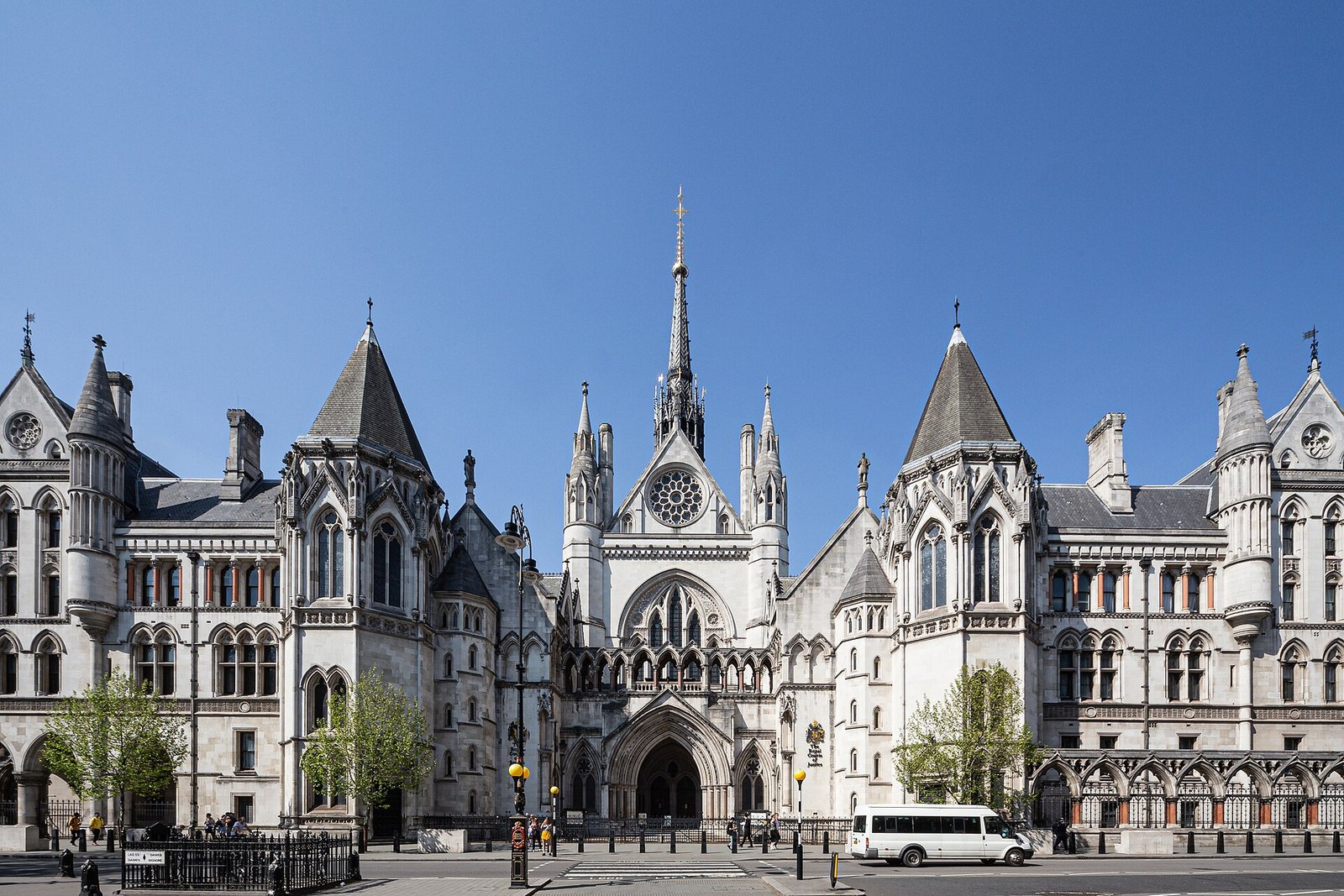
The legal framework for FCA investigations and enforcement
The FCA's powers come mainly from the Financial Services and Markets Act 2000 (FSMA). Its approach is explained in the Enforcement Guide (ENFG), which replaced the older EG on 3 June 2025, and in the Decision Procedure and Penalties Manual (DEPP), which covers decision-making, penalties and settlement.
Information and investigation powers
- Section 165 lets the FCA require authorised persons to provide information and documents, often used in supervision before any investigation.
- Section 166 allows the FCA to require a report by a skilled person, usually paid for by the firm, on systems, controls or past business.
- Sections 167 and 168 allow the appointment of investigators for general investigations and for specific suspected breaches, misconduct or offences.
- Sections 171 and 172 give investigators powers to compel interviews, information and documents.
- Section 174 limits how statements compelled under those powers can be used in criminal proceedings against the person who made them.
- Section 176 provides for search warrants, and section 177 makes non-compliance and obstruction offences.
- Section 413 protects legally privileged material ("protected items") from compulsory production.
Sanctions and remedies
The main disciplinary powers are public censure (section 205) and financial penalties (section 206) for firms, and section 66 for individuals. The FCA can impose penalties for market abuse under section 123, prohibit individuals from performing functions under section 56, apply to court for injunctions and restitution orders (sections 380 and 382), require restitution itself under section 384, and create consumer redress schemes under section 404. The FCA brings criminal prosecutions under section 401, including for insider dealing under Part V of the Criminal Justice Act 1993 and for misleading statements and impressions under sections 89 and 90 of the Financial Services Act 2012.
The PRA has parallel powers for the firms it regulates, and the two regulators sometimes run joint investigations. Scotland and Northern Ireland are covered by the same FSMA regime, although criminal procedure and prosecution arrangements differ outside England and Wales.
How FCA enforcement has changed
Since 2023 the FCA has said it wants to run fewer investigations and conclude them faster, and it has raised the threshold for opening one. Its 2025 to 2030 strategy lists fighting financial crime among its priorities, and it has continued to bring criminal prosecutions for insider dealing and fraud. In practice, more issues are now handled through supervision, skilled person reviews and redress, with enforcement reserved for cases the FCA considers most serious or most useful as deterrence.
The naming policy was the most debated change. The FCA consulted on announcing more investigations into regulated firms where it considered this in the public interest, but after strong industry and parliamentary pushback it kept, as explained in policy statement PS25/5, its "exceptional circumstances" test for regulated firms. The revised guide does allow the FCA to name subjects of investigations into suspected unauthorised activity, to confirm reactively that it is investigating in some circumstances, and to share anonymised information. A High Court challenge to an FCA decision to announce an investigation was dismissed in 2025, so the power is being used.
Conduct expectations for individuals are also widening. FCA rules confirming that serious non-financial misconduct, such as bullying, harassment and violence, can breach the conduct rules apply to non-bank firms from 1 September 2026, which is likely to generate more internal investigations and regulatory references. Our article on SMCR reform covers the wider changes to the individual accountability regime.
The FCA enforcement process, step by step
Every case is different, but most follow the same sequence. FCA enforcement lawyers London subjects instruct should be involved from the first step, because early decisions shape everything that follows.
- Supervisory concern or referral. Issues arise from supervision, a firm's own notification, a skilled person report, whistleblowers, complaints or market surveillance. The FCA decides whether to refer the matter to Enforcement.
- Notice of appointment of investigators. The subject receives a notice explaining the scope of the investigation and the suspected breaches. The FCA usually holds a scoping discussion.
- Information gathering. Document requests, data production and compelled or voluntary interviews. Privilege review, data protection and confidentiality obligations must be managed throughout.
- Preliminary findings. In most cases the FCA shares its provisional findings in a preliminary investigation report or letter, and the subject can respond before any decision is taken.
- Settlement window (stage 1). The FCA communicates its view of the breaches and the proposed penalty. Settlement in this period attracts a 30% discount on the penalty; outside it, no settlement discount applies under the current policy.
- Warning notice and representations. If the case does not settle, the Regulatory Decisions Committee may issue a warning notice. The subject has at least 14 days, often extended, to make written and oral representations.
- Decision notice. The RDC decides whether to give a decision notice. Subjects can refer the matter to the Upper Tribunal within 28 days of the decision notice, under Schedule 3 to the Upper Tribunal procedure rules.
- Final notice and publication. The outcome is recorded in a final notice, which the FCA normally publishes. Follow-on issues such as redress, civil claims and other regulators then need managing.
The 30% settlement discount is only available in stage 1, a period that normally runs for 28 days after the FCA communicates its penalty assessment and is extended only in exceptional cases. Subjects need their own view of the facts, the law and the likely penalty before that window opens, which means investing in the investigation phase rather than waiting for the FCA's findings.
Settle, partly contest or fight: comparing the options
Choosing between settlement and contesting a case is the most important decision in most FCA enforcement matters. The table summarises the main routes under DEPP 6.7.
| Route | Penalty discount | Who decides | Main advantages | Main drawbacks |
|---|---|---|---|---|
| Full settlement in stage 1 | 30% | FCA settlement decision makers | Lowest penalty, faster outcome, agreed wording of the final notice | Admissions may be used in follow-on claims; limited time to test the FCA's case |
| Focused resolution agreement in stage 1 | Up to 30%, depending on how much is agreed | RDC decides the contested issues and the discount | Contest penalty or specific findings while securing some discount | Discount uncertain; contested issues still go to the RDC |
| Settlement after stage 1 | None under current DEPP for new cases | FCA settlement decision makers | Avoids a contested hearing and Tribunal costs | No penalty reduction for timing |
| Contest before the RDC | None | Regulatory Decisions Committee | Independent internal decision maker hears representations | Cost and time; RDC is part of the FCA |
| Upper Tribunal reference | None | Upper Tribunal (Tax and Chancery Chamber) | Full rehearing by an independent judicial body; the Tribunal decides the appropriate action | Public hearing; cost; the Tribunal can increase as well as reduce sanctions |
No settlement discount applies to the part of a penalty that represents disgorgement of profit, or to permanent prohibition orders. Individuals and firms often have different interests in the same case, and separate representation may be needed. Our FCA investigation response article sets out the first steps in more detail.
Documents and evidence to secure early
- A litigation hold covering emails, chat and messaging apps, voice recordings, trading data and personal devices used for business, including off-channel communications.
- Policies, procedures, training records and compliance monitoring reports for the period under review.
- Board, committee and risk minutes showing what senior managers knew and when.
- SMCR documents: responsibilities maps, statements of responsibilities and handover records for each relevant senior manager.
- Prior correspondence with FCA supervision, notifications under Principle 11 and any attestations given.
- Internal investigation reports, prepared in a way that protects legal privilege where possible. Our article on legal professional privilege explains the limits.
- Remediation and redress records showing what the firm has done to put things right.
Risks and common mistakes
Treating a supervisory request as routine
Many enforcement cases begin with a section 165 request, a skilled person review or a supervisory visit. Incomplete or inaccurate answers at that stage can become separate breaches and damage credibility for the rest of the case. Firms should treat significant supervisory requests seriously, check the facts before responding, and take advice on whether a response may later be used in enforcement. Being open about known problems usually helps rather than harms.
Losing privilege in an internal investigation
Interview notes, draft reports and communications with forensic accountants may not be privileged unless the investigation is structured properly. Litigation privilege depends on adversarial proceedings being reasonably in contemplation, and legal advice privilege covers communications with the client, which in a company may be a narrow group. Firms should decide early whether material is intended to be privileged, involve lawyers in directing the work and avoid creating unnecessary non-privileged documents.
One lawyer for the firm and its individuals
Firms and individual senior managers often have aligned interests early in an investigation, but they can diverge quickly, for example if the firm wants to settle and attribute failings to a particular person. Joint representation can create conflicts and lead to delay or the need to change advisers mid-case. Individuals under investigation should consider separate advice, and firms should check D&O cover for individuals' costs.
Missing the stage 1 window
Because the settlement discount is now available only in stage 1, a subject who is not ready to engage when the FCA communicates its penalty assessment loses 30% of potential savings. That does not mean subjects should settle at any price. It means they should prepare their own analysis of liability and penalty during the investigation, so they can make an informed decision within the window.
Ignoring follow-on consequences
A final notice can be used by customers and counterparties in civil claims, by the Financial Ombudsman Service, by overseas regulators and by prospective employers. Admissions in settlement documents, the description of individuals in the notice and the timing of publication all matter. These effects should be weighed in settlement negotiations, especially where individuals could be identified even if not named.
FCA cases are usually won or lost on the record created long before the warning notice: how the firm responded to supervision, what it found internally and how quickly it put things right.
Skilled person reviews, redress and the alternatives to enforcement
Many serious problems never reach Enforcement. The FCA increasingly uses a skilled person review under section 166 of FSMA, a voluntary requirement or a past business review to diagnose a problem and require it to be fixed. These tools are cheaper and faster for the FCA, but they can be expensive for the firm, which usually pays the skilled person's fees and the cost of any redress.
A skilled person review deserves the same care as an investigation. The firm can comment on the scope, nominate a skilled person for FCA approval and negotiate the timetable. The skilled person's findings are often relied on in later enforcement or civil claims, so the firm should check factual accuracy carefully and record where it disagrees. FCA enforcement lawyers London firms use at this stage can help keep a remediation exercise from becoming an enforcement case.
Redress is often the issue that matters most financially. The FCA can require or encourage firms to review past sales and pay compensation, and can create an industry-wide consumer redress scheme under section 404 of FSMA where there has been widespread failure, as its work on motor finance commissions shows. Prompt, well-designed voluntary redress is also one of the factors the FCA takes into account when deciding whether to bring enforcement action and what penalty to seek. Our article on the motor finance redress scheme illustrates how this works in practice.
Cross-border investigations: Bangladesh, the EU, the Gulf and Asia
FCA investigations increasingly involve data, people or customers outside the UK. The FCA can request assistance from overseas regulators under memoranda of understanding and can receive requests from them. A firm with operations in the EU, the Gulf, Singapore or China may face parallel enquiries, and must manage different privilege, data protection and blocking statute rules in each place.
Bangladeshi-owned firms and UK firms with Bangladeshi customers or service providers raise particular issues: producing data held in Bangladesh, interviewing staff there, and coordinating with Bangladesh Bank or the Bangladesh Securities and Exchange Commission where conduct overlaps. Money-laundering and sanctions issues often sit alongside conduct concerns, and our anti-money laundering team covers that side. TRW & Co's Dhaka practice can assist with evidence and local regulatory engagement.
How TRW & Co's FCA enforcement lawyers London team helps
TRW & Co's London office is authorised and regulated by the Solicitors Regulation Authority. We act for firms, senior managers and other individuals in FCA supervisory, enforcement and criminal matters. Where advocacy in the higher courts or before the Upper Tribunal requires it, we instruct specialist counsel.
Early response and scoping
We assess supervisory requests, notices of appointment and section 166 requirements, agree scope and timetables with the FCA and put document preservation in place.
Internal investigations
We run privileged internal investigations with forensic and data specialists, working with our corporate investigations team, and prepare findings boards can act on.
Interviews and productions
We prepare and attend compelled and voluntary interviews, manage privilege review and produce documents in the format the FCA expects.
Settlement and contested cases
We analyse liability and penalty under DEPP, negotiate settlements and focused resolution agreements, and make representations to the RDC and references to the Upper Tribunal.
Individuals and senior managers
We advise individuals on conduct rule investigations, prohibition, fitness and propriety and regulatory references, independently of their employer where needed.
Criminal and follow-on exposure
We act in FCA criminal investigations with our white-collar crime team and defend follow-on customer claims with our banking and financial disputes team.
FCA enforcement lawyers London clients appoint should understand the regulatory system as well as the process, so we work closely with our financial services regulation team. See the full range of our work on our practices page.
Checklist for boards and individuals
- Has a document hold been issued covering all channels, including messaging apps and personal devices?
- Do we understand the precise scope of the investigation and the suspected breaches?
- Have we considered whether individuals need separate representation and whether D&O cover responds?
- Is our internal investigation structured to protect privilege where possible?
- Do we have our own view of liability and penalty before stage 1 begins?
- Have we considered remediation and redress, which can reduce penalties and improve outcomes?
- Have we assessed notification duties to other regulators, insurers, auditors and counterparties?
- Do we have a communications plan for publication of any final notice?
To speak in confidence with FCA enforcement lawyers London firms and individuals can rely on, contact TRW & Co at info@trw.co or +880 1779 127165, or visit Holborn Gate, 330 High Holborn, London WC1V 7QH.
Frequently asked questions
01What should we do when we receive an FCA notice of investigation?
Take advice immediately, preserve all relevant documents across every communication channel, and read the notice carefully to understand the scope and suspected breaches. Do not contact potential witnesses about the substance without advice. Consider whether individuals need separate representation, notify insurers where required, and plan a measured, accurate engagement with the FCA's investigation team, including a scoping discussion.
02Do I have to attend an FCA interview?
If the FCA uses its compulsory powers under sections 171 or 172 of FSMA, failing to attend or answer without reasonable excuse can be an offence. Compelled statements generally cannot be used against you in criminal proceedings, subject to exceptions. Interviews may instead be voluntary or under caution where criminal conduct is suspected, which changes your rights significantly. Take advice on the type of interview before attending.
03How much discount do we get for settling with the FCA?
Under DEPP 6.7, a full settlement agreed during stage 1 attracts a 30% discount on the penalty and on suspension or restriction periods. A focused resolution agreement in stage 1 can attract up to 30% depending on how much is agreed. For cases where stage 1 started on or after 1 March 2017, no discount applies to settlements after stage 1. Disgorgement and permanent prohibitions are not discounted.
04Will the FCA announce that we are under investigation?
For regulated firms, the FCA generally only announces investigations in exceptional circumstances, a test it kept in the Enforcement Guide that took effect on 3 June 2025. It may name subjects of investigations into suspected unauthorised activity, confirm reactively that it is investigating in some cases, and publish anonymised information. Final notices are normally published when a case concludes.
05Can we challenge an FCA decision?
Yes. If the Regulatory Decisions Committee gives a decision notice, you can refer the matter to the Upper Tribunal (Tax and Chancery Chamber). The reference notice must be received within 28 days after the decision notice is given. The Tribunal considers the case afresh, can hear new evidence and decides what action is appropriate, which may be more or less severe than the FCA's decision.
06Can the FCA investigate individuals as well as firms?
Yes. The FCA can investigate approved persons, senior managers, certified staff and other individuals for misconduct, and can impose penalties, suspensions, restrictions or prohibition orders. Since 1 September 2026, rules confirming that serious non-financial misconduct can breach the conduct rules also apply in non-bank firms. Individuals' interests may differ from their employer's, so separate legal advice is often appropriate.
07Does the FCA prosecute crimes?
Yes. Under section 401 of FSMA and other legislation, the FCA prosecutes offences including insider dealing under the Criminal Justice Act 1993, misleading statements and impressions under the Financial Services Act 2012, carrying on regulated activities without authorisation and some money laundering offences. Criminal investigations involve different procedural protections, including interviews under caution, and should be handled by advisers experienced in both regulatory and criminal work.
Sources and official materials
- Financial Services and Markets Act 2000 — FCA investigation, sanction and prosecution powers
- FCA Handbook: DEPP — Decision procedure, penalties and settlement discounts
- FCA Handbook: Enforcement Guide (ENFG) — FCA's approach to enforcement since June 2025
- FCA PS25/5: Enforcement Guide and transparency — Policy statement on the revised Enforcement Guide
- FCA: Enforcement — Overview of the FCA's enforcement work
- Upper Tribunal (Tax and Chancery Chamber) — Hears references against FCA decisions
- Tribunal Procedure (Upper Tribunal) Rules 2008, Schedule 3 — Time limit and procedure for references
General information only, current as at 21 October 2026. It is not legal advice and does not create a solicitor–client relationship. It reflects the law of England and Wales unless stated otherwise; Scotland and Northern Ireland have separate legal systems, and the law changes frequently. Check current official sources and take advice on the facts of your matter.