
TRW & Co · Disputes & Arbitration
Competition Litigation Lawyers in London
Competition litigation lawyers London businesses instruct bring and defend damages claims for cartels and abuse of dominance in the High Court and the Competition Appeal Tribunal. With the first opt-out class win in Kent v Apple, funding still unsettled after PACCAR and a 2026 government consultation on reform, early analysis of limitation, pass-on and liable entities decides what a claim is worth.
Key pointA final CMA decision binds the court, so follow-on claims are fought over quantum and pass-on rather than liability. The data needed to prove both is often lost through routine system changes, so secure purchase and pricing records the moment an investigation becomes public.
At a glance
Decisions bind the court
Under section 58A of the Competition Act 1998, a final CMA infringement decision binds the court and the CAT in follow-on damages claims.
Cartels presumed to harm
Schedule 8A presumes, unless the contrary is proved, that a cartel causes loss, though the claimant must still quantify the overcharge it suffered.
Six-year limitation period
In England and Wales the Schedule 8A limitation period is six years, starting only when the infringement ends and the claimant has the essential knowledge.
Pass-on is for defendants
After Sainsbury's v Visa, a defendant arguing the claimant passed the overcharge to its customers must prove it, usually through economic evidence.
Opt-out claims now succeed
In October 2025 the CAT found for the class in Kent v Apple, the first opt-out collective claim to succeed at trial; Apple said it would appeal.
Swipe or scroll →
What competition litigation covers in the UK
Competition litigation is private enforcement of competition law: claims for damages or injunctions by businesses and consumers harmed by cartels, abuse of dominance or other anti-competitive conduct. Companies instruct competition litigation lawyers London practitioners both to recover overcharges they paid and to defend claims brought against them, including large collective actions on behalf of millions of consumers.
The underlying rules are the Chapter I prohibition on anti-competitive agreements and the Chapter II prohibition on abuse of a dominant position in the Competition Act 1998. Claims may also rely on infringements of EU competition law that occurred before the end of the Brexit transition period. A claim can be brought in the High Court or in the specialist Competition Appeal Tribunal (CAT).
The typical claimant is a business that bought goods or services at inflated prices from a cartel, or a rival that was foreclosed by a dominant firm's conduct. Examples include price-fixing in components, trucks, financial products and packaging; exclusive dealing and tying by digital platforms; and excessive pricing. Indirect purchasers further down the supply chain, including consumers, may also have claims.
Competition law becomes a litigation question in three main ways: when a regulator publishes an infringement decision; when a business suspects it is paying cartel prices or being shut out of a market; and when a claimant firm or class representative writes to a company threatening proceedings. Experienced competition litigation lawyers London businesses rely on will assess value, limitation and funding before any of those situations moves to a claim.
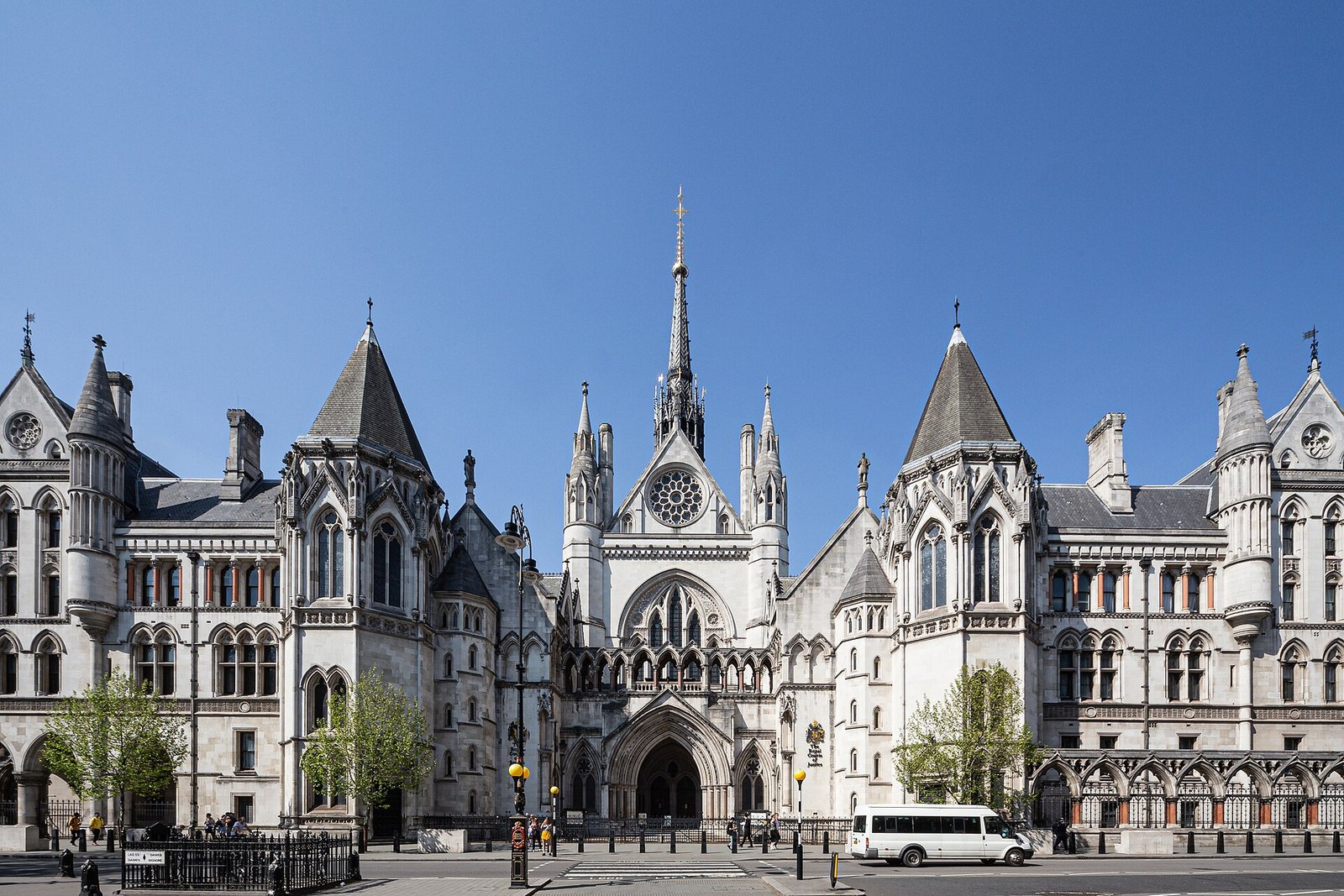
The legal framework for competition damages claims
Standalone and follow-on claims
A follow-on claim relies on an existing infringement decision by the Competition and Markets Authority (CMA), a sector regulator or, for older conduct, the European Commission. Under section 58A of the Competition Act 1998, the court and the CAT are bound by a CMA infringement decision once it has become final. The claimant then has to prove causation and loss, not the infringement itself.
A standalone claim has to prove the infringement too. That is harder and more expensive, but it is the only option where no regulator has acted. Standalone abuse of dominance claims against digital platforms have become more common, and the CAT has shown it will decide them on the evidence before it.
The Competition Appeal Tribunal
Section 47A of the Competition Act 1998 allows damages claims, and claims for injunctions, to be brought in the Competition Appeal Tribunal. The CAT sits in panels that typically include an economist or other expert member alongside a legally qualified chair. It has its own procedural rules, the Competition Appeal Tribunal Rules 2015, including a fast-track procedure designed for simpler claims, often by smaller businesses. Claims may also be transferred between the High Court and the CAT.
Rules from the Damages Directive implementation
Schedule 8A to the Competition Act 1998, introduced in 2017, contains rules for many competition claims. The most important include:
- Presumption of loss. It is presumed, unless the contrary is proved, that a cartel causes loss. The claimant still has to quantify it.
- Limitation. In England and Wales the limitation period is six years. It does not start until the infringement has ended and the claimant knows, or could reasonably be expected to know, the essential facts. It is suspended while a competition authority investigates.
- Immunity recipients. A cartel member with leniency immunity has limited liability to claimants other than its own direct and indirect purchasers.
- Disclosure protections. Leniency statements and settlement submissions are protected from disclosure.
Which rules apply depends on when the conduct and the loss occurred. Older claims may be governed by earlier limitation rules, and transitional questions are a common battleground. The full text is in Schedule 8A.
Leading appellate decisions
In Sainsbury's Supermarkets v Visa Europe Services, the Supreme Court addressed card interchange fees and held that a defendant alleging the claimant passed on the overcharge to its own customers must prove it. In Mastercard v Merricks, it set a relatively accessible threshold for certifying opt-out collective proceedings. In PACCAR, it held that percentage-based litigation funding agreements are damages-based agreements, which are unenforceable in opt-out collective proceedings.
Choosing the type of claim and the forum
The choice between standalone and follow-on, individual and collective, and High Court and CAT affects cost, evidence and timing. Competition litigation lawyers London claimants instruct usually set out the options in a short comparison like the one below.
| Type of claim | What must be proved | Typical claimant | Forum | Main trade-off |
|---|---|---|---|---|
| Individual follow-on | Causation and loss; the infringement is established by a final decision | Direct purchasers of cartelised goods or services | High Court or CAT | Faster and cheaper, but only available where a regulator has acted |
| Individual standalone | Infringement, causation and loss | Foreclosed rivals, customers of a dominant supplier | High Court or CAT | Can address conduct no regulator has pursued; heavier evidence and cost |
| Opt-out collective proceedings | Certification, then infringement (if standalone), causation and aggregate loss | Consumers or small businesses through a class representative | CAT only | Reaches large classes, but requires certification, funding and Tribunal approval of settlements |
| Opt-in collective proceedings | As above, for members who join | Groups of businesses with identifiable losses | CAT only | Smaller, better-defined class; members must sign up |
| Injunction claim | Infringement and the need for relief | Businesses facing exclusion or refusal to supply | High Court or CAT | Can stop harm quickly; a cross-undertaking in damages is usually required |
Collective proceedings are covered in more detail on our group litigation and class actions page and in our guide to opt-out collective actions.
Recent developments in the CAT and in policy
The opt-out regime introduced by the Consumer Rights Act 2015 has now produced trial outcomes. The first two opt-out claims to reach trial, Le Patourel v BT and Gutmann v First MTR, were dismissed. In October 2025 the CAT gave judgment in Kent v Apple, finding that Apple had abused dominant positions in iOS app distribution and in-app payments and awarding aggregate damages to the class; Apple said it would appeal. The Merricks claim against Mastercard settled, with the CAT approving a £200m settlement in 2025.
Funding remains unsettled. The Civil Justice Council recommended legislation to reverse PACCAR in June 2025, but it was not included in the May 2026 King's Speech. Our note on litigation funding tracks the position.
In July 2026 the Department for Business and Trade consulted on reforms to opt-out collective actions and Competition Act enforcement. The consultation closed on 25 September 2026. Proposals reported include a stricter certification test with a cost-benefit element, permitting damages-based agreements with safeguards, full immunity from private claims for first-in leniency applicants, more emphasis on ADR, and fees for bringing claims in the CAT. Any changes would need further steps before taking effect, so businesses should plan on the current rules while watching the response.
A regulator's decision settles whether there was an infringement. The fight in a follow-on claim is about how much it cost, who bore it and who passed it on.
How a competition damages claim proceeds
For an individual follow-on claim by a business in the High Court or the CAT, the steps are usually as follows. Standalone and collective claims add stages for proving the infringement and certifying the class.
- Identify the infringement and exposure. Review the regulator's decision or the evidence of anti-competitive conduct, and map the products, periods and volumes affected.
- Check limitation and transitional rules. Determine which limitation regime applies, when time started, and whether it was suspended during an investigation; agree standstills where possible.
- Preliminary quantum analysis. Work with an economist to estimate the overcharge and the likely pass-on argument, so that value is known before costs are committed.
- Funding and forum. Decide whether to self-fund or use third-party funding or insurance, and whether to issue in the High Court or the CAT.
- Letter before claim and issue. Send a reasoned letter, consider ADR, and issue against one or more addressees of the decision, who are jointly and severally liable.
- Disclosure and economic evidence. Obtain documents from the regulator's file where permitted and from the defendants, then exchange expert economic reports on overcharge and pass-on.
- Trial or settlement. Many claims settle once expert evidence is exchanged. Where trial is needed, we instruct specialist counsel for the advocacy and manage contribution claims between defendants.
Documents and evidence
Competition damages claims turn on economic evidence, and that evidence depends on data, so competition litigation lawyers London clients instruct ask for it at the first meeting. Claimants and defendants should start collecting it early.
- The infringement decision or evidence. The published decision and any non-confidential version, plus evidence of the conduct for standalone claims.
- Purchase data. Invoices, contracts, price lists and volumes for the affected products, ideally for periods before, during and after the infringement.
- Downstream sales data. Prices charged to the claimant's own customers, which the defendant will use to argue pass-on.
- Procurement and negotiation records. Tenders, rebates and negotiation emails that help show what prices would have been in a competitive market.
- Internal decision documents. For defendants, compliance records and contemporaneous evidence of how prices were set.
- Corporate structure. Group charts and acquisitions history, because liability can extend to parent companies and successors.
Leniency statements and settlement submissions are protected from disclosure, but much else in a regulator's file can be sought with the court's permission. Internal advice should be kept within legal professional privilege where possible.
Risks and common mistakes
These are the issues competition litigation lawyers London clients instruct most often have to repair.
Misjudging limitation
Limitation in competition claims depends on when the conduct and loss occurred, and older claims may be governed by different rules from those in Schedule 8A. Claimants have lost claims by assuming the six-year period only began when a decision was published, or that an investigation suspended time when the relevant rules did not provide for it. The safe approach is to work out every possible start date under every potentially applicable regime, and to agree standstills with defendants while the analysis is completed.
Underestimating pass-on
Defendants routinely argue that the claimant passed the overcharge on to its own customers and so suffered little loss. After Sainsbury's v Visa, the defendant must prove pass-on, but it can do so through economic evidence about pricing behaviour. Claimants who have not analysed their own downstream pricing can see their claim shrink at trial. Commission an early economic review of how the claimant set its own prices during the infringement period.
Suing the wrong entities
Liability for competition infringements can extend across a corporate group, including parent companies that exercised decisive influence and successors to the infringing business. Suing only the immediate supplier may leave the claimant exposed if that entity has few assets. Choosing an English-domiciled anchor defendant can also secure jurisdiction over foreign co-defendants. Map the group structure and asset position before issue.
Defendants ignoring contribution and settlement dynamics
Cartelists are jointly and severally liable, so a claimant can recover all its loss from one participant. That defendant must then seek contribution from the others, which has its own time limits and rules. A defendant that settles early may also face questions about how the settlement interacts with claims against others. Defendants should coordinate contribution strategy early and draft settlement terms with these issues in mind.
Treating collective claims as a reputational issue only
Opt-out claims can involve very large aggregate damages, and Kent v Apple shows that they can succeed at trial. Businesses that respond only through public relations may miss early opportunities to challenge the class definition, the methodology for calculating loss, or the funding terms at certification. Engage competition litigation counsel and economists from the first letter, and assess whether early settlement or a robust certification challenge is the better course.
Before publication of a regulatory decision affecting your supply chain, ask finance to secure purchase and pricing data for the relevant periods. That data is the foundation of any damages claim, and it is often lost through routine system changes.
Cross-border competition claims
Cartels and dominant platforms rarely operate in one country, and competition litigation lawyers London businesses instruct must often coordinate with proceedings elsewhere. A single international cartel may give rise to claims in London, Amsterdam, Frankfurt and elsewhere, and claimants often choose among them on the basis of disclosure, funding, limitation and the treatment of pass-on. Since Brexit, the UK and EU regimes have diverged procedurally, and European Commission decisions adopted after the transition period do not bind UK courts in the same way as CMA decisions.
For businesses connected with Bangladesh, competition issues often arise in global supply chains. Garment exporters and other manufacturers may have bought shipping, components or raw materials affected by international cartels, and may have claims in England if they purchased through UK entities or under English law contracts. Bangladesh has its own Competition Act 2012 and a competition commission, and TRW & Co colleagues in Dhaka can advise on local law. Our UK-Bangladesh disputes team coordinates these matters.
Claims involving Gulf, Singapore or Chinese counterparties raise questions about jurisdiction, service abroad and enforcement. Where a contract contains an arbitration clause, competition damages claims may be arbitrable, and the interaction between arbitration and CAT proceedings needs careful handling. Our international arbitration team works on those questions.
How our competition litigation lawyers London team helps
TRW & Co's London office is authorised and regulated by the Solicitors Regulation Authority. We act for businesses seeking to recover losses from anti-competitive conduct and for companies defending claims. We work alongside our competition law advisory colleagues, who handle CMA investigations and compliance.
Claim assessment and recovery
We review infringement decisions and supply chain data to identify whether a business has a claim, what it may be worth and which limitation regime applies, before costs are committed.
Follow-on damages claims
Claims built on CMA, sector regulator and older European Commission decisions, focused on quantum, pass-on and choosing the right defendants and forum.
Standalone abuse claims
Claims and injunctions against dominant suppliers or platforms for exclusionary conduct, refusal to supply or excessive pricing, where no regulator has acted.
Defence of damages claims
Defence strategy for individual and collective claims, including limitation, pass-on, contribution between defendants and coordination with any regulatory investigation.
Collective proceedings
Advice on certification, class definition, distribution methodology and funding, for defendants and for organisations considering whether to support a class representative.
Investigation-to-litigation planning
Joined-up advice from a CMA dawn raid or leniency decision through to the private damages exposure that follows it.
Where advocacy in the CAT or the higher courts is required, we instruct specialist counsel and economists and work with them as one team. See also our commercial litigation and injunctions practices, and the full list on our practices.
Checklist for decision-makers
Whether you are a purchaser that may have overpaid or a business facing a claim, these questions frame the first discussion with competition litigation lawyers London businesses instruct.
- Is there a final infringement decision, or would the claim need to prove the infringement?
- Which products, periods, entities and volumes were affected, and is the data still available?
- Which limitation regime applies, when did time start, and was it suspended?
- How strong is the pass-on argument, given how the claimant priced its own sales?
- Which group companies are liable, and where are their assets?
- Is the CAT, the High Court or arbitration the right forum, and does the contract dictate it?
- How will the claim be funded, and are the funding terms enforceable after PACCAR?
- For defendants: what contribution claims and leniency issues arise, and what would an early settlement need to cover?
- How might the 2026 reform proposals affect the claim if they are taken forward?
To discuss a potential claim or a threatened action, contact our London office. Our competition litigation lawyers London team will give an early view on value, limitation and strategy.
Frequently asked questions
01What is the difference between a follow-on and a standalone competition claim?
A follow-on claim relies on an existing infringement decision, usually by the CMA, a sector regulator or the European Commission for older conduct. Once a CMA decision is final, the court and the CAT are bound by it, so the claimant only has to prove causation and loss. A standalone claim must also prove the infringement, which requires more evidence and is more expensive. Standalone claims are the only option where no regulator has acted, and they are common in abuse of dominance cases.
02How long do I have to bring a competition damages claim?
Under Schedule 8A to the Competition Act 1998, the limitation period in England and Wales is six years. It does not start until the infringement has ended and the claimant knows, or could reasonably be expected to know, the essential facts, and it is suspended while a competition authority investigates. Older claims may be governed by earlier rules, depending on when the conduct and loss occurred. Because the transitional position is complex, claimants should take advice early and agree standstills where possible.
03Should I sue in the High Court or the Competition Appeal Tribunal?
Both can hear competition damages claims. The CAT is specialist, sits with expert members such as economists, and is the only forum for collective proceedings. It also has a fast-track procedure for simpler claims. The High Court may suit claims combining competition and other causes of action, such as contract claims, or where wider procedural tools are useful. Cases can be transferred between them. The choice depends on the claim's complexity, the other claims involved and strategic considerations about procedure and timing.
04Can the defendant argue that we passed on the overcharge to our customers?
Yes. Pass-on is a frequent defence. After Sainsbury's v Visa, the defendant bears the burden of proving that the claimant passed on the overcharge, usually through economic evidence about how the claimant set its prices. If pass-on is proved, damages are reduced accordingly, and customers further down the chain may have their own claims. Claimants should analyse their own pricing behaviour early, so that they understand how strong the argument is before committing to litigation.
05Can consumers bring a class action for competition infringements?
Yes. Opt-out collective proceedings in the CAT, introduced by the Consumer Rights Act 2015, allow a class representative to claim on behalf of everyone in a defined class who is domiciled in the UK, unless they opt out. The CAT must certify the claim and approve the representative. The regime has produced dismissals at trial, a successful claim in Kent v Apple, and settlements such as the £200m Merricks settlement approved in 2025. The government consulted on reforms in 2026.
06We received leniency from the CMA. Can we still be sued?
Yes, under the current rules. A leniency recipient that obtained immunity has limited liability to claimants other than its own direct and indirect purchasers, and leniency statements are protected from disclosure, but it can still face damages claims. In July 2026 the government proposed full immunity from private claims for first-in leniency applicants, but that is a consultation proposal, not current law. Leniency applicants should plan for private exposure alongside the regulatory process.
07Who pays if several companies took part in a cartel?
Cartel participants are generally jointly and severally liable for the whole loss, so a claimant can recover in full from any one of them. A defendant that pays more than its share can seek contribution from the others, subject to its own time limits and to special rules for immunity recipients. Claimants often sue an English-domiciled participant to secure jurisdiction over foreign co-defendants. Defendants should address contribution and settlement strategy early.
Sources and official materials
- Competition Act 1998 — Chapter I and II prohibitions, sections 47A, 47B and 58A
- Competition Act 1998, Schedule 8A — Presumption of loss, limitation and immunity rules
- Competition Appeal Tribunal Rules 2015 — Procedure in the Competition Appeal Tribunal
- Sainsbury's Supermarkets v Visa Europe Services [2020] UKSC 24 — Supreme Court on interchange fees and pass-on
- Mastercard v Merricks [2020] UKSC 51 — Certification of opt-out collective proceedings
- Competition Appeal Tribunal — Judgments, case register and collective proceedings
- Competition and Markets Authority — Infringement decisions and enforcement
General information only, current as at 21 October 2026. It is not legal advice and does not create a solicitor–client relationship. It reflects the law of England and Wales unless stated otherwise; Scotland and Northern Ireland have separate legal systems, and the law changes frequently. Check current official sources and take advice on the facts of your matter.