
TRW & Co · Disputes & Arbitration
Professional Negligence Solicitors in London
Professional negligence solicitors London businesses instruct bring and defend claims against solicitors, accountants, auditors, valuers, brokers and other advisers whose errors cause loss. Limitation can expire before the mistake is discovered, and the Supreme Court has narrowed recoverable loss to the risks an adviser took on, so early, precise advice on time limits and scope of duty decides what a claim is worth.
Key pointIn contract, time runs from the date of the bad advice, not from when you discover it, so many viable claims are lost to limitation before anyone looks at them. Since 2021 the courts also limit damages to losses within the risk the adviser was engaged to guard against.
At a glance
Protocol before proceedings
The Pre-Action Protocol for Professional Negligence requires a preliminary notice and letter of claim, with three months for the professional to investigate and respond.
Six-year starting point
Contract and negligence claims generally have six years, with an extra three-year knowledge period for latent negligence damage and a fifteen-year longstop.
Scope of duty limits loss
Following Manchester Building Society v Grant Thornton, damages are limited to losses within the risk the adviser's duty was meant to protect against.
Insurance usually responds
Most professionals carry indemnity cover; if a professional becomes insolvent, the Third Parties (Rights against Insurers) Act 2010 can allow a direct claim against the insurer.
Experts decide breach
Breach is judged against a reasonably competent practitioner at the time, so independent expert evidence from the same discipline is usually central to the case.
Swipe or scroll →
What professional negligence covers in England and Wales
Professional negligence is the law that applies when a person who holds themselves out as having a special skill gives advice or performs a service below the standard a reasonably competent member of that profession would meet, and loss follows. Businesses and individuals instruct professional negligence solicitors London practitioners when a transaction, a tax position, an audit, a valuation or a piece of litigation has gone wrong because of an adviser's error.
The usual defendants are solicitors, barristers, accountants and auditors, tax advisers, surveyors and valuers, financial advisers, insurance brokers, actuaries, architects and engineers, and IT and other consultants. The same principles also reach company secretarial providers, trustees and other professional fiduciaries. The claimant is usually the client, but in defined circumstances a third party who relied on the advice can sue too.
A problem becomes a legal question the moment someone suspects an adviser's work caused a loss: a missed limitation date in a claim, an unenforceable guarantee, an overvalued security, an unexpected tax charge, a defective lease or a failed audit. From that point the time limits are running, documents may be lost and the professional's insurer will be preparing its own position.
Not every disappointing outcome is negligence. English law does not treat a professional as a guarantor of success, and an error of judgment that a responsible body of the profession would have made is not actionable. The job of experienced professional negligence solicitors London clients rely on is to separate a genuine breach that caused recoverable loss from a bad result that no claim can fix.
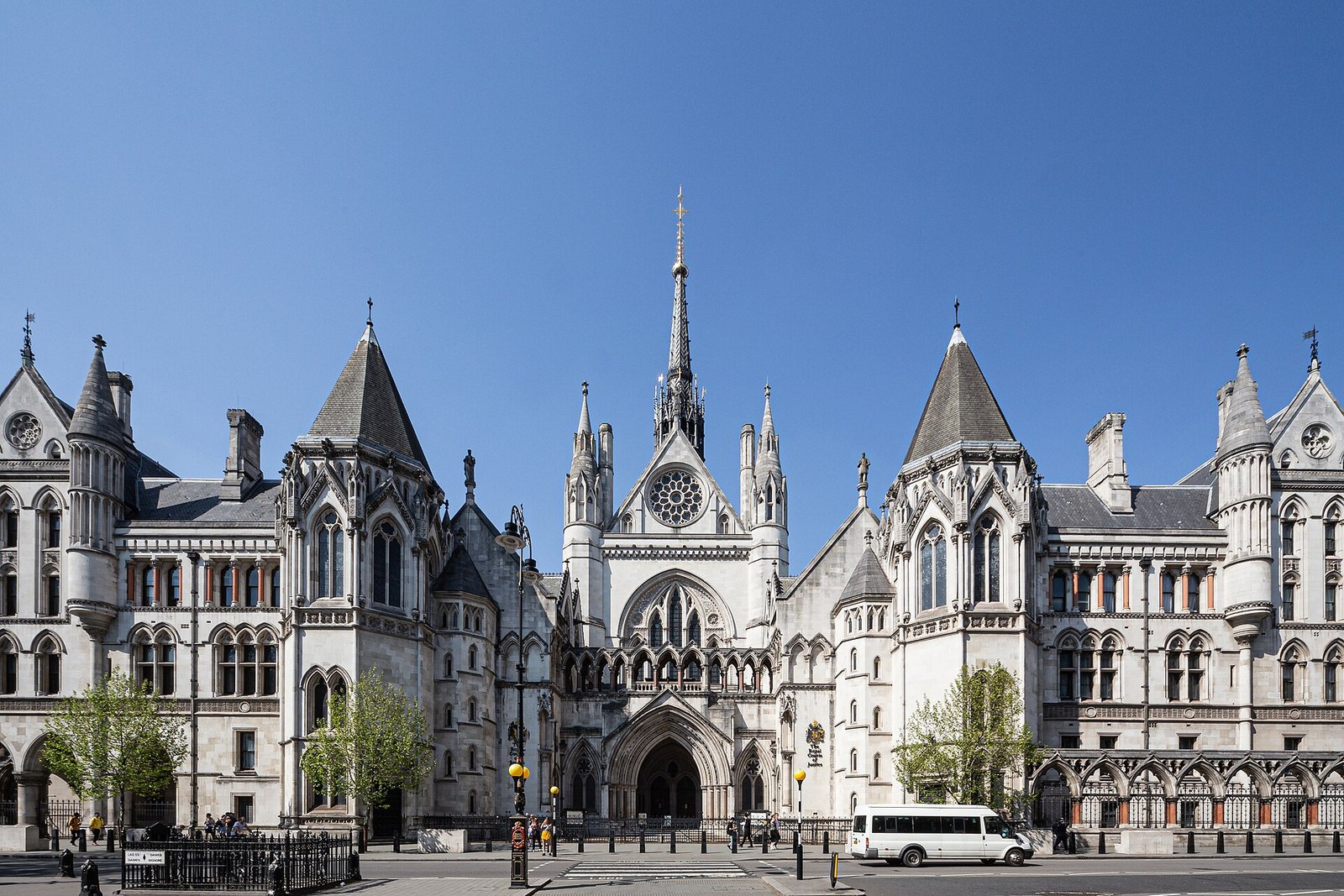
The legal framework: duty, breach, causation and loss
A claim against a professional is usually brought in both contract and the tort of negligence. The contract, typically the engagement letter and terms of business, defines what the adviser agreed to do. Section 13 of the Supply of Goods and Services Act 1982 implies a term that services will be carried out with reasonable care and skill. Alongside that, a concurrent duty of care in tort arises from the professional relationship.
Duty and its scope
Whether a duty exists, and to whom, is rarely the hard part where there is a retainer. The real fight is usually about the scope of the duty. In Manchester Building Society v Grant Thornton UK LLP and Khan v Meadows, both decided by the Supreme Court in 2021, the court restated the framework: a professional is liable only for losses that fall within the purpose of the duty it assumed. The court asks what risk the advice was meant to guard against, then whether the loss claimed flows from that risk.
The practical effect is that the claimant must show the loss is of a kind the adviser was responsible for, not merely that it would not have happened "but for" the advice. A distinction remains between giving information on one part of a decision and advising on the whole transaction, but the court now treats that as a tool rather than a rigid rule.
Breach and the professional standard
The standard is that of the reasonably competent practitioner in the relevant field, judged at the time and without hindsight. If a responsible body of the profession would have acted as the defendant did, there is generally no breach. That is why independent expert evidence from the same discipline is usually essential, except in straightforward solicitor cases where the court can assess the conduct itself.
Causation and loss of a chance
Where the question is what the claimant would have done with proper advice, the claimant must prove it on the balance of probabilities. Where the outcome depended on what a third party would have done, such as a counterparty in negotiation or a court in a lost claim, the court values the lost chance. In Perry v Raleys Solicitors the Supreme Court confirmed that a claimant alleging a solicitor lost them a claim must still prove, on the balance of probabilities, that they would have brought an honest claim in the first place.
Damages may be reduced for the claimant's own contributory negligence, and where several advisers share the blame, the defendant may seek contribution from others under the Civil Liability (Contribution) Act 1978. Liability caps in engagement letters are common and are tested for reasonableness where the statutory controls on unfair terms apply.
Regulators and complaint routes
Professional regulators, such as the Solicitors Regulation Authority for solicitors, the Bar Standards Board, the accountancy bodies and RICS for surveyors, deal with conduct, not compensation for negligence. Individuals, micro-enterprises and some small organisations can complain about legal services to the Legal Ombudsman, whose awards are capped and which has its own time limits. Larger businesses and higher-value claims go to court.
Limitation: the time limits that decide many claims
Time limits are where professional negligence claims are most often won or lost, and they need checking before anything else. The Limitation Act 1980 sets several overlapping periods, and a claimant may rely on whichever produces the latest date.
| Claim or rule | Period | When time starts | Practical note |
|---|---|---|---|
| Contract (simple contract) | Six years (section 5) | The date of breach, usually when the defective advice was given or the work done | Time can run before the client knows anything is wrong |
| Contract under deed | Twelve years (section 8) | The date of breach | Check whether the appointment or any warranty was executed as a deed |
| Tort of negligence | Six years (section 2) | When damage is first suffered, which can be later than the breach | Identifying when "damage" first occurred is often contested |
| Latent damage in negligence | Three years from knowledge (section 14A) | When the claimant knew, or should have known, the material facts about the damage and who caused it | Applies to negligence claims, not to claims framed only in contract |
| Longstop for negligence | Fifteen years (section 14B) | The last act or omission alleged to be negligent | Bars the claim even if damage has not yet occurred or been discovered |
| Contribution between defendants | Two years (section 10) | Judgment or settlement against the party seeking contribution | Relevant where a professional settles and then pursues another adviser |
Separate rules can postpone time where facts relevant to the claim were deliberately concealed, and different regimes apply to personal injury and to claims in Scotland, where prescription rules work differently. Parties commonly sign a standstill agreement to pause time while the pre-action protocol runs. The wording matters: an unclear standstill is a frequent source of satellite disputes. Our guide to limitation periods in the UK explains the wider rules.
If a claim may be close to any limitation date, secure a written standstill agreement or issue protective proceedings before doing anything else. The pre-action protocol does not stop time running, and a well-founded claim that is out of time is worth nothing.
Key decisions for claimants and professionals
Professional negligence work runs in both directions. Claimants need to decide whether a claim is worth pursuing and how. Professionals and their insurers need to decide whether to defend, settle or bring in other parties. Good professional negligence solicitors London businesses instruct will frame the decision around recoverable loss, not the strength of the grievance.
For claimants
The first question is whether the loss is recoverable at all, given the scope-of-duty principle, any liability cap and the client's own role in the decision. The second is whether the professional is insured and solvent. Most UK professionals carry compulsory or market-standard professional indemnity insurance, and the Third Parties (Rights against Insurers) Act 2010 can allow a claimant to proceed directly against the insurer if the professional becomes insolvent.
The third question is funding. Options include paying privately, a conditional fee agreement, after-the-event insurance, or third-party funding. Funding arrangements have been unsettled since the Supreme Court's 2023 decision in PACCAR, and the government did not include reversing legislation in the May 2026 King's Speech. We explain the current position in our note on litigation funding in the UK.
For professionals and their insurers
A professional facing a claim must notify its insurer promptly and in line with the policy, avoid admissions, and preserve the file. The insurer will usually control the defence. Early decisions include whether the claim is in time, whether the alleged loss falls within the scope of the duty, whether a liability cap applies, and whether another adviser or the client's own conduct contributed to the loss.
A professional is not an insurer of the client's commercial outcome. The question is always what risk the adviser took responsibility for, and whether the loss came from that risk.
The process, from complaint to resolution
Most professional negligence claims follow the Pre-Action Protocol for Professional Negligence. Claims against construction professionals usually fall under the construction and engineering protocol instead, and clinical claims under the clinical disputes protocol. The steps below show how professional negligence solicitors London claimants instruct will usually run a claim against a solicitor, accountant, valuer or financial adviser.
- Early assessment. Review the retainer, the advice and the loss; identify every limitation date; consider whether a standstill or protective proceedings are needed straight away.
- Preliminary notice. The claimant sends a short notice of the claim; the professional should acknowledge it within 21 days and notify its insurer.
- Letter of claim. A detailed letter sets out the facts, the allegations of breach, causation and an estimate of loss, with key documents. The professional should acknowledge it within 21 days.
- Investigation and response. The professional has three months from acknowledgment to investigate and send a letter of response, a letter of settlement or both. Extensions are common in complex cases and should be agreed in writing.
- Negotiation and ADR. Where the claim is not denied outright, the parties should negotiate and consider mediation. Courts can now order ADR and penalise an unreasonable refusal in costs, following Churchill v Merthyr Tydfil and the 2024 rule changes.
- Proceedings. If the matter does not settle, the claim is issued, usually in the Business and Property Courts for higher-value cases, or the County Court for smaller claims. Notice of intention to issue is normally given first.
- Disclosure and expert evidence. Each side discloses documents and, with the court's permission, serves expert reports on breach and often on quantum. Experts meet and produce a joint statement.
- Trial or settlement. Most claims settle, often at mediation or after expert evidence. Where a trial is needed, we work with specialist counsel, who will usually conduct the advocacy.
The broader civil procedure is covered in our guide to the civil litigation process in England, and our letter before claim guide explains how to frame the opening correspondence.
Documents and evidence to assemble
Professional negligence claims are document-heavy because the court must reconstruct what the adviser knew, what was asked of them and what they said. The earlier the papers are gathered, the better the assessment of merit and value.
- The retainer. Engagement letters, terms of business, scope variations, any liability cap and any limitation clause.
- The advice itself. Reports, emails, attendance notes, draft and final documents, and any caveats or qualifications given.
- Instructions and information supplied. What the client told the adviser and what documents it provided, because a professional is generally judged on the information it was given.
- The decision trail. Board minutes, internal emails and contemporaneous notes showing how the advice was used, which matter for causation and contributory negligence.
- Evidence of loss. Accounts, valuations, tax assessments, settlement agreements or judgments that quantify the loss, plus evidence of what would have happened with proper advice.
- The professional's file. A client is usually entitled to its file from a former solicitor; other professions have their own rules. Request it early.
Communications with your own lawyers about the potential claim will generally be protected by legal professional privilege, but internal discussions that do not involve lawyers may not be. Our note on legal professional privilege explains where the boundaries lie.
Risks and common mistakes
The same errors appear again and again in professional negligence disputes. Professional negligence solicitors London claimants and defendants instruct spend a good deal of time unpicking them.
Assuming limitation runs from discovery
Many claimants assume time only starts when they find out about the mistake. For contract claims that is wrong: time runs from the breach, which may be years earlier. The three-year knowledge period under section 14A applies only to negligence claims, and the fifteen-year longstop cuts off even claims nobody could have known about. Concealment can postpone time, but proving deliberate concealment is demanding. The safe course is to calculate every possible start date, assume the earliest, and protect the claim with a standstill agreement or protective proceedings while investigating.
Claiming losses outside the scope of the adviser's duty
Since Manchester Building Society v Grant Thornton, the court looks closely at what risk the adviser was protecting against. A valuer who overvalued a property may be liable for the consequences of the overvaluation, but not for the whole loss caused by a market fall that would have hit the lender anyway. A claim pleaded as "all losses flowing from the transaction" invites a strike-out or a large reduction. Plead the loss by reference to the specific risk the advice addressed, and test it against the counterfactual before the letter of claim goes out.
Ignoring the claimant's own role
Professionals regularly argue that the client knew the risk, ignored warnings or would have gone ahead anyway. Contributory negligence can reduce damages substantially, and a finding that the client would have acted the same way with proper advice defeats causation entirely. Claimants should review their own documents with the same rigour they apply to the adviser's file, address weak points in the letter of claim, and avoid overstating what they would have done differently.
Professionals making admissions or late notifications
A professional who apologises, admits fault or offers to fix the problem without speaking to its insurer can prejudice its cover. Most professional indemnity policies require prompt notification of circumstances that might give rise to a claim, and late notification can lead to disputes with insurers. The right course is to notify, preserve the file, and let a measured response go out once the facts are understood. Remedial work can still be offered, but with insurer consent and without admission.
Under-preparing expert evidence
Breach in most professional negligence cases turns on independent expert evidence from the same discipline. Instructing an expert late, choosing one without relevant experience, or giving an incomplete set of documents weakens a claim at its core. The expert's duty is to the court, so a report that reads as advocacy will be discounted. Identify the right expert early, agree the questions with counsel, and test the report against the other side's likely answers before relying on it.
Cross-border professional negligence claims
Many professional negligence disputes have an international element. A UK company may have relied on advice from an overseas firm, or a foreign investor may have relied on English solicitors, auditors or valuers when doing business in the UK. For professional negligence solicitors London clients instruct on these matters, the first questions are which law governs the retainer and the tort claim, and which courts have jurisdiction.
Engagement letters usually contain a choice of law and jurisdiction clause, and English law and the English courts are common choices. Where there is no clause, the court applies the post-Brexit retained rules on applicable law and the common law rules on jurisdiction, including whether permission is needed to serve proceedings abroad.
For clients connected with Bangladesh, typical scenarios include English solicitors who acted on a property or company transaction involving Bangladeshi parties, accountants advising British-Bangladeshi families on UK tax, and valuers or brokers advising on UK assets owned through Bangladeshi structures. Enforcement of an English judgment against a defendant whose assets are in Bangladesh needs separate local advice. Our UK-Bangladesh disputes team works with TRW & Co colleagues in Dhaka on those questions.
Claims involving advisers in the EU, the Gulf, Singapore or China raise similar issues: whether the adviser has assets or insurance reachable from England, whether an English judgment will be recognised where those assets are, and whether local regulatory complaints offer a faster route. Our guide to enforcing judgments explains how recovery abroad works.
How our professional negligence solicitors London team helps
TRW & Co's London office is authorised and regulated by the Solicitors Regulation Authority. We act for businesses, investors and individuals bringing claims against advisers, and we advise professionals on their exposure. We do not promise outcomes; we give a clear view of merit, value and cost.
Early merits and limitation review
We review the retainer, the advice and the loss, identify every limitation date and secure a standstill or protective proceedings where needed. You receive a written view on breach, causation, scope of duty and likely recoverable loss.
Claims against solicitors and barristers
Lost litigation, defective transaction documents, missed deadlines and conflicts of interest. We reconstruct the underlying matter and value the lost chance where the outcome depended on a third party or a court.
Claims against accountants and tax advisers
Audit failures, negligent tax planning, flawed due diligence and transaction advice. We work with forensic accountants and tax experts to separate the adviser's error from the client's commercial risk.
Valuers, surveyors and brokers
Lender and borrower claims over valuations, survey failures and insurance placement errors where cover turns out not to respond. We address scope of duty and market movement from the outset.
Defending professionals
We advise professionals and firms on notification, early response, protocol correspondence and contribution claims against other advisers, working alongside their insurers where cover is in place.
Settlement and ADR
Most claims resolve without trial. We prepare for mediation from the outset and, where advocacy in the higher courts is required, we instruct specialist counsel. See our mediation and ADR practice.
Professional negligence often overlaps with other disputes. We work with our commercial litigation, construction disputes and banking and financial disputes teams where the adviser's error sits inside a wider commercial conflict. The full range of our services is on the our practices page.
Checklist for decision-makers
Whether you are considering a claim or responding to one, these are the questions professional negligence solicitors London boards and insurers should answer first.
- What exactly did the adviser agree to do, and is there a liability cap or exclusion in the engagement terms?
- When was the advice given, when was damage first suffered, and when did you first know about it? What is the earliest possible limitation date?
- Is a standstill agreement in place, and does it cover all potential defendants and causes of action?
- What risk was the advice meant to protect against, and does the loss claimed fall within that risk?
- What would you have done with proper advice, and do your own documents support that account?
- Did anyone else contribute to the loss, including other advisers or your own team?
- Is the professional insured and solvent, and is there a direct route against the insurer if not?
- How will the claim be funded, and has an early mediation been considered?
- If a foreign party or foreign assets are involved, which law applies and where would a judgment be enforced?
If you need advice on a potential claim against an adviser, or on a claim made against your firm, contact our London office. Our professional negligence solicitors London team can review the papers and give an initial view on limitation and merit.
Frequently asked questions
01How do I know if my adviser was negligent or just gave advice I did not like?
Negligence means the adviser fell below the standard of a reasonably competent member of the same profession at the time, judged without hindsight. A poor result is not enough. If a responsible body of practitioners would have given the same advice, there is usually no breach. In most cases an independent expert from the same discipline is needed to assess the work. We review the retainer, the advice and the surrounding facts first, then tell you whether expert evidence is likely to support a claim before you spend money on it.
02How long do I have to bring a professional negligence claim?
Usually six years from the breach for a contract claim, or six years from when damage was first suffered for a negligence claim. For latent damage in negligence there is an alternative three-year period from when you knew, or should have known, the relevant facts, subject to a fifteen-year longstop from the negligent act. Deeds attract a twelve-year period. These rules interact in complicated ways, so treat the earliest possible date as the deadline and secure a standstill agreement or issue protective proceedings if time is short.
03Can I sue a professional who was not my adviser?
Sometimes. A third party can recover where the professional assumed responsibility to them, typically where the adviser knew the advice would be passed to and relied on by that person for a particular purpose. Auditors, valuers and solicitors giving undertakings or reliance letters are common examples. Many reports and engagement letters expressly exclude third-party reliance, which makes such claims harder. We look at what was said, who it was for and how it was used before advising on whether a non-client claim is realistic.
04What does the pre-action protocol require?
The Pre-Action Protocol for Professional Negligence expects the claimant to send a preliminary notice and then a detailed letter of claim with key documents. The professional should acknowledge each within 21 days and has three months from acknowledging the letter of claim to investigate and respond. The parties should then try to settle, including through ADR. The protocol does not stop limitation running, so a standstill agreement is normally put in place. Ignoring the protocol can lead to costs penalties if proceedings are later issued.
05Will the professional's insurer pay any damages?
In most cases a professional indemnity insurer will fund the defence and pay any settlement or judgment within the policy limits. Solicitors, accountants and many other regulated professionals must hold cover, and others usually do in practice. If the professional becomes insolvent, the Third Parties (Rights against Insurers) Act 2010 may let you claim directly against the insurer. Policy terms, limits, excesses and any coverage dispute between the professional and its insurer can still affect recovery, so we look at insurance early.
06Can I claim against my former solicitor for losing my case?
Yes, if the solicitor's negligence caused you to lose or settle a claim for less than it was worth. The court will not rerun the original case in full. It values the chance you lost, which means assessing how likely the original claim was to succeed and what it would have recovered. You must still prove that you would have pursued the original claim honestly and properly. Expert evidence, the original file and a careful reconstruction of the underlying dispute are central to this type of claim.
07Should a professional facing a complaint admit the mistake and offer to fix it?
Not without speaking to the insurer first. Most professional indemnity policies require prompt notification of claims and circumstances and prohibit admissions without consent. An informal admission can prejudice cover and the defence. That does not mean doing nothing: notify the insurer, preserve the file, and consider whether remedial work or an early settlement offer would reduce the loss. A measured response, made with insurer consent, is often the cheapest way to resolve the matter.
08Do professional negligence claims always go to court?
No. Many settle during the pre-action protocol or at mediation, often after each side has seen expert evidence on breach. English courts now expect parties to consider ADR seriously and can order it, with costs consequences for unreasonable refusal. Individuals and small businesses with complaints about legal services may also be able to use the Legal Ombudsman, which is free but has limits on awards. Where a trial is needed, we conduct the litigation and instruct specialist counsel for the advocacy.
Sources and official materials
- Pre-Action Protocol for Professional Negligence — Steps and timetable before issuing a claim
- Limitation Act 1980 — Time limits including sections 2, 5, 14A and 14B
- Manchester Building Society v Grant Thornton UK LLP [2021] UKSC 20 — Supreme Court on the scope of a professional's duty
- Perry v Raleys Solicitors [2019] UKSC 5 — Causation in lost-litigation claims against solicitors
- Third Parties (Rights against Insurers) Act 2010 — Direct claims against an insolvent defendant's insurer
- Civil Liability (Contribution) Act 1978 — Sharing liability between defendants
- Legal Ombudsman — Complaints scheme for consumers and small businesses about legal services
General information only, current as at 21 October 2026. It is not legal advice and does not create a solicitor–client relationship. It reflects the law of England and Wales unless stated otherwise; Scotland and Northern Ireland have separate legal systems, and the law changes frequently. Check current official sources and take advice on the facts of your matter.