
TRW & Co · UK–Bangladesh Corridor
UK–Bangladesh Disputes and Enforcement
UK Bangladesh cross-border dispute lawyers resolve supply, finance, investment and shareholder disputes between the two countries. The decisive question is enforcement: an English judgment does not automatically run in Dhaka, and a Bangladeshi judgment needs a fresh claim in London. Choosing the right forum, securing assets early and planning recognition from day one decides what you recover.
Key pointBecause Bangladesh is a New York Convention state but the route for executing English court judgments there must be confirmed case by case, London arbitration often gives the more reliable path to recovery against Bangladeshi assets.
At a glance
No Hague service route
Bangladesh is not a party to the Hague Service Convention, so serving English proceedings there needs a permitted local, diplomatic or court-authorised alternative method.
New York Convention applies
Bangladesh acceded to the New York Convention in 1992; foreign awards are enforced under its Arbitration Act 2001 on limited refusal grounds.
Judgments need checking
Direct execution under section 44A of the Bangladeshi Code of Civil Procedure depends on reciprocating-territory status, which must be confirmed on the facts.
Common-law claim in England
Bangladesh is not covered by the 1920 Act list or the Hague 2019 Convention, so its judgments are usually enforced by a fresh English claim.
Apostille now available
Bangladesh's accession to the Apostille Convention took effect in 2025, which can simplify authenticating documents for cross-border enforcement.
Swipe or scroll →
What UK–Bangladesh disputes involve
Trade, investment and family wealth flow constantly between the United Kingdom and Bangladesh, and so do disputes. UK Bangladesh cross-border dispute lawyers handle the claims that arise when a contract, an investment, a debt or an asset straddles both countries, and the practical question is not only who is right but where a win can be enforced.
The matters we see fall into recognisable groups. UK buyers in dispute with Bangladeshi garment and manufacturing suppliers over quality, delay or payment. Bangladeshi exporters chasing unpaid invoices from UK importers. Joint venture and shareholder disputes in companies with owners in both countries. Loans, guarantees and trade finance where the borrower and its assets are in Dhaka but the documents choose English law. Investment disputes with Bangladeshi counterparties or public bodies. And claims to trace money that has moved from Bangladesh into UK property or bank accounts.
These disputes are harder than purely domestic ones for three reasons. The two legal systems share common-law roots but have different procedures and timescales. Serving proceedings and obtaining evidence across the border is slower. And the route for turning an English judgment or a London arbitration award into money in Bangladesh, or the reverse, is narrower than many businesses expect.
TRW & Co is headquartered in Dhaka with a London office authorised and regulated by the Solicitors Regulation Authority. That combination lets one team plan the English proceedings and the Bangladeshi enforcement together, rather than discovering the gaps after judgment.
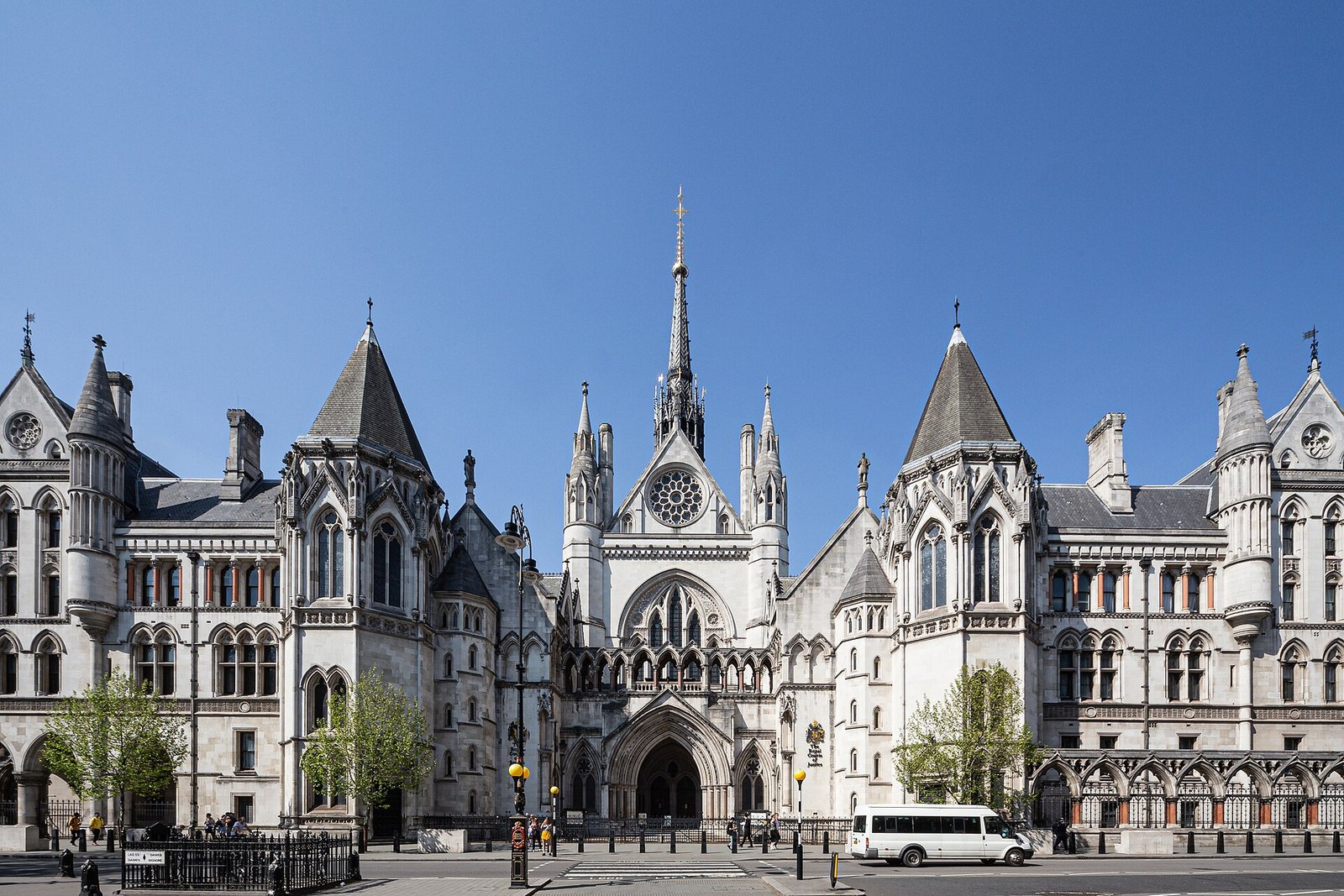
Choosing the forum: English courts, Bangladeshi courts or arbitration
Most of the value in a cross-border dispute is decided by the dispute resolution clause, often drafted years earlier. If there is no clause, or it is ambiguous, the first task of UK Bangladesh cross-border dispute lawyers is to establish which forums are available and which one produces an enforceable result.
| Forum | Typical use | Strengths | Enforcement in the other country |
|---|---|---|---|
| English High Court (Business and Property Courts) | Contracts governed by English law with English jurisdiction clauses; claims against UK-based parties | Specialist judges; strong disclosure and freezing injunction powers; predictable procedure | In Bangladesh, depends on whether the judgment can be executed directly or must be sued on as a fresh claim; the conclusiveness tests in the Bangladeshi Code of Civil Procedure apply |
| Bangladeshi courts | Defendants and assets in Bangladesh; land and local regulatory matters | Direct access to local assets; local interim orders | In England, a Bangladeshi money judgment is generally enforced by a fresh common-law claim on the judgment |
| London-seated arbitration (LCIA, ICC or ad hoc) | Supply, construction, finance and investment contracts | Neutral seat; confidential; the Arbitration Act 1996 as amended by the Arbitration Act 2025 | Bangladesh is a party to the New York Convention, and foreign awards are enforced under the Bangladeshi Arbitration Act 2001 |
| Arbitration seated in Dhaka or a third country | Contracts with Bangladeshi public bodies or local requirements; Singapore or Dubai seats for regional deals | Local familiarity or regional neutrality | Awards are enforceable in England under the New York Convention, subject to the limited refusal grounds |
Where both routes are open, arbitration often offers the more reliable enforcement path into Bangladesh, because the New York Convention framework is clearer than the position for foreign court judgments. Court proceedings in London remain the better choice where urgent asset preservation is needed in England, or where the defendant's assets are in the UK. Our page on Bangladesh arbitration in London covers clause drafting and institutional choice in more detail.
The legal framework on both sides
English law: jurisdiction and service
Proceedings in England are governed by the Civil Procedure Rules. To sue a defendant located in Bangladesh, a claimant usually needs the court's permission to serve outside the jurisdiction, showing that the claim falls within one of the jurisdictional gateways, that it has a serious issue to be tried, and that England is the proper place to bring it. A contract containing an English jurisdiction clause makes this far easier.
Bangladesh is not a party to the Hague Service Convention, so service generally proceeds through the methods permitted by Bangladeshi law, through diplomatic channels, or by an alternative method the English court authorises. Translation into Bengali may be required. Build realistic time for service into the strategy, because a defective service can unravel a default judgment later.
Enforcing Bangladeshi judgments in England
England has statutory registration schemes for judgments from listed countries. Bangladesh does not appear among the countries to which the Administration of Justice Act 1920 regime extends, and it is not a contracting state to the Hague Judgments Convention 2019. In practice a Bangladeshi money judgment is enforced in England by bringing a fresh claim on the judgment debt at common law, often with an application for summary judgment. The English court will not re-examine the merits but will refuse enforcement on limited grounds such as lack of jurisdiction, fraud or breach of natural justice.
Enforcing English judgments in Bangladesh
Under the Bangladeshi Code of Civil Procedure 1908, a decree from a superior court of a "reciprocating territory" can be executed directly under section 44A, while other foreign judgments must be sued upon as a new claim and treated as evidence. Every foreign judgment must also pass the conclusiveness tests in section 13, which exclude judgments given without jurisdiction, not on the merits, obtained by fraud, contrary to natural justice or founded on a breach of Bangladeshi law.
There is no publicly maintained, up-to-date list of reciprocating territories, so the route for an English judgment must be confirmed on the facts with Bangladeshi counsel. UK Bangladesh cross-border dispute lawyers should settle that question before proceedings are issued, because it affects the form of judgment worth seeking. Our guide to enforcing an English judgment in Bangladesh explains the practical steps.
Arbitration awards
Bangladesh acceded to the New York Convention in 1992. Its Arbitration Act 2001, based on the UNCITRAL Model Law, provides that a foreign arbitral award is binding and may be enforced by the court on application, with refusal only on grounds modelled on the Convention, including invalidity of the arbitration agreement, lack of proper notice, non-arbitrability and conflict with Bangladeshi public policy. In England, the Arbitration Act 1996, as amended by the Arbitration Act 2025 which came into force on 1 August 2025, governs London-seated arbitrations and the enforcement of foreign awards. See also our guide to enforcing a London award in Bangladesh.
Interim relief and tracing assets across the corridor
When a counterparty starts moving money, speed matters more than elegance. The English High Court can grant a freezing injunction over assets in England and, where justified, a worldwide freezing order binding the defendant personally. It can also order disclosure of assets, and grant relief in support of foreign proceedings or arbitrations seated elsewhere.
Courts in Bangladesh have their own powers to grant temporary injunctions and attachment before judgment, and the Arbitration Act 2001 allows the court to grant interim measures in support of arbitration. Coordinating applications in both countries, so that an order in one does not tip off the defendant before the other is in place, is one of the main reasons clients instruct UK Bangladesh cross-border dispute lawyers with offices in both jurisdictions.
For money that has moved from Bangladesh into UK property, companies or bank accounts, civil claims in deceit, conspiracy, breach of trust and knowing receipt can be combined with proprietary tracing. Public registers such as HM Land Registry and the Register of Overseas Entities help locate assets. Our page on Bangladesh-linked asset recovery in the UK explains the tools in more depth, and our civil fraud and asset recovery team handles the English proceedings.
Before applying for a freezing injunction against a Bangladeshi defendant, map where the assets actually are and whether an English order will be respected by the banks or registries holding them. An order that cannot bite can still be useful as leverage, but the cost-benefit decision should be made with that knowledge, not after the hearing.
How a UK–Bangladesh dispute typically runs
The sequence below reflects a contract claim by a UK business against a Bangladeshi counterparty with assets mainly in Bangladesh. It adapts readily to the reverse scenario.
- Clause and enforcement review. We read the governing law, jurisdiction or arbitration clause and map the counterparty's assets. This decides whether to sue in London, arbitrate, or go directly to the Bangladeshi courts.
- Evidence and limitation check. Limitation is checked under English law and, where relevant, under the Bangladeshi Limitation Act 1908. Documents are preserved and key Bengali-language records are translated.
- Letter before claim. A reasoned letter is sent, complying with the English pre-action rules, often in parallel with a commercial approach through local contacts in Dhaka or Chattogram.
- Interim protection. If there is a risk of dissipation, applications for freezing or attachment orders are prepared in England and Bangladesh in a coordinated sequence.
- Proceedings or arbitration. Proceedings are issued and served, with permission to serve out where needed, or a notice of arbitration is filed with the chosen institution.
- Judgment or award. The case proceeds through pleadings, disclosure, evidence and a hearing. Settlement and mediation are explored throughout.
- Recognition and enforcement. The judgment or award is presented for enforcement in Bangladesh under the Code of Civil Procedure or the Arbitration Act 2001, with certified, translated and authenticated documents.
Documents and evidence to assemble
Cross-border cases fail on paperwork more often than on law. Collect these early, and keep originals or certified copies, because courts in both countries scrutinise authenticity.
- The signed contract and every amendment, purchase order, letter of credit or guarantee, including Bengali versions and translations.
- Evidence of the counterparty's corporate identity, such as records from the Registrar of Joint Stock Companies and Firms in Bangladesh, and the authority of the signatory.
- Correspondence, inspection reports, shipping documents and bank records showing performance, default and loss.
- For enforcement, a sealed or certified copy of the English judgment or the arbitral award, the arbitration agreement, and evidence of service.
- Authentication of documents: Bangladesh acceded to the Apostille Convention with effect from 2025, which can simplify the process, but confirm what the receiving court requires for each document.
- A note of the counterparty's known assets, bank relationships and group companies in Bangladesh, the UK and third countries.
Experienced UK Bangladesh cross-border dispute lawyers will also check that witness evidence can be obtained in a usable form, since key individuals may be reluctant to travel or to give statements against a local business partner. Our guide to legalising UK documents for use in Bangladesh sets out the authentication steps in practice.
Risks and common mistakes
Winning a judgment that cannot be enforced
The most expensive mistake is obtaining an English judgment against a defendant whose only assets are in Bangladesh without first checking how that judgment will be enforced there. If direct execution under section 44A is not available, the judgment becomes the basis of a new suit, which adds time and cost and invites fresh defences. Plan the enforcement route before choosing the forum, and consider whether arbitration, a local claim or security over local assets would produce a faster recovery.
Defective service on a Bangladeshi defendant
Because Bangladesh is not a Hague Service Convention state, service must follow a method permitted by the English rules and not contrary to Bangladeshi law. Shortcuts, such as relying on email without the court's authorisation, risk a default judgment being set aside and undermine enforcement in Bangladesh, where the court will ask whether the defendant had proper notice. Take advice before attempting service and keep a full record of each step.
Ambiguous or pathological dispute clauses
Contracts between UK and Bangladeshi parties sometimes contain clauses that refer to both courts and arbitration, name an institution that does not exist, or omit the seat. These create threshold fights that delay the merits by months. The Arbitration Act 2025 introduced a default rule that the law of the seat governs the arbitration agreement unless the parties expressly choose otherwise, which helps but does not cure every defect. Review templates now, before a dispute arises.
Public policy objections in Bangladesh
Both the conclusiveness test for foreign judgments and the Arbitration Act 2001 allow a Bangladeshi court to refuse enforcement on public policy grounds. Claims involving penalties, foreign exchange controls or matters governed by local regulation can attract this objection. Structuring claims and remedies with Bangladeshi law in mind, and being able to show that the defendant had a fair opportunity to be heard, reduces the risk materially.
Ignoring foreign exchange rules on payment
Even after a successful judgment or settlement, remitting money out of Bangladesh involves authorised dealer banks and the foreign exchange framework administered by Bangladesh Bank. Settlement agreements should address how and when payment will be remitted, which bank will process it and what documents will support the transfer. Otherwise a settlement agreed in London can stall at the remittance stage.
The wider cross-border angle
Many UK–Bangladesh disputes involve a third country. Supply chains run through Singapore, Hong Kong or China; financing may come from Gulf banks; holding companies may sit in Dubai or the EU. Each adds a further enforcement jurisdiction and, sometimes, a better place to find assets. Experienced UK Bangladesh cross-border dispute lawyers will look for the jurisdiction where recovery is quickest, not only the one named in the contract.
Where English proceedings need evidence from Bangladesh, letters of request and witness arrangements take time, and witnesses may need to give evidence remotely with the permission of the court. Expert evidence on Bangladeshi law is often required where foreign law is in issue, because English courts treat foreign law as a question of fact to be proved.
Disputes with Bangladeshi state entities
Contracts with Bangladeshi ministries, state-owned enterprises and public utilities raise extra questions. In English proceedings, the State Immunity Act 1978 gives foreign states general immunity, subject to exceptions that include commercial transactions and written submission to the jurisdiction, while enforcement against state property is restricted further. Arbitration clauses with an express waiver of immunity from execution are therefore valuable. UK Bangladesh cross-border dispute lawyers will also check whether an investment treaty protection is available to a UK investor in addition to its contractual rights, and whether local procurement or approval rules affect the validity of the contract itself.
Practical leverage in these disputes often comes from the commercial relationship rather than the court: ongoing projects, financing from development lenders and reputational considerations can all encourage a negotiated outcome. Mediation and structured negotiation, run alongside a credible arbitration timetable, frequently produce the best results.
In a UK–Bangladesh dispute, the first question is not "can we win?" but "where will we collect?" The answer usually decides the forum.
How TRW & Co helps as UK Bangladesh cross-border dispute lawyers
Our London office conducts English litigation and arbitration, and our Dhaka headquarters and offices in Chattogram and Sylhet support work on the ground in Bangladesh. As UK Bangladesh cross-border dispute lawyers, we offer one strategy across both systems.
Forum and enforcement mapping
A written assessment of where to bring the claim and how any judgment or award would be enforced, with realistic timescales in both countries.
English litigation
Claims in the Business and Property Courts, including permission to serve out and service in Bangladesh. Where advocacy in the higher courts is required, we instruct specialist counsel.
London arbitration
Advice and representation in LCIA, ICC and ad hoc arbitrations involving Bangladeshi parties, and clause drafting for new contracts.
Interim relief
Coordinated freezing and attachment applications in England and Bangladesh, sequenced to avoid tipping off a defendant.
Enforcement in Bangladesh
Execution and enforcement proceedings for English judgments and foreign awards, with document authentication and translation managed end to end.
Settlement and remittance
Mediated or negotiated settlements drafted so that payment can actually be remitted through the Bangladeshi banking system.
Related services include commercial litigation, international arbitration, enforcement of judgments and our broader UK–Bangladesh corridor practice. Browse all of our practices for related expertise.
Checklist for decision-makers
- Does the contract choose English law, Bangladeshi law or neither, and is the dispute clause clear and workable?
- Where are the counterparty's assets, and how would a judgment or award be enforced there?
- Have you checked limitation under both English and Bangladeshi law?
- Are original and translated documents, with authentication, available or obtainable?
- Is there a risk of assets being moved, and would interim relief in one or both countries be effective?
- Would arbitration, mediation or a negotiated settlement deliver faster recovery than litigation?
- How would any payment be remitted out of Bangladesh, and through which bank?
To speak to UK Bangladesh cross-border dispute lawyers in confidence, contact our London office at Holborn Gate, 330 High Holborn, London WC1V 7QH, email info@trw.co or call +880 1779 127165.
Frequently asked questions
01Can an English court judgment be enforced in Bangladesh?
Yes, but the route matters. If the UK is treated as a reciprocating territory, a decree of a superior English court can be executed directly under section 44A of the Code of Civil Procedure 1908. Otherwise the judgment-holder must bring a fresh suit in Bangladesh, where the English judgment is evidence. In either case the judgment must satisfy the conclusiveness tests in section 13, including jurisdiction, a decision on the merits and natural justice. Because there is no public, current list of reciprocating territories, confirm the route with Bangladeshi counsel before relying on it.
02Is a London arbitration award easier to enforce in Bangladesh than a court judgment?
Often, yes. Bangladesh is a party to the New York Convention, and its Arbitration Act 2001 treats foreign awards as binding and enforceable on application to the court. The grounds for refusal are limited and mirror the Convention, such as an invalid arbitration agreement, lack of proper notice, matters that cannot be arbitrated, or conflict with public policy. Enforcement can still be contested and take time, but the framework is clearer than for foreign court judgments, which is why many UK–Bangladesh contracts choose London arbitration.
03How do I serve English court proceedings on a company in Bangladesh?
You will usually need the English court's permission to serve outside the jurisdiction unless the contract allows service without permission. Because Bangladesh is not a party to the Hague Service Convention, service must be effected by a method permitted by Bangladeshi law, through diplomatic channels or by an alternative method authorised by the English court. Documents may need translating into Bengali. Proper service is essential, because a Bangladeshi court asked to enforce the judgment will examine whether the defendant had fair notice.
04Can I enforce a Bangladeshi court judgment against assets in England?
Usually by bringing a new claim in the English courts based on the Bangladeshi judgment debt, rather than by simple registration, because Bangladesh is not among the countries covered by the statutory registration schemes or the Hague Judgments Convention 2019. The English court will not reopen the merits. It will enforce a final money judgment from a court that had jurisdiction by English standards, unless it was obtained by fraud, contrary to natural justice or public policy. Summary judgment can make the process quick where there is no real defence.
05Can assets in the UK be frozen in a dispute with a Bangladeshi party?
Yes. The English High Court can grant a freezing injunction where there is a good arguable claim and a real risk that assets will be dissipated. The court can also grant interim relief in support of proceedings or arbitrations taking place elsewhere, including in Bangladesh. Applications are often made without notice and require full and frank disclosure of all material facts. Where assets are in both countries, applications should be coordinated so that relief in one jurisdiction does not alert the defendant before the other is obtained.
06Do I need lawyers in both the UK and Bangladesh?
In most substantial disputes, yes. English proceedings must be conducted under English procedure, while enforcement, local interim relief and land or regulatory issues in Bangladesh require Bangladeshi lawyers. Problems arise when the two teams work in sequence rather than together, for example when an English judgment is obtained in a form that is hard to enforce locally. TRW & Co's London office and Dhaka headquarters let one coordinated team plan both ends of the dispute from the outset.
07What should a UK–Bangladesh contract say about disputes?
It should choose a governing law, a single forum and, if arbitration, a seat, an institution, the number of arbitrators and the language. Avoid hybrid clauses that refer to both courts and arbitration without clear rules. Consider whether interim relief in Bangladeshi courts should be expressly preserved. Under the Arbitration Act 2025 the law of the seat governs the arbitration agreement unless the parties expressly agree otherwise. Our guide to English law and London arbitration in Bangladesh contracts explains drafting choices.
Sources and official materials
- Civil Procedure Rules — Service out of the jurisdiction and English procedure
- HCCH Service Convention status table — Contracting parties to the Hague Service Convention
- Reciprocal Enforcement of Judgments (Administration of Justice Act 1920, Part II) (Consolidation) Order 1984 — Countries covered by the 1920 Act registration scheme
- HCCH 2019 Judgments Convention status table — Contracting states to the Judgments Convention
- Arbitration Act 1996 — Law governing London-seated arbitration
- Arbitration Act 2025 — Amendments to the 1996 Act in force from August 2025
- New York Convention — Recognition and enforcement of foreign arbitral awards
General information only, current as at 21 October 2026. It is not legal advice and does not create a solicitor–client relationship. It reflects the law of England and Wales unless stated otherwise; Scotland and Northern Ireland have separate legal systems, and the law changes frequently. Check current official sources and take advice on the facts of your matter.