
TRW & Co · Real Estate & Construction
Property Litigation Solicitors in London
Property litigation solicitors London landlords, tenants and investors instruct resolve disputes over leases, possession, title, boundaries and building condition. Many property remedies are time-limited or lost by conduct, so early, procedurally precise advice matters. With section 21 abolished for residential lets and leasehold reform rolling out in 2026, the rules for possession and service charge disputes are changing too.
Key pointIn forfeiture cases, a single rent demand sent after the landlord knows of a breach can waive the right to forfeit for that breach, so the first practical step is to stop automated demands, not to change the locks.
At a glance
Ten-year adverse possession rule
For registered land, a squatter can apply to be registered after ten years' adverse possession, but the owner can object and narrow conditions then apply.
Section 21 abolished
The Renters' Rights Act 2025 ended section 21 no-fault possession for residential tenancies in England from 1 May 2026; landlords must use statutory grounds.
Section 146 notice first
Before forfeiting for breaches other than non-payment of rent, landlords must serve a section 146 notice under the Law of Property Act 1925.
Residential squatting is criminal
Squatting in a residential building is an offence under section 144 LASPO 2012; commercial squatting is generally a civil matter for possession proceedings.
Dilapidations damages capped
Section 18(1) of the 1927 Act caps disrepair damages at the reduction in the value of the landlord's reversion.
Swipe or scroll →
What property litigation solicitors London clients instruct handle
Property litigation solicitors London landlords, tenants, investors and developers instruct resolve disputes about land and buildings: who owns it, who may use it, what is owed under a lease, and who must put right a defect or breach. The work spans negotiation, expert determination, tribunal applications and court claims, often against a commercial deadline.
A property issue becomes a dispute when one side's position starts to cost the other money or block a plan: a tenant holding over after a failed break, a neighbour's extension crossing a boundary, squatters in a vacant building, or a rent review that cannot be agreed. Early advice keeps options open, because many property remedies are time-limited or can be lost by conduct.
This page covers England and Wales. Scotland and Northern Ireland have their own courts, land registers and tenancy laws, and we work with local counsel there. For the transactional side of the same assets, see our commercial property page.
Courts, tribunals and procedural rules
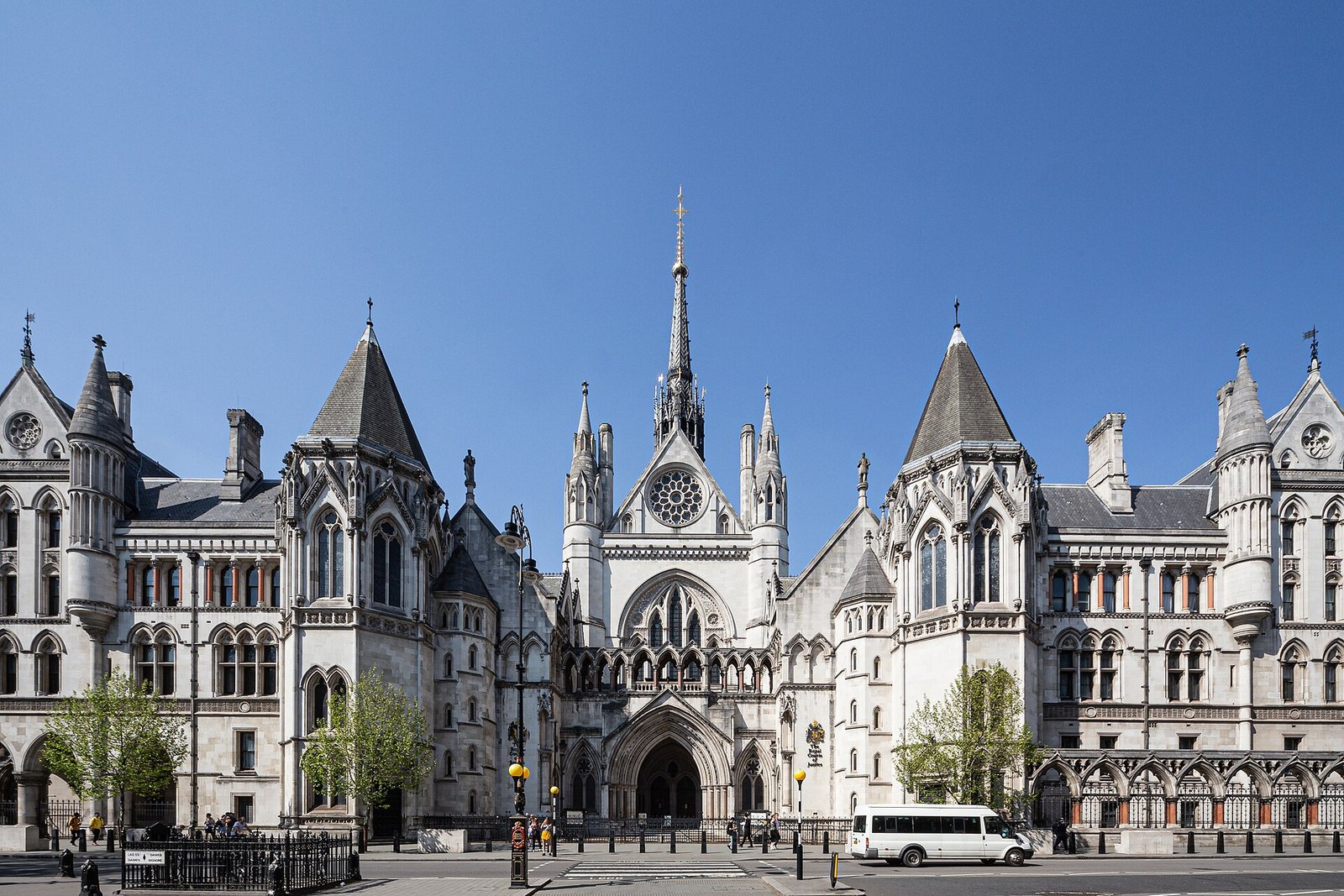
Choosing the right forum is one of the first decisions property litigation solicitors London clients rely on us to get right. The wrong venue wastes time and can carry costs consequences.
| Forum | Typical property work | Notes |
|---|---|---|
| County Court | Possession claims, 1954 Act lease renewals, rent and service charge debts, most boundary and nuisance claims | Default venue for most possession claims under CPR Part 55 |
| High Court, Business and Property Courts | Complex or high-value land, trust of land and lease disputes (including the Property, Trusts and Probate List) | Suits claims with complex facts, important points of law or urgent injunctions |
| Technology and Construction Court | Building defects, professional negligence of surveyors, architects and engineers | Part of the Business and Property Courts |
| First-tier Tribunal (Property Chamber) | Residential service charges, leasehold enfranchisement, disputed HM Land Registry applications | Land registration division determines objections referred by HM Land Registry |
| Upper Tribunal (Lands Chamber) | Discharge or modification of restrictive covenants, appeals, some telecoms Code disputes | Specialist judges and surveyor members |
| Arbitration or expert determination | Rent reviews, service charge and valuation disputes where the lease provides | Governed by the lease and, for arbitration, the Arbitration Act 1996 as amended |
Possession claims follow CPR Part 55. Most other claims must follow the Practice Direction on Pre-Action Conduct or a specific protocol, such as the Dilapidations Protocol. Tribunal details are on the First-tier Tribunal (Property Chamber) and Upper Tribunal (Lands Chamber) pages.
Choosing a strategy: negotiate, determine or litigate
Not every property dispute belongs in court. Where the issue is purely valuation, such as a rent review or the cost of reinstatement works, expert determination is usually quicker and cheaper, although there is very limited scope to challenge the result. Arbitration gives a binding award with a narrow right of appeal and keeps the dispute private.
Court proceedings suit cases that need injunctions, possession orders, findings of fact on disputed evidence, or a ruling that binds third parties such as HM Land Registry. Property litigation solicitors London clients consult should weigh speed, cost, confidentiality and enforceability before choosing, and check whether the lease already dictates the forum.
Commercial lease disputes
Lease disputes make up the largest share of the work property litigation solicitors London businesses bring to us. They tend to cluster around five events.
Contested 1954 Act renewals
Where a landlord opposes a new lease under section 30(1) of the Landlord and Tenant Act 1954, typically on redevelopment or own-occupation grounds, the court often decides that ground first. The landlord must prove a genuine, settled intention and a reasonable prospect of carrying it out. Unopposed renewals usually turn on rent, length and break rights.
Forfeiture and relief
Forfeiture by re-entry or proceedings ends a lease for tenant breach. For breaches other than non-payment of rent, a notice under section 146 of the Law of Property Act 1925 must come first. Tenants, subtenants and mortgagees can apply for relief, and the court has wide discretion. Our article on forfeiting a commercial lease sets out the steps.
Dilapidations
End-of-lease claims for disrepair and reinstatement are capped by section 18(1) of the Landlord and Tenant Act 1927 at the reduction in value of the landlord's reversion. Expert valuation evidence usually drives settlement. See our guide to dilapidations claims.
Rent review and service charges
Rent review disputes are normally decided by an arbitrator or independent expert, depending on the lease. Service charge disputes in commercial leases are contractual; for residential long leases, the Landlord and Tenant Act 1985, section 27A lets the First-tier Tribunal decide whether charges are payable and reasonable.
In rent review references, the quality of comparable evidence and the hypothetical lease assumptions in the review clause usually decide the outcome. Missing a time limit in the review machinery is rarely fatal unless the lease makes time of the essence, so check the clause before conceding anything.
Break clause disputes
Break clauses are construed strictly, and a tenant that misses a condition can remain liable for years of rent. Disputes typically concern vacant possession, outstanding sums or the validity of the notice. Day-to-day lease advice sits with our landlord and tenant team.
Title, boundary and neighbour disputes
Adverse possession
For registered land, Schedule 6 to the Land Registration Act 2002 allows a squatter to apply for registration after ten years' adverse possession. The registered owner is notified and can object, and the applicant then succeeds only on narrow grounds, including estoppel or a reasonable boundary mistake. For unregistered land, the older twelve-year rule under the Limitation Act 1980 still matters.
Owners of vacant or rarely visited land should inspect regularly, secure boundaries and respond promptly to any notice from HM Land Registry. The objection window is short, and a missed notice can transform a weak claim into a strong one. Granting the occupier a licence can also stop time running, because possession with permission is not adverse.
Boundaries and easements
Boundary disputes are common in London, where plans are small-scale and buildings abut. Title plans show general boundaries only, so evidence from historic deeds, photographs and surveyors is usually needed. Easement disputes cover rights of way, drainage, support and access for maintenance.
Owners can apply to HM Land Registry for a determined boundary, which fixes the exact line on the title plan, but the application needs an accurate surveyed plan and can trigger an objection that is referred to the First-tier Tribunal. In many cases a negotiated boundary agreement, recorded on both titles, is cheaper and preserves neighbour relations.
Rights of light and party walls
Rights of light can delay or stop development, and injunctions remain possible where damages would not be adequate. Developers should identify affected neighbours early and consider insurance or release agreements. Works to party walls require notice under the Party Wall etc. Act 1996; GOV.UK guidance says notice for party wall works must be given between two months and a year before work starts.
Restrictive covenants
Where an old covenant blocks a use or development, the owner can seek its discharge or modification from the Upper Tribunal (Lands Chamber) under section 84 of the Law of Property Act 1925, negotiate a release, or rely on title insurance. Each option has different timing and cost; development teams should include our planning and development colleagues.
Possession, trespass, injunctions and residential disputes
Unauthorised occupation of vacant commercial property remains a problem in London. Owners usually seek possession under CPR Part 55, which includes a fast-track interim possession order procedure in some cases. Squatting in a residential building is a criminal offence under section 144 of the Legal Aid, Sentencing and Punishment of Offenders Act 2012, but squatting in commercial premises is generally a civil matter.
Injunctions are also used to stop nuisance, unauthorised works, breaches of covenant and protest activity. Applicants usually have to give a cross-undertaking in damages, so the commercial risk of the injunction itself should be assessed before applying.
Telecoms operators' rights to install and keep apparatus are governed by the Electronic Communications Code in Schedule 3A to the Communications Act 2003. Code disputes over access, terms and removal follow their own procedures and are often decided by the Upper Tribunal.
Residential and leasehold disputes after the 2026 reforms
For residential landlords, the Renters' Rights Act 2025 abolished section 21 "no fault" possession from 1 May 2026, converting most assured shorthold tenancies into periodic assured tenancies. Possession now depends on the statutory grounds, so evidence and notice validity matter more than ever. Our article on the Renters' Rights Act explains the changes.
The Leasehold and Freehold Reform Act 2024 is being brought into force in stages. Some changes, such as removing the two-year ownership requirement for lease extensions, are already in force; others, including the new valuation method, await regulations. Disputes over enfranchisement and service charges continue in the First-tier Tribunal in the meantime.
In property disputes, the documents usually decide the case before the lawyers do. The party that can prove what was agreed, when, and what the building looked like at the time starts with the advantage.
How a property dispute usually runs
Each case is different, but a typical contested matter handled by property litigation solicitors London clients instruct moves through these stages.
- Early assessment. Review the lease, title and correspondence, identify limitation dates and urgent risks (waiver, statutory deadlines, ongoing trespass), and set objectives.
- Preserve evidence. Secure photographs, surveys, inspection records, emails and site access logs; appoint experts where condition or value is in issue.
- Pre-action correspondence. Send a letter of claim compliant with the relevant protocol or practice direction, and respond to the other side's case.
- Settlement and ADR. Explore negotiation, mediation, expert determination or a without-prejudice meeting; courts expect parties to consider ADR seriously.
- Issue proceedings. Start the claim in the right court or tribunal, applying for an injunction or interim possession order where urgency requires.
- Case management and disclosure. Comply with directions, exchange documents and witness statements, and coordinate expert reports.
- Trial or determination. Prepare for the hearing, instructing specialist counsel where advocacy in the higher courts is needed.
- Enforcement. Obtain a writ or warrant of possession, enforce money judgments and register any order affecting title.
Documents and evidence to gather
- The lease, licences, deeds of variation, rent review memoranda and any side letters.
- Official copies of the register and title plan, plus historic deeds and plans for boundary and easement cases.
- All correspondence, notices and proof of service, including section 25 notices, break notices and section 146 notices.
- Rent and service charge statements, demands and payment history.
- Schedules of condition, dilapidations, surveyor reports and photographs with dates.
- Planning permissions, building control records and contractor documents for works-related disputes.
- Evidence of occupation and use, such as site visit records, utility bills and witness accounts, for possession and adverse possession cases.
If you are considering forfeiture, stop all automated rent demands immediately and route every communication with the tenant through one person. A single demand for rent falling due after you know of the breach can waive the right to forfeit for that breach.
Risks and common mistakes
Missing a limitation or statutory deadline
Property claims carry hard deadlines: limitation periods for contract and tort claims, the 1954 Act timetable for renewal applications, the six-month window for notices to former tenants and guarantors, and protocol timings. Some deadlines cannot be extended once missed.
At the first sign of a dispute, list every relevant date and diarise it with a margin. Where time is short, issue protective proceedings or agree a written standstill rather than relying on negotiations continuing.
Skipping the pre-action protocol
Courts expect parties to exchange information and consider settlement before issuing. A party that ignores the relevant protocol or practice direction can face costs sanctions even if it wins on the merits.
The Dilapidations Protocol, for example, expects a quantified demand and a diminution case to be exchanged before proceedings. Build these steps into the timetable from the start.
Self-help that goes too far
Changing locks, removing goods or blocking access can be lawful in limited circumstances but unlawful in others. Peaceable re-entry where anyone lives at the premises, or taking control of goods outside CRAR rules, can expose the owner to damages and, in some cases, criminal liability.
Take advice before any self-help step and document the basis for it carefully.
Underestimating injunction risk
An applicant for an interim injunction is normally asked to give an undertaking to compensate the respondent if the injunction is later found to have been wrongly granted. On a stalled development, that exposure can be large.
Equally, a developer that ignores a neighbour's rights of light or covenant may face an injunction rather than damages. Assess the injunction risk on both sides before committing to a strategy.
Ignoring offers and costs tools
Part 36 offers and Calderbank offers can shift costs significantly at the end of a case. Parties who refuse reasonable offers, or who refuse mediation without good reason, may pay more in costs than the sum in dispute.
Review settlement options at each stage and make well-judged offers early.
Cross-border property disputes
Disputes over English land must be decided under English law and, for title questions, by the English courts or tribunals, whatever the parties' nationality. Cross-border elements usually arise around the people and money: overseas landlords, foreign guarantors, and assets abroad against which a judgment must be enforced.
Since 1 July 2025 the Hague Judgments Convention 2019 has applied in the UK, which can help enforce English money judgments in other contracting states. Where it does not apply, enforcement depends on the local law of the country concerned. Our offices in Dhaka, Singapore and Dubai can coordinate enforcement steps locally.
Overseas landlords and investors should also make sure their Register of Overseas Entities filings are current, because a non-compliant entity faces restrictions on dealing with its UK land, which can complicate settlements involving a surrender or transfer. Service of proceedings on a party outside England and Wales may need the court's permission, which adds time to the timetable.
For disputes over land in Bangladesh involving UK residents, see our UK–Bangladesh disputes page and our article on land disputes in Bangladesh.
How TRW & Co helps as property litigation solicitors London clients trust
We act for landlords, tenants, investors, developers and lenders. We conduct litigation and arbitration from our London office; where advocacy in the higher courts is required, we instruct specialist counsel.
Lease disputes
We handle contested renewals, forfeiture and relief, break clause disputes, rent review references and service charge claims for landlords and tenants.
Dilapidations
We run claims and defences under the Dilapidations Protocol, working with building surveyors and valuers on schedules and diminution evidence.
Title and boundaries
We act on adverse possession, boundary, easement, rights of light and restrictive covenant disputes, including Land Registry objections and Upper Tribunal applications.
Possession and injunctions
We obtain possession orders against trespassers and tenants, and seek or resist urgent injunctions on development and nuisance disputes.
Construction-linked claims
We coordinate with our construction disputes team on building defects and professional negligence claims.
Enforcement
We enforce judgments in England and coordinate recovery abroad with our international offices and trusted local counsel.
See all our practice areas or contact the London office at Holborn Gate, 330 High Holborn, London WC1V 7QH (info@trw.co, +880 1779 127165). We set out options, risks and likely costs exposure at the start; we do not promise outcomes.
Checklist before you start a property dispute
- Identify every limitation and statutory deadline and diarise it.
- Stop automated rent demands if forfeiture is being considered.
- Secure documents, photographs and site evidence now.
- Check the title register and the identity of every party.
- Choose the right forum: County Court, High Court, tribunal or the lease's chosen process.
- Follow the relevant pre-action protocol or practice direction.
- Assess the cost and risk of any injunction, including the cross-undertaking.
- Consider mediation and make a well-judged early offer.
- Plan enforcement before issuing, especially against overseas parties.
- Brief property litigation solicitors London disputes need before taking any self-help step.
Frequently asked questions
01How do I remove squatters from my commercial building?
Squatting in commercial premises is generally a civil matter, so the owner usually needs a possession order under CPR Part 55. In some cases an interim possession order offers a faster route, with criminal consequences if the occupiers do not leave. Gather evidence of ownership and when you discovered the occupation, and avoid self-help that could involve force. Squatting in a residential building is a criminal offence under section 144 of LASPO 2012, which the police can deal with directly.
02Can my tenant get relief from forfeiture?
Yes. Tenants, subtenants and mortgagees can apply to the court for relief from forfeiture. For non-payment of rent, relief is usually granted if the arrears and costs are paid and the application is made promptly. For other breaches, the court considers the seriousness of the breach, whether it has been remedied and the conduct of both parties. Landlords should factor the prospect of relief into their strategy, and tenants should apply without delay.
03My neighbour's extension crosses the boundary. What can I do?
First, establish where the legal boundary is. HM Land Registry title plans show general boundaries only, so evidence from deeds, historic plans and a surveyor is often needed. If the encroachment is confirmed, options include negotiation, mediation, a determined boundary application to HM Land Registry, or a court claim for trespass with an injunction or damages. Acting quickly matters, because delay can weaken an injunction claim and long occupation can support adverse possession arguments.
04How long does property litigation take?
It varies widely. An undefended possession claim may conclude in a matter of weeks or months, while a defended dilapidations or rights of light claim can take a year or more to reach trial. Many cases settle after the pre-action stage or mediation. Timing depends on court listings, the need for expert evidence, interim applications and the parties' willingness to negotiate. We give a realistic timetable at the outset and update it as the case develops.
05What changed for residential possession claims in 2026?
The Renters' Rights Act 2025 abolished section 21 no-fault possession in England from 1 May 2026, and most assured shorthold tenancies became periodic assured tenancies. Landlords now need to rely on the statutory possession grounds, with the correct notice and evidence. The law also introduced other obligations on landlords, with further phases expected. Commercial landlords are not affected by these changes, but mixed-use buildings need care where part is let residentially.
06Can a restrictive covenant on my land be removed?
Possibly. Options include negotiating a release with the party entitled to the benefit, taking out title indemnity insurance, or applying to the Upper Tribunal (Lands Chamber) under section 84 of the Law of Property Act 1925 to discharge or modify the covenant. The Tribunal considers whether the covenant is obsolete, whether it secures practical benefits, and whether compensation would be adequate. Applications take time and can attract objections, so they should be planned into development timetables.
07Should we mediate a property dispute?
Usually it is worth serious consideration. Courts expect parties to consider ADR, and an unreasonable refusal can lead to costs penalties even for a successful party. Mediation is particularly effective in dilapidations, service charge and neighbour disputes, where the parties may have a continuing relationship and the costs of trial can quickly exceed the sum in issue. It is confidential and without prejudice, and you can still proceed to court if it does not settle.
Sources and official materials
- CPR Part 55: possession claims — Procedure for possession claims including interim possession orders
- Land Registration Act 2002, Schedule 6 — Adverse possession of registered land
- Law of Property Act 1925, section 146 — Forfeiture notices and relief
- Renters' Rights Act 2025 — Residential tenancy reform including abolition of section 21
- Legal Aid, Sentencing and Punishment of Offenders Act 2012, section 144 — Offence of squatting in a residential building
- Upper Tribunal (Lands Chamber) — Restrictive covenant applications and property appeals
- Dilapidations Protocol — Pre-action steps for end-of-lease condition claims
General information only, current as at 21 October 2026. It is not legal advice and does not create a solicitor–client relationship. It reflects the law of England and Wales unless stated otherwise; Scotland and Northern Ireland have separate legal systems, and the law changes frequently. Check current official sources and take advice on the facts of your matter.