
TRW & Co · Tax, Private Wealth & Family
HMRC Investigation Solicitors and Tax Disputes in London
HMRC investigation solicitors help businesses and individuals respond when HMRC opens an enquiry, demands information, alleges fraud under Code of Practice 9 or proposes penalties. The first replies often decide how HMRC categorises behaviour, which sets penalty ranges and how many years can be reopened, so early, careful legal advice protects both money and liberty.
Key pointA Contractual Disclosure Facility letter gives you 60 days to decide: accepting and making a full disclosure is the only way to guarantee HMRC will not criminally investigate the deliberate conduct disclosed.
At a glance
60-day COP9 window
A person offered the Contractual Disclosure Facility has 60 days to accept or reject it, extendable only in exceptional circumstances.
30 days to appeal
You usually have 30 days from an HMRC decision letter to appeal or accept a review; statutory reviews usually take 45 days.
Behaviour sets time limits
Assessments are normally limited to four years, extended to six years for careless and 20 years for deliberate loss of tax.
Penalty ranges
Deliberate and concealed inaccuracies attract penalties of 30% to 100% if disclosure is unprompted, rising to 50% to 100% if prompted.
Independent tribunal
Appeals go to the First-tier Tribunal (Tax Chamber), which can replace HMRC's decision, then on law to the Upper Tribunal.
Swipe or scroll →
What HMRC investigations cover and when to call HMRC investigation solicitors
HMRC investigation solicitors act for companies, partnerships, trustees and individuals when HM Revenue & Customs questions a tax return, demands information, alleges deliberate behaviour or proposes penalties. The label "investigation" covers everything from a routine compliance check on one figure in a return to a civil fraud investigation under Code of Practice 9 or a criminal inquiry by HMRC's Fraud Investigation Service.
The type of inquiry determines the risk. An aspect enquiry into a single deduction is very different from a letter offering the Contractual Disclosure Facility, which means HMRC suspects tax fraud. Both, however, follow the same basic logic: HMRC must have a statutory power to ask, a time limit within which to assess, and evidence to support any penalty based on the taxpayer's behaviour.
The moment to involve HMRC investigation solicitors is early, ideally before the first substantive reply. What is said in the opening weeks often fixes how HMRC categorises behaviour, which in turn decides the penalty range, the time limits that apply and, in serious cases, whether the matter is handled civilly or criminally.
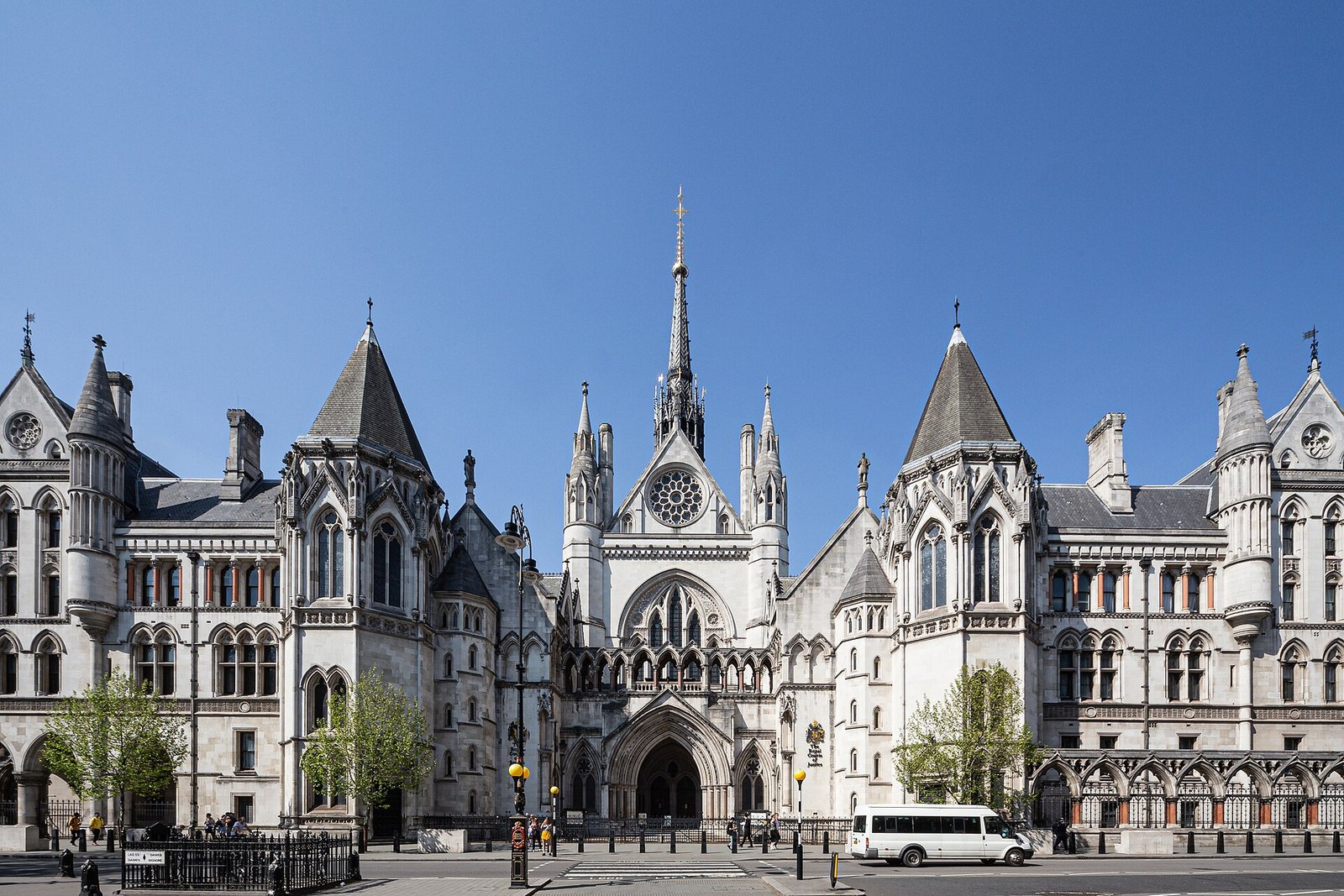
The legal framework: HMRC's powers, time limits and the tribunals
HMRC's enquiry powers are statutory. For individuals, partnerships and trustees, an officer may open an enquiry into a self assessment return by notice under section 9A of the Taxes Management Act 1970, and closes it by a closure notice under section 28A. For companies, the equivalent rules are in Schedule 18 to the Finance Act 1998, with the notice of enquiry under paragraph 24. Outside the normal enquiry window, HMRC may make a discovery assessment under section 29 of the 1970 Act if it finds that tax has been under-assessed and the statutory conditions are met.
Time limits depend on behaviour
The ordinary time limit for an income tax or capital gains tax assessment is four years after the end of the tax year, under section 34. Section 36 extends that to six years where a loss of tax was brought about carelessly, and to 20 years where it was brought about deliberately. Similar extended limits apply to companies. That is why HMRC's view of behaviour matters so much: an allegation of carelessness or deliberate conduct opens years that would otherwise be closed.
Information powers and penalties
Schedule 36 to the Finance Act 2008 gives HMRC power to issue information notices requiring documents and information reasonably required to check a tax position, and to inspect business premises. Some notices can be appealed; others, such as those approved by the tribunal, cannot. Penalties for inaccurate returns are governed by Schedule 24 to the Finance Act 2007, which grades the penalty by behaviour and the quality of disclosure.
Avoidance-specific powers
Where HMRC considers that arrangements are tax avoidance, Part 4 of the Finance Act 2014 allows it to issue follower notices, where a relevant judicial ruling has been decided against another taxpayer, and accelerated payment notices requiring disputed tax to be paid up front. The general anti-abuse rule and the disclosure of tax avoidance schemes regime may also be in play.
Who decides
Appeals against assessments, closure notices and penalties go to the First-tier Tribunal (Tax Chamber), then on points of law to the Upper Tribunal, the Court of Appeal and the Supreme Court. Challenges to HMRC's conduct or a failure to follow its published practice may be brought by judicial review in the High Court. Criminal prosecutions are brought by the Crown Prosecution Service following an HMRC investigation. These rules apply throughout the UK, although Scottish criminal proceedings follow Scottish procedure.
Types of HMRC investigation compared
HMRC investigation solicitors first identify which process is in play, because each has different rules and risks.
| Process | What triggers it | What it means for you |
|---|---|---|
| Compliance check or enquiry (aspect or full) | Notice of enquiry into a return within the statutory window, often risk-based or random | HMRC is checking the return; behaviour has not been categorised yet |
| Discovery assessment | HMRC finds an under-assessment after the enquiry window has closed | Conditions and time limits must be tested; often the first point of challenge |
| Schedule 36 information notice | HMRC needs documents or information to check a tax position | Compliance is compulsory unless appealed or outside HMRC's powers; penalties for non-compliance |
| Code of Practice 8 | Suspected significant avoidance, handled by HMRC's Fraud Investigation Service | Civil investigation without fraud allegation; complex technical and factual issues |
| Code of Practice 9 and the Contractual Disclosure Facility | HMRC suspects tax fraud | 60 days to accept or reject; accepting and disclosing fully gives protection from criminal investigation for the conduct disclosed |
| Criminal investigation | Cases HMRC selects for prosecution under its criminal investigation policy | Rights under criminal procedure apply; interviews under caution; urgent specialist advice needed |
| Voluntary disclosure (including the Worldwide Disclosure Facility) | Taxpayer identifies an error before HMRC does | Unprompted disclosure attracts lower minimum penalties; offshore matters use the WDF |
Key decisions HMRC investigation solicitors help you take
Whether to accept the Contractual Disclosure Facility
Under HMRC's Contractual Disclosure Facility guidance, a person offered a contract has 60 days to accept or reject it, extendable only in exceptional circumstances. Accepting means admitting that deliberate behaviour brought about a loss of tax, making an outline disclosure within 60 days and a full disclosure report afterwards. In return, HMRC agrees not to criminally investigate the conduct disclosed. Rejecting leaves HMRC free to begin a criminal investigation, and a signed rejection can be used as evidence. If the taxpayer believes there was no deliberate conduct, the right response needs careful legal analysis, not a reflex.
Whether to disclose before HMRC asks
Under Schedule 24, the minimum penalty depends on whether disclosure was unprompted or prompted. HMRC's compliance checks factsheets show the ranges: careless errors attract 0% to 30% if unprompted but 15% to 30% if prompted, and deliberate and concealed errors 30% to 100% if unprompted but 50% to 100% if prompted. Within each range, reductions depend on telling, helping and giving access, and HMRC usually restricts the reduction where disclosure takes three years or more.
Review, tribunal or alternative dispute resolution
HMRC's guidance on disagreeing with a decision explains that you usually have 30 days from the decision letter to appeal or accept a review. For direct taxes you appeal to HMRC first and may then accept a statutory review or notify the appeal to the tribunal; reviews usually take 45 days. For indirect taxes such as VAT, HMRC offers a review in the decision letter and you can usually appeal straight to the tribunal. HMRC also offers alternative dispute resolution, using a trained HMRC mediator, at any stage of an enquiry or tribunal proceedings.
Pay now or postpone
For many direct tax appeals you can apply to postpone payment of disputed tax, but interest runs if you lose. For VAT, the tribunal may require payment unless hardship is shown. Paying on account can stop interest accruing while the dispute continues and does not concede the argument.
Do not answer an opening letter with a long narrative explanation. Confirm receipt, check the legal basis of each request and the time limits, and agree a timetable. Most avoidable penalty findings start with a well-meaning but inaccurate early statement that later has to be corrected.
How an HMRC investigation usually unfolds
- Opening letter. HMRC issues a notice of enquiry, an information request or a CDF offer. We check its legal basis, the time limits and what it signals about HMRC's concerns.
- Internal fact-finding. Under privilege where possible, we review the records and interview the people involved to understand the true position before anything is said to HMRC.
- Strategy and first response. We decide what to provide, what to challenge and whether any disclosure should be made, and agree a realistic timetable with the officer.
- Information exchange and meetings. HMRC reviews documents and may ask for meetings. We prepare clients, attend, and ensure the record of any meeting is accurate.
- HMRC's view of the matter. HMRC sets out its technical and factual position and any proposed adjustments. We respond in writing, testing the law, the evidence and the behaviour categorisation.
- Negotiation or ADR. Most matters settle. We negotiate tax, interest and penalties, and consider ADR where communication has broken down or facts are disputed.
- Closure, appeal and review. HMRC issues a closure notice, assessment or penalty. Within 30 days we appeal, seek a statutory review or notify the appeal to the tribunal.
- Tribunal proceedings. If the dispute continues, we prepare the case, witness statements and expert evidence, and instruct specialist counsel for the hearing where needed.
Documents and evidence to gather
Good HMRC investigation solicitors build the file before HMRC does. Assemble the following as soon as an inquiry opens.
- All correspondence from HMRC, with envelopes or email metadata showing dates of receipt, as time limits run from these dates.
- The returns and computations under enquiry, plus working papers and the adviser's file.
- Bank statements, invoices, contracts and ledgers that support the disputed figures.
- Board minutes, emails and memoranda recording why transactions were undertaken.
- Any professional advice relied on when the return was filed, which may support a reasonable-care argument.
- Records of offshore accounts, structures and trusts, and any information exchanged automatically with HMRC.
- Details of any previous disclosures, settlements or rulings.
- A chronology of key events and people, kept under legal privilege.
Our article on what happens in an HMRC tax investigation explains the process for individuals in more detail, and our guide to legal professional privilege explains why involving solicitors early can protect internal analysis.
Risks and common mistakes
Treating a CDF letter like a routine enquiry
A Code of Practice 9 letter means HMRC suspects fraud. Ignoring it, or replying without advice, can end the opportunity for civil settlement. If HMRC hears nothing within 60 days it assumes the person has chosen not to co-operate and may start a civil or criminal investigation. Equally, accepting the contract and then making an incomplete disclosure is dangerous, because the protection depends on full disclosure. The outline disclosure must be considered carefully, with the scope of the deliberate behaviour accurately defined and supported by evidence of the amounts involved.
Missing the 30-day appeal window
Appeals and review requests usually must be made within 30 days of the decision letter. Once the window closes, a late appeal needs HMRC's agreement or the tribunal's permission, and the tribunal will weigh the length of and reason for the delay and the prejudice to each side. Businesses sometimes lose rights simply because a letter sat unopened or was sent to an old adviser. Diarising deadlines and appealing protectively, while discussions continue, avoids the problem without escalating the dispute.
Conceding behaviour too early
Describing an error as an oversight or mistake can be construed as accepting carelessness, which extends the assessing time limit to six years and engages penalties. Carelessness means failing to take reasonable care; relying on competent professional advice after giving full information can be strong evidence of reasonable care. HMRC must prove the behaviour it alleges. Before any admission, establish exactly what happened, what advice was taken and who knew what, because behaviour categorisation drives both penalties and time limits.
Over-supplying or under-supplying information
An informal request is not a Schedule 36 notice, and the two carry different obligations. Supplying everything indiscriminately can widen an enquiry and waive privilege; refusing reasonable requests can lead to a formal notice, penalties and a loss of co-operation credit. Some material is protected, including privileged legal advice and, in many cases, auditors' and tax advisers' working papers. Each request should be checked against HMRC's powers and responded to proportionately, with a record of what was supplied and when.
Forgetting the corporate offence
An investigation into an individual's affairs can expose the business they work for. If an employee or agent criminally facilitated tax evasion, the company may face prosecution under Part 3 of the Criminal Finances Act 2017 unless it had reasonable prevention procedures. Businesses that discover facilitation should take advice on internal investigation and whether to self-report. Our corporate investigations team handles the wider inquiry.
In an HMRC investigation, the categorisation of behaviour is the real battleground: it decides the penalty range, how many years HMRC can reopen and, at the extreme, whether the matter is civil or criminal.
Offshore and cross-border investigations
HMRC now receives large volumes of data from overseas tax authorities under automatic exchange arrangements, and offshore matters attract higher penalties and longer time limits than purely domestic ones. Taxpayers with undisclosed foreign income or gains can use the Worldwide Disclosure Facility, and an unprompted disclosure remains far better than waiting for HMRC to use data it already holds.
Bangladesh-linked matters
Many of our clients have family, property or business interests in Bangladesh. Typical issues include rental income from Bangladeshi property not reported on UK returns, gains on sale of inherited land, and remittances whose tax treatment changed when the remittance basis was replaced by the four-year foreign income and gains regime from 6 April 2025. The UK–Bangladesh double taxation agreement may give credit for Bangladeshi tax paid, but only if the claim is properly evidenced. Our UK–Bangladesh succession team and colleagues in Dhaka help obtain land records, sale deeds and Bangladeshi tax documents that HMRC will expect to see.
The EU, the Gulf, Singapore and China
For clients connected with the UAE, Singapore or China, HMRC investigations often turn on residence and source: whether a person was UK resident under the statutory residence test, and whether income arose in the UK. Where foreign tax authorities are investigating the same income, we coordinate with TRW & Co's offices in Singapore and Dubai and with local advisers so that positions taken in each country are consistent.
How TRW & Co's HMRC investigation solicitors help
Our London office is authorised and regulated by the Solicitors Regulation Authority. We act for businesses, senior executives, families and trustees.
Enquiries and information notices
We manage correspondence with HMRC, test the legal basis of requests, and respond proportionately. We challenge Schedule 36 notices that exceed HMRC's powers.
COP9 and COP8 investigations
We advise on whether to accept the Contractual Disclosure Facility, prepare outline disclosures and disclosure reports, and handle Fraud Investigation Service meetings.
Voluntary disclosures
We prepare unprompted disclosures, including under the Worldwide Disclosure Facility, quantify liabilities with accountants and present behaviour accurately to minimise penalties.
Penalty and assessment challenges
We test discovery assessments, time limits and behaviour findings, and seek suspension or reduction of penalties where the law allows.
Tribunal appeals and ADR
We conduct appeals in the First-tier Tribunal and beyond, and represent clients in HMRC's ADR process. Where advocacy in the higher courts is required, we instruct specialist counsel.
Criminal exposure
Where an investigation may become criminal, we work with our white-collar crime team on interviews, self-reporting and the corporate offence.
For the advisory side of tax, see our corporate and business tax team, and for the full list of practices visit our practices.
Checklist for decision-makers
If HMRC has written to you, HMRC investigation solicitors will usually want answers to these questions in the first week.
- What type of letter is it: enquiry, information notice, discovery assessment, COP8 or COP9?
- What is the date of the letter, and when do the 30-day and 60-day windows expire?
- Which years and taxes are under review, and are any of them outside the ordinary four-year limit?
- Has anyone already spoken to HMRC, and what was said?
- Where are the records, and who holds the adviser's working papers?
- Is there any offshore income, account or structure that needs to be considered?
- Is there any risk of criminal investigation, for the individual or the company?
- Would paying on account reduce interest without conceding the dispute?
To discuss a live matter in confidence, contact our London office at info@trw.co or on +880 1779 127165. The HMRC investigation solicitors in our team work from Holborn Gate, 330 High Holborn, London WC1V 7QH.
Frequently asked questions
01What should I do if I receive a COP9 letter?
Take specialist advice immediately and do not contact HMRC about the substance until you have. The letter offers the Contractual Disclosure Facility and gives you 60 days to accept or reject it. Accepting means admitting that deliberate behaviour caused a loss of tax and making a full disclosure, in return for HMRC's agreement not to criminally investigate that conduct. Rejecting allows HMRC to begin a criminal investigation. If you do nothing, HMRC assumes you have chosen not to co-operate.
02How far back can HMRC investigate?
It depends on behaviour. For income tax and capital gains tax, the ordinary limit is four years after the end of the tax year. That extends to six years where the loss of tax was brought about carelessly, and 20 years where it was brought about deliberately. Similar rules apply to companies, and longer limits can apply to some offshore matters. HMRC must be able to show the behaviour it alleges, which is why categorisation is so often disputed.
03Can I refuse to give HMRC information?
You can decline informal requests, but HMRC can then issue a formal information notice under Schedule 36 to the Finance Act 2008, and failing to comply can lead to penalties. Some notices can be appealed, for example where the information is not reasonably required. Privileged legal advice is protected, and there are limits on what HMRC can demand from auditors and tax advisers. The right approach is to check each request against HMRC's powers and respond proportionately.
04How are penalties for errors calculated?
Penalties for inaccurate returns are a percentage of the extra tax due, set by behaviour and disclosure. Careless errors attract 0% to 30% if unprompted and 15% to 30% if prompted. Deliberate errors attract 20% to 70% unprompted and 35% to 70% prompted, and deliberate and concealed errors 30% to 100% unprompted and 50% to 100% prompted. Where reasonable care was taken, there is no penalty. Reductions within each range depend on the quality of disclosure.
05Should I accept a statutory review or go to the tribunal?
A statutory review is carried out by an HMRC officer not involved in the original decision and usually takes 45 days. It is quicker and cheaper than a tribunal hearing and sometimes resolves clear errors. If the dispute turns on contested facts or a point of law that HMRC is unlikely to concede, going straight to the First-tier Tribunal may be more efficient. You can still appeal to the tribunal after an unsuccessful review.
06Can disputes with HMRC be mediated?
Yes. HMRC offers alternative dispute resolution, in which a trained HMRC mediator works with you and the case officer to narrow the issues and explore settlement. It is available to individuals and businesses at any stage of an enquiry or tribunal proceedings, subject to HMRC accepting the application. ADR does not stop the clock on appeal deadlines, so protective appeals should still be made.
07How can TRW & Co help with an HMRC investigation?
Our London office, regulated by the Solicitors Regulation Authority, advises on enquiries, information notices, COP8 and COP9 investigations, voluntary and offshore disclosures, penalties, ADR and tribunal appeals, and works with our white-collar crime team where there is criminal risk. Where advocacy in the higher courts is required, we instruct specialist counsel. Contact us in confidence at info@trw.co.
Sources and official materials
- Taxes Management Act 1970 — Enquiries, discovery assessments and time limits
- Finance Act 2008, Schedule 36 — HMRC information and inspection powers
- Finance Act 2007, Schedule 24 — Penalties for errors
- Admit tax fraud using the Contractual Disclosure Facility — HMRC guidance on COP9 and the CDF
- Disagree with a tax decision or penalty — Appeals, reviews and deadlines
- Appeal to the tax tribunal — First-tier Tribunal (Tax) procedure
- Use alternative dispute resolution to settle a tax dispute — HMRC's ADR service
- Make a disclosure using the Worldwide Disclosure Facility — Offshore voluntary disclosures
General information only, current as at 21 October 2026. It is not legal advice and does not create a solicitor–client relationship. It reflects the law of England and Wales unless stated otherwise; Scotland and Northern Ireland have separate legal systems, and the law changes frequently. Check current official sources and take advice on the facts of your matter.