
TRW & Co · Technology, Data & IP
Intellectual Property Solicitors in London
Intellectual property solicitors London businesses instruct help them protect, own, exploit and enforce brands, technology, content, designs and know-how. Recent Supreme Court rulings on overbroad trade mark filings and patentability of AI inventions, and continuing debate on copyright and AI, make 2026 a good time to check that your IP is properly owned, registered and documented.
Key pointA commissioned logo, website or piece of software does not automatically belong to the business that paid for it: without a signed written assignment, the creator usually keeps the copyright, which buyers and investors will spot in due diligence.
At a glance
Overbroad filings risky
The Supreme Court in SkyKick v Sky [2024] UKSC 36 confirmed that overbroad trade mark specifications can amount to bad faith and partial invalidity.
AI patent test reset
In Emotional Perception [2026] UKSC 3 the Supreme Court abandoned the Aerotel test, aligning UK patentability of software and AI with the EPO.
IPEC for smaller cases
The Intellectual Property Enterprise Court caps damages at £500,000 and limits recoverable costs, with a small claims track for claims up to £10,000.
Trade marks last indefinitely
A UK trade mark registration lasts ten years and can be renewed indefinitely, while patents last up to 20 years subject to renewal fees.
UK outside the UPC
European patents still cover the UK, but the UK is not part of the Unified Patent Court, so UK disputes stay in UK courts.
Swipe or scroll →
What intellectual property solicitors London businesses instruct actually do
Intellectual property solicitors London businesses instruct help them identify, protect, exploit and enforce the intangible assets that often make up most of their value: brands, technology, software, content, designs, data and know-how. The work runs from filing a trade mark and drafting a licence to stopping a counterfeiter or defending an infringement claim in the High Court.
Every business owns some intellectual property, whether it knows it or not. A start-up's code, a consumer brand's name and packaging, a manufacturer's product designs, a fund's proprietary models and a consultancy's methodologies are all potential IP assets. The legal question is whether those assets are owned by the right entity, protected by the right rights and documented well enough to be licensed, sold or enforced.
IP becomes urgent at familiar moments: before a product launch or rebrand, during fundraising or a sale when investors ask for proof of ownership, when a key employee leaves with know-how, when a competitor copies a product, and when a letter alleging infringement arrives.
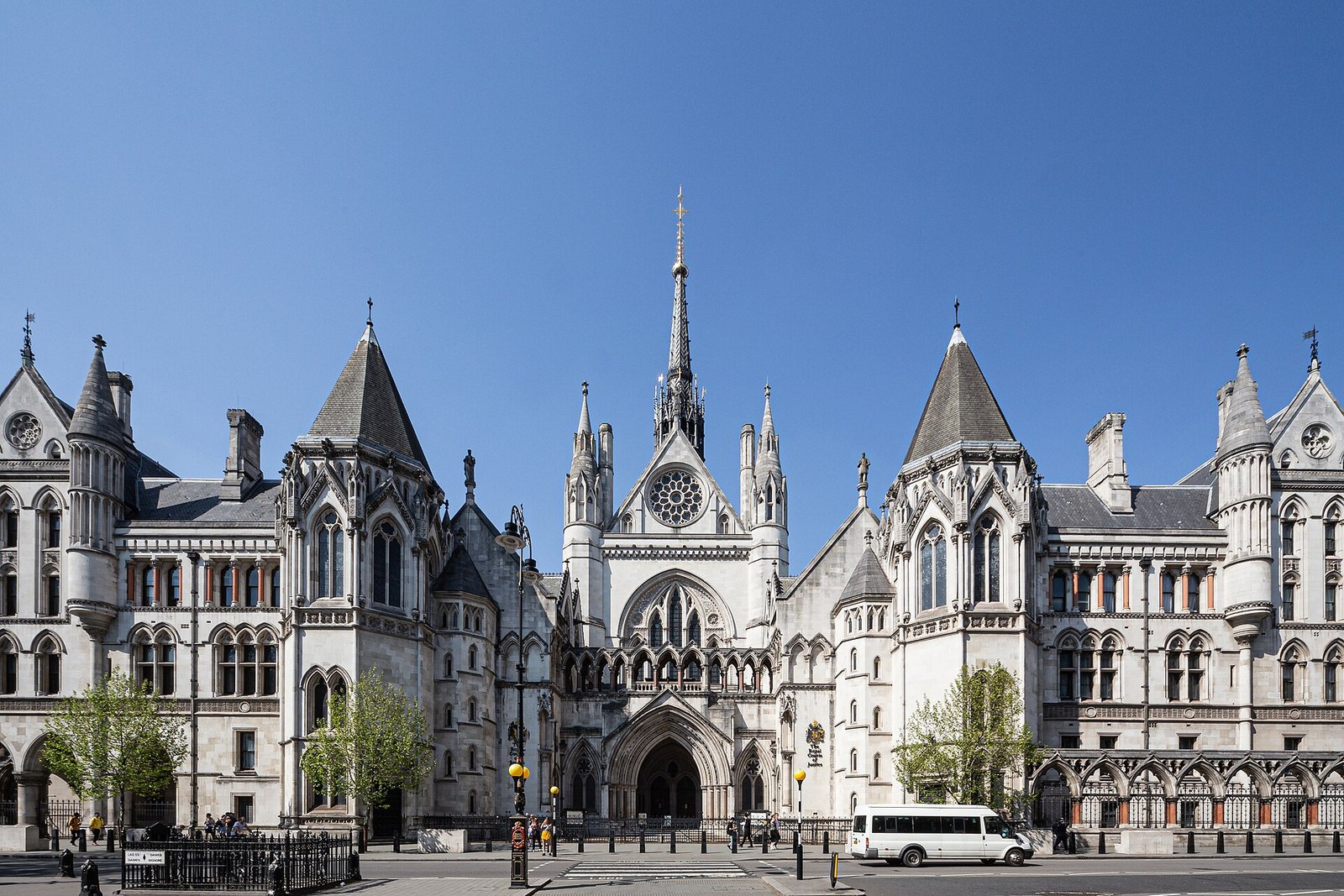
The main IP rights in the UK
UK intellectual property law combines registered rights, which must be applied for at the UK Intellectual Property Office, and unregistered rights, which arise automatically. Most businesses need a mix of both.
| Right | Protects | How it arises | Duration |
|---|---|---|---|
| Trade mark | Brand names, logos and other signs | Registration under the Trade Marks Act 1994 | Ten years, renewable indefinitely |
| Passing off | Goodwill in an unregistered brand | Common law, through trading reputation | As long as goodwill exists |
| Patent | New, inventive and industrially applicable inventions | Grant under the Patents Act 1977 or a European patent designating the UK | Up to 20 years, subject to renewal fees |
| Copyright | Original literary, artistic, musical and dramatic works, software, films and recordings | Automatically on creation under the Copyright, Designs and Patents Act 1988 | Generally the author's life plus 70 years for literary and artistic works |
| Registered design | Appearance of a product | Registration under the Registered Designs Act 1949 | Up to 25 years in five-year periods |
| Unregistered design right | Shape and configuration of products | Automatically under Part III of the 1988 Act | Up to 15 years from creation, or 10 years from first marketing |
| Trade secrets and confidential information | Know-how, formulas, data and business information | Breach of confidence and the Trade Secrets (Enforcement, etc.) Regulations 2018 | As long as the information remains secret |
Database right, the supplementary unregistered design right and plant variety rights also play a role in specific sectors. UK law applies across England and Wales, Scotland and Northern Ireland for registered rights, although litigation takes place in each jurisdiction's own courts.
The legal and institutional framework
Statutes and registries
The core statutes are the Trade Marks Act 1994, the Patents Act 1977, the Copyright, Designs and Patents Act 1988 and the Registered Designs Act 1949, together with the Trade Secrets (Enforcement, etc.) Regulations 2018. Registrations are handled by the Intellectual Property Office, which also hears oppositions, invalidity actions and some ownership disputes.
Courts
In England and Wales, IP claims are heard in the Business and Property Courts. The Patents Court handles patent and registered design cases. The Intellectual Property Enterprise Court handles smaller and less complex cases, with damages capped at £500,000 and recoverable costs capped, and its small claims track deals with claims up to £10,000 for certain rights. Larger trade mark and copyright cases go to the Chancery Division's Intellectual Property List.
Recent case law that changes the advice
In SkyKick v Sky [2024] UKSC 36, the Supreme Court confirmed that applying for a trade mark with a specification far broader than any intended use can amount to bad faith, which can invalidate the registration in part. Overbroad filings are now a liability, not a safety net. Our trade mark registration guide explains how to draft specifications.
In Emotional Perception AI v Comptroller-General [2026] UKSC 3, the Supreme Court abandoned the Aerotel test for excluded subject matter and aligned the UK with the European Patent Office approach, which matters for software and AI inventions. And in Getty Images v Stability AI [2025] EWHC 2863 (Ch), the High Court held that model weights which do not store copies of works are not infringing copies.
Key decisions: protecting, owning and exploiting IP
Intellectual property solicitors London companies work with will usually start with three decisions that shape everything else.
Which rights to register
Registered rights are easier to enforce because ownership and scope are on the public record. Register core brands as trade marks in the classes you actually use and plan to use. For inventions, decide between patenting, which requires public disclosure, and keeping the technology secret. For products where appearance matters, a registered design is inexpensive compared with the cost of proving unregistered rights in court.
Who owns the IP
Employees' inventions and copyright works made in the course of employment generally belong to the employer, but contractors, consultants, agencies and co-founders own what they create unless there is a written assignment. Copyright assignments must be in writing and signed. Investors and buyers check this first, and gaps can delay or derail a deal. See our guide to IP assignment versus licence.
How to exploit it
IP can be used in-house, licensed exclusively or non-exclusively, franchised, or held in a group IP company. Each option has tax, competition law and control consequences. Licences should define the rights, field, territory, royalties, quality control and ownership of improvements precisely.
Most IP is lost not in court but in the paperwork: an unsigned assignment, an overbroad filing or an NDA that was never put in place.
How IP enforcement works
When someone infringes your rights, the right response depends on the commercial goal: stopping the infringement, obtaining compensation or agreeing a licence. Intellectual property solicitors London rights owners rely on will usually follow this sequence.
- Gather evidence. Capture dated evidence of the infringement, such as test purchases, screenshots and sales data, and confirm your own ownership and registrations.
- Assess validity and risk. Check whether your right could be challenged in a counterclaim, and whether any threat you make could be unjustified under the Intellectual Property (Unjustified Threats) Act 2017.
- Choose the forum. Decide between the IPEC, the High Court, an IPO action, online platform takedowns or customs detention, depending on value and urgency.
- Send a letter before claim. Set out the rights, the infringement and the remedies sought, in line with the pre-action protocol requirements. Our letter before claim guide explains the essentials.
- Seek interim relief if needed. Apply for an interim injunction where delay would cause irreparable harm, acting quickly because delay undermines the application.
- Litigate or settle. Many disputes settle with undertakings, a licence or a coexistence agreement. If not, the claim proceeds to trial, and remedies include an injunction, damages or an account of profits, and delivery up.
Claims for infringement are generally subject to a six-year limitation period, but delay can still harm your position on injunctions and remedies. Our IP litigation team handles contentious matters, and where advocacy in the higher courts is required, we instruct specialist counsel.
Documents and evidence to assemble
An IP audit should produce a set of documents that you can hand to an investor, buyer or court. The core set includes:
- A register of registered rights with owners, renewal dates and the classes or territories covered.
- Employment contracts and contractor, agency and consultancy agreements with IP assignment and confidentiality clauses.
- Founder IP assignments to the company, signed and dated.
- Licences in and out, including open-source licences used in software.
- Evidence of first use and reputation for unregistered brands, such as sales figures and marketing materials.
- Design drawings and development records showing when designs were created and by whom.
- Trade secret protection measures: access controls, confidentiality policies and NDAs.
- Records of any disputes, threats, coexistence agreements and settlements.
A commissioned logo, website or piece of software does not automatically belong to the business that paid for it. Without a signed written assignment, the designer or developer usually keeps the copyright and the client has only an implied licence. Fixing this before a sale or investment is quick; fixing it during due diligence can be expensive.
Risks and common mistakes
Launching a brand without clearance searches
Adopting a name without checking the trade mark registers and the market risks an infringement claim, a forced rebrand and wasted marketing spend. Clearance searches should cover registered marks, company names and unregistered use in your key markets. Filing your own application early also gives you priority. A conflicting earlier mark can often be managed through a coexistence agreement if found before launch. Our article on trade mark infringement and passing off explains the tests.
Filing overbroad trade mark specifications
Since SkyKick, a trade mark filed for goods and services the owner never intended to use can be partly invalid for bad faith. Overbroad filings also invite non-use challenges after five years and can weaken enforcement. File for what you use and genuinely plan to use, document your business plans at the time of filing, and review your portfolio periodically. Narrower, well-evidenced registrations are usually stronger in practice than sprawling ones.
Disclosing an invention before filing a patent
A patent requires novelty, and public disclosure before the filing date, including by the inventor at a conference, in a pitch deck or in a product demonstration, can destroy it. Use NDAs for pre-filing discussions and file a priority application before any public disclosure. Many countries have no grace period, so even disclosures abroad can be fatal. Our patent application guide covers the filing strategy.
Making unjustified threats
Threatening someone with infringement proceedings for patents, trade marks or designs can expose you to a claim for unjustified threats, particularly where the threat is made to retailers or customers rather than the manufacturer or importer. The 2017 Act allows permitted communications, such as giving notice that a right exists, but the line is technical. Have letters checked before sending, especially if you plan to contact a competitor's customers or online platforms.
Relying on confidentiality without protecting it
Trade secret protection depends on reasonable steps to keep the information secret. If documents are not marked, access is not restricted and departing employees are not reminded of their obligations, a court may find that the information was never confidential. Combine contractual protections with practical controls and an exit process for leavers. Our article on trade secrets protection sets out the steps.
IP in deals, investment and restructuring
IP is frequently the main asset being bought, financed or invested in, and it is often where due diligence finds the most problems. Intellectual property solicitors London investors and buyers instruct focus on a short list of questions.
What buyers and investors check
Diligence asks whether the target owns the IP it uses, whether registered rights are valid, in force and held in the right group company, whether any rights are licensed in on terms that terminate on a change of control, and whether open-source software has been used in a way that requires disclosure of proprietary code. It also looks for disputes, threats and trade secret protection. Our legal due diligence checklist covers the wider review.
Warranties and remedies
The sale or investment agreement will contain IP warranties, and disclosure against them limits the seller's liability. Specific indemnities are common for known chain-of-title gaps or pending claims. Fixing gaps before a process begins, through confirmatory assignments and updated registrations, is cheaper and keeps negotiating leverage with the seller.
Group structures and security
Many groups hold IP in a dedicated company and license it to operating subsidiaries. That structure needs proper intra-group licences and transfer pricing support. Lenders may take security over registered IP, which should be recorded at the IPO so that it binds later purchasers. On an insolvency or restructuring, IP is often the most valuable asset, and clear ownership records make a sale far easier. Intellectual property solicitors London lenders and insolvency practitioners instruct can verify title quickly when timing is critical.
Cross-border IP: Europe, Bangladesh, the Gulf and Asia
IP rights are territorial. A UK registration protects only the UK, so international businesses need a filing strategy that matches their markets. Intellectual property solicitors London groups instruct should coordinate that strategy across every relevant registry.
Europe
Since Brexit, EU trade marks and registered Community designs no longer cover the UK, and separate UK filings are needed. European patents granted by the European Patent Office still cover the UK because the European Patent Convention is not an EU instrument. The UK is not part of the Unified Patent Court system, so UK patent disputes remain in the UK courts. See our guide to the Unified Patent Court.
Bangladesh
Bangladesh has its own registry, the Department of Patents, Designs and Trademarks, and has updated its patent, design and copyright legislation in recent years. Bangladesh is not yet a member of the Madrid system, so trade marks must be filed nationally. Counterfeiting and brand squatting are real risks for UK brands sourcing from or selling into Bangladesh, and early local filings are usually the cheapest protection. Our UK-Bangladesh practice coordinates filings and enforcement with our Dhaka office.
The Gulf, Singapore and China
The UAE, Singapore and China are members of the Madrid system, so international registrations can extend UK filings there. China operates a strict first-to-file system, making early registration essential for any brand manufacturing or selling in the Chinese market. Where enforcement is needed abroad, we work with local counsel and coordinate evidence and strategy from London.
How TRW & Co helps
We act for start-ups, growing companies and international groups. Our work as intellectual property solicitors London clients rely on is commercial: we focus on the rights that create value and the risks that could destroy it.
IP audits and strategy
Identifying what you own, closing chain-of-title gaps and building a filing and protection strategy that fits your markets and budget.
Brand protection
Clearance searches, UK and international trade mark filings through our trade marks team, oppositions, and online and customs enforcement against counterfeiters.
Technology and licensing
Licences, assignments, development and collaboration agreements, software and open-source compliance, and IP in AI projects.
Transactions
IP due diligence, warranties and transitional arrangements in acquisitions, investments and joint ventures, working with our corporate team.
Disputes and enforcement
Letters before claim, interim injunctions, IPEC and High Court claims, IPO proceedings and settlement negotiations, with specialist counsel instructed for advocacy where required.
Trade secrets and departing staff
Confidentiality frameworks, restrictive covenants and urgent action when employees or partners take confidential information.
To discuss a matter, contact our London office or explore all our practices.
Checklist for decision-makers
Use these questions to test whether your IP is under control. Gaps are common and usually fixable, and intellectual property solicitors London businesses use can prioritise the ones that matter most.
- Do we own, by signed written assignment, all IP created by founders, contractors and agencies?
- Are our core brands registered as trade marks in every market where we trade or manufacture?
- Do our trade mark specifications reflect what we actually do and plan to do?
- Have we decided, for each key innovation, whether to patent it or keep it secret?
- Do we use NDAs before discussing unfiled inventions or confidential plans?
- Do we know which open-source licences our software uses and what they require?
- Is there a renewal calendar for all registered rights?
- Do licences in and out clearly cover scope, territory, improvements and termination?
- Do we have a process for spotting and responding to infringement quickly?
- Would our IP documentation survive investor or buyer due diligence today?
Intellectual property is often the most valuable asset a business has and the least well documented. A focused review now can protect value and avoid costly disputes later.
Frequently asked questions
01Do I need to register copyright in the UK?
No. Copyright arises automatically when an original work is created and recorded, and there is no official UK copyright register. What matters is being able to prove authorship, the date of creation and ownership. Keep dated drafts, source code repositories and development records, and make sure contractors and agencies assign copyright to you in writing. For brands and product designs, registered rights such as trade marks and registered designs are usually worth obtaining because they are easier to enforce.
02How long does it take to register a UK trade mark?
A straightforward UK application that meets no objections or oppositions typically completes within a few months, after examination by the Intellectual Property Office and a publication period during which third parties can oppose. Objections or oppositions can extend this significantly. Clearance searches before filing reduce the risk of conflict. Protection runs from the filing date once registered, and the registration lasts ten years, renewable indefinitely.
03Who owns IP created by employees and contractors?
Copyright works and inventions created by employees in the course of their employment generally belong to the employer, although employees can claim compensation in limited circumstances for patented inventions of outstanding benefit. Contractors, consultants, agencies and unpaid founders own what they create unless they sign a written assignment. Contracts should include clear assignment, moral rights waiver and confidentiality clauses, and founders should assign pre-incorporation IP to the company.
04Should we patent our technology or keep it secret?
It depends on whether the technology can be reverse engineered, how long its commercial value will last and whether you need to show investors a registered asset. A patent gives up to 20 years of protection in exchange for public disclosure. Trade secrets can last indefinitely but are lost if the information leaks or is independently developed. Many businesses patent visible product features and keep processes and data secret. Do not disclose an invention publicly before deciding.
05What can we do if a competitor copies our product?
First identify which rights are infringed: trade marks, passing off, registered or unregistered designs, copyright or patents. Gather evidence, check your ownership and the strength of your rights, then consider a letter before claim. Urgent cases may justify an interim injunction. The Intellectual Property Enterprise Court offers a cost-capped route for smaller disputes. Take care with threats to the competitor's customers, which can be actionable under the unjustified threats rules.
06Does a UK trade mark protect us in Bangladesh or the EU?
No. IP rights are territorial, so a UK registration protects only the UK. EU trade marks cover EU member states but no longer the UK. Many countries, including the UAE, Singapore and China, can be designated through the Madrid system based on a UK filing, but Bangladesh currently requires a national application with its Department of Patents, Designs and Trademarks. File early in markets where you manufacture or sell to reduce the risk of brand squatting.
07Can AI-generated content or inventions be protected?
Partly. Works made with meaningful human creative input using AI tools can be protected by copyright in the usual way, but the government has proposed removing the special protection for wholly computer-generated works. An AI system cannot be named as an inventor on a UK patent, as the Supreme Court decided in Thaler, but AI-assisted inventions can be patented where a human qualifies as inventor. Record the human contribution to valuable outputs.
Sources and official materials
- Intellectual Property Office (GOV.UK) — UK registry for trade marks, patents and designs
- Trade Marks Act 1994 — UK trade mark legislation
- Patents Act 1977 — UK patent legislation
- Copyright, Designs and Patents Act 1988 — Copyright and unregistered design right
- Trade Secrets (Enforcement, etc.) Regulations 2018 — Statutory trade secret protection
- SkyKick UK Ltd v Sky Ltd [2024] UKSC 36 — Supreme Court on bad faith and broad specifications
- Emotional Perception AI v Comptroller-General [2026] UKSC 3 — Supreme Court on patentability of AI inventions
General information only, current as at 21 October 2026. It is not legal advice and does not create a solicitor–client relationship. It reflects the law of England and Wales unless stated otherwise; Scotland and Northern Ireland have separate legal systems, and the law changes frequently. Check current official sources and take advice on the facts of your matter.