
TRW & Co · Disputes & Arbitration
Contract Dispute Solicitors in London
Contract dispute solicitors London businesses instruct help them enforce or defend commercial bargains: unpaid invoices, defective performance, wrongful termination and disputed price or scope. English courts can now order parties to mediate, limitation and notice clauses punish delay, and early decisions on termination or withholding payment often decide the outcome long before any trial.
Key pointCourts can now order parties to try ADR, and since 1 October 2024 the Civil Procedure Rules let them penalise an unreasonable refusal in costs, even against a party that wins at trial.
At a glance
Six years to sue
Claims for breach of a simple contract must generally be brought within six years of breach; claims on a deed within twelve years (Limitation Act 1980).
Courts can order ADR
Churchill v Merthyr Tydfil [2023] EWCA Civ 1416 and CPR changes from 1 October 2024 allow courts to order ADR and sanction refusals.
Statutory late payment interest
Business debts carry statutory interest of 8% above Bank of England base rate where the contract sets no substantial rate of its own.
Track by claim value
Since 1 October 2023: small claims to £10,000, fast track to £25,000, intermediate track to £100,000, multi-track above.
Penalty rule restated
Cavendish v Makdessi [2015] UKSC 67: a payment-on-breach clause is unenforceable if out of all proportion to a legitimate interest.
Swipe or scroll →
What contract disputes cover in England and Wales
Contract dispute solicitors London businesses instruct are dealing with the most common commercial conflict there is: one party says the other has not done what it promised, and money, supply or reputation is at stake. A contract dispute can concern non-payment, defective goods or services, late delivery, termination, price adjustment, exclusivity, confidentiality, or whether a binding contract was formed at all.
English contract law is largely judge-made, built on centuries of commercial cases, and supplemented by statutes such as the Unfair Contract Terms Act 1977, the Misrepresentation Act 1967, the Sale of Goods Act 1979 and, for consumers, the Consumer Rights Act 2015. Its reputation for certainty is why English law is chosen in so many international contracts, including many with no other connection to England.
A disagreement becomes a legal question when the parties' positions harden and one side considers termination, withholding payment or issuing proceedings. Each of those steps has legal consequences. Terminating without a proper basis can itself be a repudiatory breach, turning the innocent party into the wrongdoer. The right advice at that moment often prevents a dispute from escalating.
Many contract disputes are resolved by negotiation or mediation, and some are referred to arbitration because the contract says so; see our international arbitration page. The rest go to the civil courts, where our commercial litigation team runs them.
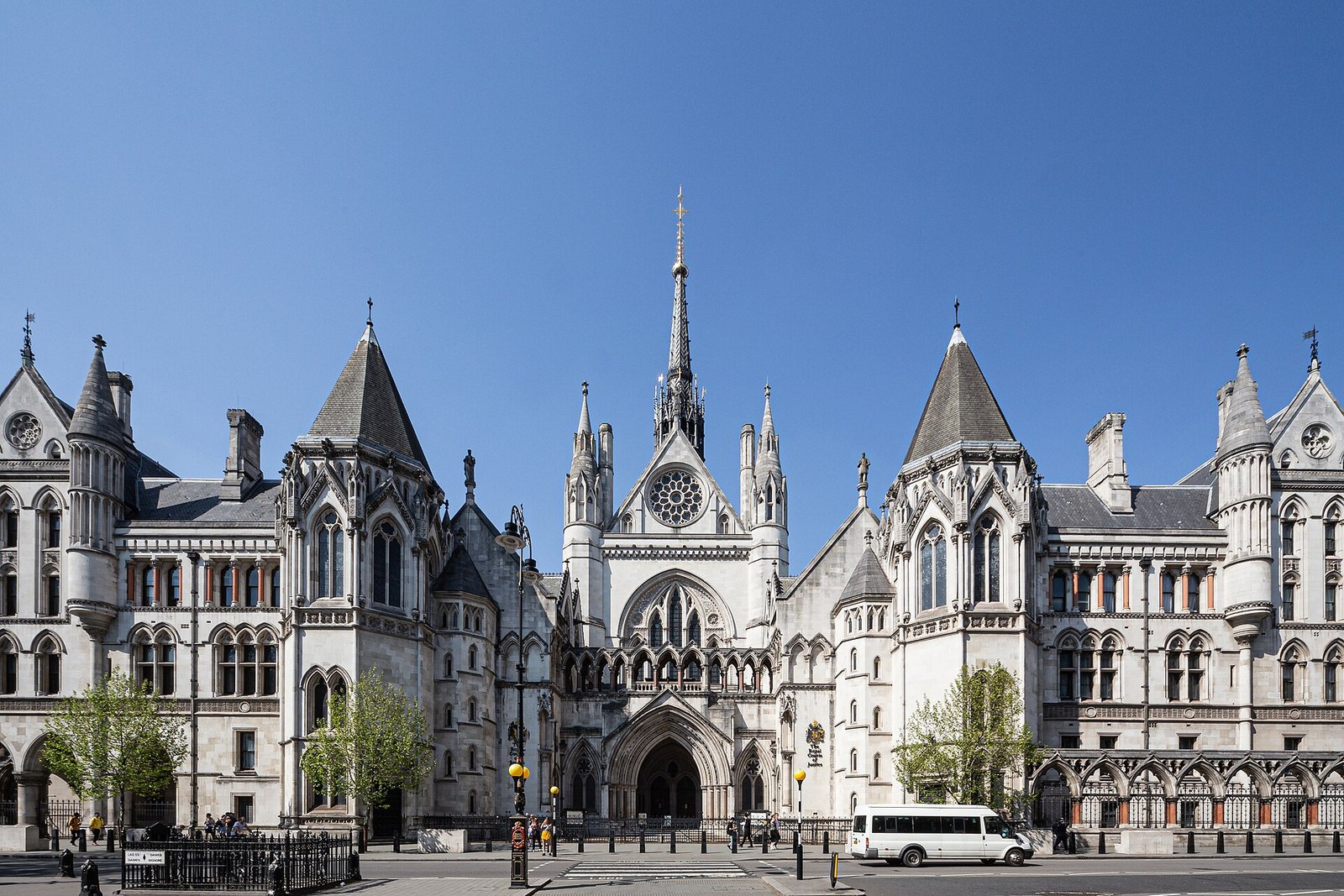
The legal framework for contract claims
Breach, termination and remedies
A breach of contract gives the innocent party a right to damages. Damages aim to put the claimant in the position it would have been in had the contract been performed, subject to rules on causation, remoteness (whether the type of loss was within the parties' reasonable contemplation) and mitigation. Where the breach is repudiatory, the innocent party can choose to accept it and terminate, or affirm the contract and continue. Contractual termination rights operate alongside these common law rights, and their notice requirements must be followed exactly.
Other remedies include debt claims for a contractual price, specific performance or injunctions in limited cases, rectification of a document that fails to record the parties' agreement, and rescission for misrepresentation. Our guide to breach of contract remedies explains each in more depth.
Key statutory controls on terms
Exclusion and limitation clauses in business contracts are generally enforceable, but some are subject to the reasonableness test in section 11 of the Unfair Contract Terms Act 1977, particularly where one party deals on the other's written standard terms. Clauses requiring payment on breach are tested against the penalty rule restated by the Supreme Court in Cavendish Square Holding BV v Makdessi [2015] UKSC 67, which asks whether the clause protects a legitimate interest and is not out of all proportion to it.
How the courts interpret the contract
Many contract disputes are really arguments about meaning. English courts interpret a contract objectively, asking what a reasonable person with the parties' background knowledge would have understood the words to mean. The natural meaning of the language carries most weight, but commercial context matters, especially where the drafting is unclear. Evidence of pre-contract negotiations and of what the parties privately intended is generally excluded, so contract dispute solicitors London clients consult will look first at the document and the shared factual background.
Courts will imply a term only where it is necessary to give the contract business efficacy or is so obvious it goes without saying. They will not rewrite a bad bargain. Where the written document fails to record what the parties actually agreed, rectification may be available, but the evidential bar is high.
Misrepresentation claims alongside breach
If a party was induced to enter the contract by a false statement of fact, it may have a claim for misrepresentation as well as, or instead of, breach of contract. Remedies can include rescission and damages under the Misrepresentation Act 1967. Entire agreement and non-reliance clauses are designed to limit these claims, and clauses excluding liability for misrepresentation must satisfy the statutory reasonableness test. Contract dispute solicitors London businesses instruct will usually test both routes before pleading.
Limitation periods
Under the Limitation Act 1980, a claim for breach of a simple contract must generally be brought within six years of the breach (section 5), and a claim on a deed within twelve years (section 8). Time runs from breach, not from when loss is discovered, though fraud and deliberate concealment can postpone it. Scotland applies a separate prescription regime, generally with shorter periods for contractual obligations, and Northern Ireland has its own limitation legislation.
Late payment interest
Where a contract between businesses does not provide for interest on late payment, the Late Payment of Commercial Debts (Interest) Act 1998 implies a right to statutory interest of 8% above the Bank of England base rate, plus fixed debt recovery costs. A contractual interest rate displaces the statutory rate, provided it is a substantial remedy.
Key decisions for contract dispute solicitors London clients instruct
The biggest decisions in a contract dispute are commercial as much as legal: whether to keep performing, how much to spend, and when to settle. Contract dispute solicitors London businesses rely on should set out those options with realistic costs and timeframes, not just legal merits.
| Route | Best suited to | Trade-offs |
|---|---|---|
| Negotiation | Ongoing relationships; clear liability with disputed quantum | Cheap and fast, but relies on goodwill; without-prejudice rules protect offers |
| Mediation | Most commercial disputes, at any stage | Confidential and flexible; no binding outcome unless settlement is signed; courts can now order ADR |
| Expert determination | Technical or valuation issues, such as completion accounts or price reviews | Quick and final on the referred issue, but very limited grounds for challenge |
| Adjudication | Construction contracts under the Construction Act | Decision in weeks, temporarily binding; can be revisited in court or arbitration |
| Arbitration | Contracts with an arbitration clause, often international | Private and enforceable abroad; limited appeals; tribunal costs payable |
| Court proceedings | Claims needing coercive powers, multiple parties or a public precedent | Strong case management and interim relief; public; costs exposure if unsuccessful |
Which court track will apply
Since 1 October 2023, defended claims in England and Wales are generally allocated to the small claims track (up to £10,000), the fast track (up to £25,000), the intermediate track (above £25,000 up to £100,000) or the multi-track (above £100,000 or complex). Fast and intermediate track cases are largely subject to fixed recoverable costs, which cap what the winner can recover. Higher-value commercial claims are usually issued in the Business and Property Courts, which have specialist judges and their own disclosure rules.
ADR is no longer optional in practice
In Churchill v Merthyr Tydfil County Borough Council [2023] EWCA Civ 1416, the Court of Appeal held that courts can order parties to engage in non-court dispute resolution and can stay proceedings for that purpose. From 1 October 2024, the Civil Procedure Rules were amended so that the overriding objective includes promoting or using ADR, case management powers expressly include ordering it, and an unreasonable refusal can be reflected in costs. Our mediation and ADR team advises on timing and approach.
The strongest position in a contract dispute is usually built in the first month: what you say, what you keep and what you do not do.
The contract dispute process step by step
The Practice Direction on Pre-Action Conduct and Protocols expects parties to exchange information and consider settlement before issuing a claim. Failure to comply can lead to costs sanctions.
- Early assessment. Review the contract, correspondence and performance record; identify the breach, the loss, any time bars and the dispute resolution clause.
- Reserve rights and preserve evidence. Send reservation-of-rights correspondence where needed, avoid inadvertent affirmation or waiver, and suspend document deletion.
- Letter before claim. Set out the claim, the basis for it and the remedy sought, attach key documents, and allow a reasonable period for response.
- Response and ADR. Consider the response, exchange further information and explore negotiation or mediation, with any offers made on a without-prejudice or Part 36 basis.
- Issue and statements of case. Issue the claim, serve particulars of claim, and receive the defence and any counterclaim.
- Case management and disclosure. The court allocates the case, sets a timetable and orders disclosure, witness statements and, where needed, expert evidence.
- Trial or early disposal. Seek summary judgment where the other side has no real prospect of success; otherwise prepare for trial, with ADR windows along the way.
- Judgment and enforcement. Obtain judgment, deal with costs and interest, and enforce if payment does not follow.
Documents and evidence to assemble
Contract disputes are decided on what the documents say and what the parties did. The court interprets the contract objectively, in its commercial context, so contemporaneous evidence of that context matters. Contract dispute solicitors London courts take seriously will have organised this material before the first letter is sent.
The contract and its history
The signed contract, schedules, variations, standard terms and the negotiation correspondence. Check entire agreement and no-oral-modification clauses, which affect what evidence counts.
Performance evidence
Delivery notes, acceptance certificates, service reports, KPIs, invoices and payment records showing what was done and when.
Notices and correspondence
Every notice served, with proof of delivery in the manner the contract requires, and emails showing each side's position over time.
Loss calculations
Management accounts, lost orders, replacement costs and mitigation steps. Quantum is often where cases are won or lost, so start early.
Check the notice clause before you send anything that matters. Many contracts require notices to be in writing, delivered by a particular method, to a named address or person. A termination notice sent by the wrong route can be invalid, and the time spent arguing about it can be expensive.
Risks and common mistakes
These are the errors that contract dispute solicitors London clients consult see most often, and most are avoidable.
Wrongful termination
Terminating a contract without a valid contractual or common law right can itself be a repudiatory breach, entitling the other party to accept it, end the contract and claim damages. Common errors include treating a minor breach as repudiatory, missing a cure period, using the wrong notice procedure, or relying on a termination right that has been waived by continuing to perform. Before terminating, check the precise wording of the termination clause, whether common law rights are preserved, and whether the conduct relied on is serious enough. If in doubt, reserve rights first.
Missing contractual time bars
Many commercial contracts require claims to be notified within a short period, with specified content, failing which they are barred. These clauses can operate well before the statutory limitation period expires. Warranty claims under share purchase agreements, and claims under construction and supply contracts, are frequent examples. Diary every contractual notification deadline when a potential claim first appears, and comply with the content requirements exactly. A short, compliant notice is better than a detailed one sent late.
Withholding payment without a right to set off
Businesses often withhold payment because of a cross-claim. Whether that is permitted depends on the contract, which may exclude set-off, and on whether the cross-claim is closely connected to the sum withheld. Withholding without a right can expose the business to a debt claim, statutory interest and, in some cases, a statutory demand or winding-up petition. In construction contracts, payment and pay less notice rules under the Construction Act add further requirements. Take advice before deciding to withhold.
Ignoring ADR and pre-action steps
Since the Churchill decision and the October 2024 rule changes, courts can order parties to engage in ADR and can penalise an unreasonable refusal in costs, even for a party that wins at trial. Failing to follow the pre-action practice direction, for example by issuing proceedings without a proper letter before claim, can also lead to costs sanctions. Treat ADR as part of the strategy, record proposals in writing, and respond constructively to proposals from the other side.
Creating unhelpful documents
Internal emails, chat messages and board papers written during a dispute are usually disclosable unless privileged. Speculative comments about weaknesses, or messages admitting fault, can be used at trial. Route sensitive discussions through lawyers so that privilege can apply, limit internal circulation, and remember that without-prejudice protection only covers genuine attempts to settle. Our guide to legal professional privilege sets out the rules.
Cross-border angle: Bangladesh, the Gulf, Singapore, China and the EU
Many contracts governed by English law are performed abroad, and many disputes involve a counterparty with assets outside England. Three questions matter: which law governs the contract, which forum has jurisdiction, and where any judgment or award can be enforced. A clear governing-law and jurisdiction clause answers the first two, and the choice between courts and arbitration largely decides the third.
Bangladesh
UK companies buying from or investing in Bangladesh frequently choose English law and London arbitration, partly because Bangladesh is a party to the New York Convention, which assists enforcement of foreign arbitral awards there. Enforcing an English court judgment in Bangladesh depends on Bangladeshi procedural law and whether reciprocal enforcement applies, so the dispute resolution clause should be chosen with enforcement in mind. TRW & Co's Dhaka headquarters works with the London office on these questions; see our UK–Bangladesh disputes practice.
The Gulf, Singapore, China and the EU
Since 1 July 2025, the Hague 2019 Judgments Convention has applied between the UK and EU member states other than Denmark, as well as Ukraine and Uruguay, for proceedings commenced from that date. It assists enforcement of English money judgments in those states. For counterparties in the Gulf, Singapore or China, arbitration is often the more dependable route to enforcement. Where judgments must be enforced, our enforcement of judgments team coordinates with local counsel.
How TRW & Co helps
TRW & Co's London office is authorised and regulated by the Solicitors Regulation Authority. We advise businesses on both sides of contract disputes, from early strategy to trial or arbitration and enforcement. Where advocacy in the higher courts is required, we instruct specialist counsel.
Early case assessment
We review the contract and documents quickly, identify the strongest claims and defences, and set out options with realistic costs, timing and risks.
Termination and notices
We advise before termination or suspension, draft notices and reservation-of-rights letters, and help avoid inadvertent waiver or repudiation.
Pre-action and settlement
We prepare letters before claim and responses, structure without-prejudice and Part 36 offers, and represent clients at mediation.
Litigation and arbitration
We issue and defend claims in the County Court and the Business and Property Courts, and conduct arbitrations where the contract requires it.
Debt and late payment
We recover undisputed sums efficiently, including statutory interest, working with our debt recovery team.
Contract improvement
After a dispute, we help revise templates so the same issue does not recur, with our commercial contracts team.
See all of our practices, or read our article on letters before claim.
Checklist for decision-makers
Before taking a decision in a contract dispute, contract dispute solicitors London businesses use will usually want these points covered.
- Locate the signed contract, all variations and the governing law and dispute resolution clause.
- Identify the breach alleged, when it happened, and the contractual and statutory time limits.
- Check notice, cure period and termination provisions before acting.
- Reserve rights in writing if you continue to perform while the dispute is live.
- Preserve documents and restrict internal commentary on the dispute.
- Quantify the loss and record the steps taken to mitigate it.
- Assess the counterparty's ability to pay and where its assets are.
- Consider ADR early and keep a written record of proposals.
- Agree a budget and decision points with your advisers.
- Get advice before the first formal letter; contact our London office.
Contract dispute solicitors London businesses value most are those who give a clear early view on merits, cost and the commercial way out. That is the advice we aim to give at the first meeting.
Frequently asked questions
01How long do I have to bring a breach of contract claim?
In England and Wales, a claim for breach of a simple contract must generally be brought within six years of the date of breach, and a claim on a contract executed as a deed within twelve years, under the Limitation Act 1980. Time usually runs from breach, not from when you discover the loss. Fraud or deliberate concealment can postpone the start of the period. Contracts can also contain shorter notification deadlines, so check the contract as well as the statute.
02Can I terminate a contract because the other side is in breach?
Only if the contract gives you a termination right that has been triggered, or the breach is repudiatory at common law, meaning it goes to the root of the contract or shows the other party will not perform. You must also follow any notice and cure-period requirements. Terminating without a proper basis can make you the party in breach. Before terminating, take advice on the clause wording and on whether continuing to perform has waived the right.
03Do I have to try mediation before going to court?
Not as an absolute rule, but in practice ADR is expected. The pre-action practice direction requires parties to consider ADR, and since Churchill v Merthyr Tydfil and the October 2024 rule changes, courts can order parties to engage in ADR and stay proceedings while they do. An unreasonable refusal can be penalised in costs, even if you win. Most commercial disputes are suitable for mediation at some stage.
04Can I claim interest on unpaid invoices?
Yes. If your contract sets a rate of interest, that applies. If it does not, the Late Payment of Commercial Debts (Interest) Act 1998 gives businesses a right to statutory interest at 8% above the Bank of England base rate on late payments from other businesses, plus fixed debt recovery costs. The court can also award interest on judgment sums. Claim interest expressly in your letter before claim and in the claim form.
05How much will a contract dispute cost?
Costs depend on the value, complexity, the other side's approach and how far the case goes. Fast and intermediate track claims are largely subject to fixed recoverable costs, which limit what the winner recovers. In the multi-track, the loser usually pays a proportion of the winner's reasonable costs, assessed by the court. We provide a phased budget at the outset and revisit it at each decision point, so that spending stays proportionate to what is at stake.
06Are limitation of liability clauses enforceable?
In business contracts, generally yes, if clearly drafted. Some clauses are subject to the reasonableness test under the Unfair Contract Terms Act 1977, particularly where a party contracts on the other's written standard terms, and liability for death or personal injury caused by negligence cannot be excluded. Courts read exclusion clauses according to their natural meaning but expect clear words to exclude valuable rights. Consumer contracts are subject to stricter rules under the Consumer Rights Act 2015.
07What is a Part 36 offer?
A Part 36 offer is a formal settlement offer under the Civil Procedure Rules. If a claimant rejects a defendant's offer and fails to do better at trial, the claimant usually pays the defendant's costs from the end of the offer period. If a defendant rejects a claimant's offer and the claimant does at least as well at trial, the defendant can face enhanced interest, indemnity costs and an additional amount. Part 36 offers must meet strict formal requirements to have these effects.
Sources and official materials
- Limitation Act 1980 — Time limits for contract claims in England and Wales
- Unfair Contract Terms Act 1977, section 11 — The reasonableness test for exclusion clauses
- Late commercial payments: charging interest and debt recovery — GOV.UK guidance on statutory interest and recovery costs
- Practice Direction: Pre-Action Conduct and Protocols — Steps expected before issuing a claim
- Churchill v Merthyr Tydfil CBC [2023] EWCA Civ 1416 — Court power to order parties to engage in ADR
- Cavendish Square Holding BV v Makdessi [2015] UKSC 67 — Supreme Court restatement of the penalty rule
- Civil Procedure Rules Part 36 — Formal settlement offers and their costs consequences
General information only, current as at 21 October 2026. It is not legal advice and does not create a solicitor–client relationship. It reflects the law of England and Wales unless stated otherwise; Scotland and Northern Ireland have separate legal systems, and the law changes frequently. Check current official sources and take advice on the facts of your matter.