
TRW & Co · Competition, Regulatory & Investigations
Business and Human Rights Lawyers in London
Business and human rights lawyers help UK companies manage their legal exposure for harm to workers and communities in their operations and supply chains. In 2026 that exposure is growing: Parliament is considering penalties for weak modern slavery statements, English courts hear claims from overseas workers, and EU forced labour rules will soon reach UK exporters.
Key pointPaying a fair price for goods does not protect every later buyer from money laundering risk. The Court of Appeal held in 2024 that the adequate consideration exemption is personal, so a company that suspects forced labour in its supply chain and keeps trading may be exposed.
At a glance
£36m reporting threshold
Commercial organisations carrying on business in the UK with total turnover of £36 million or more must publish an annual modern slavery statement under section 54.
Penalties proposed in 2026
The Immigration and Asylum Bill, introduced on 30 June 2026, would allow fines of up to the higher of £1 million or 1% of turnover for non-compliant statements.
Claims heard in England
The Court of Appeal accepted in 2024 that England was the right forum for Nepalese and Bangladeshi migrant workers' forced labour claims against Dyson companies.
EU forced labour ban
Regulation (EU) 2024/3015 applies from 14 December 2027 and can force withdrawal of any product made wholly or partly with forced labour from the EU market.
CSDDD narrowed
After the Omnibus I amendments, non-EU groups are in scope only above €1.5 billion EU turnover, with compliance from 26 July 2029.
Swipe or scroll →
What business and human rights law covers in England and Wales
Business and human rights lawyers help companies identify, prevent and answer for harm to people connected with their operations, products and supply chains. The subject covers forced and child labour, unsafe working conditions, land and community impacts, discrimination and the misuse of technology. In the UK it is no longer a matter of voluntary policy alone: reporting duties, money laundering law, civil liability and procurement rules all now attach legal consequences to human rights failures.
The people affected are rarely in the UK. They are garment workers in Dhaka, migrant workers in Malaysian factories, miners in Zambia or ship-breaking labourers in Chattogram. What makes it a UK legal question is that the parent company, the buyer, the brand or the financier sits in England, and English courts and regulators have shown they are prepared to look through corporate structures and supply contracts.
The issue usually reaches a board at one of a few moments: when a modern slavery statement is due, when an EU customer demands due diligence terms, when an NGO report or journalist names the company, when a claimant firm writes a letter before claim, or when an acquisition target's supply chain is examined. Each of those moments is easier to handle if the groundwork has been done.
This page explains the current UK framework, the reforms in Parliament in 2026, the litigation risk and the EU rules that reach UK suppliers. It sits alongside our pages on ESG and sustainability and Bangladesh supply chains.
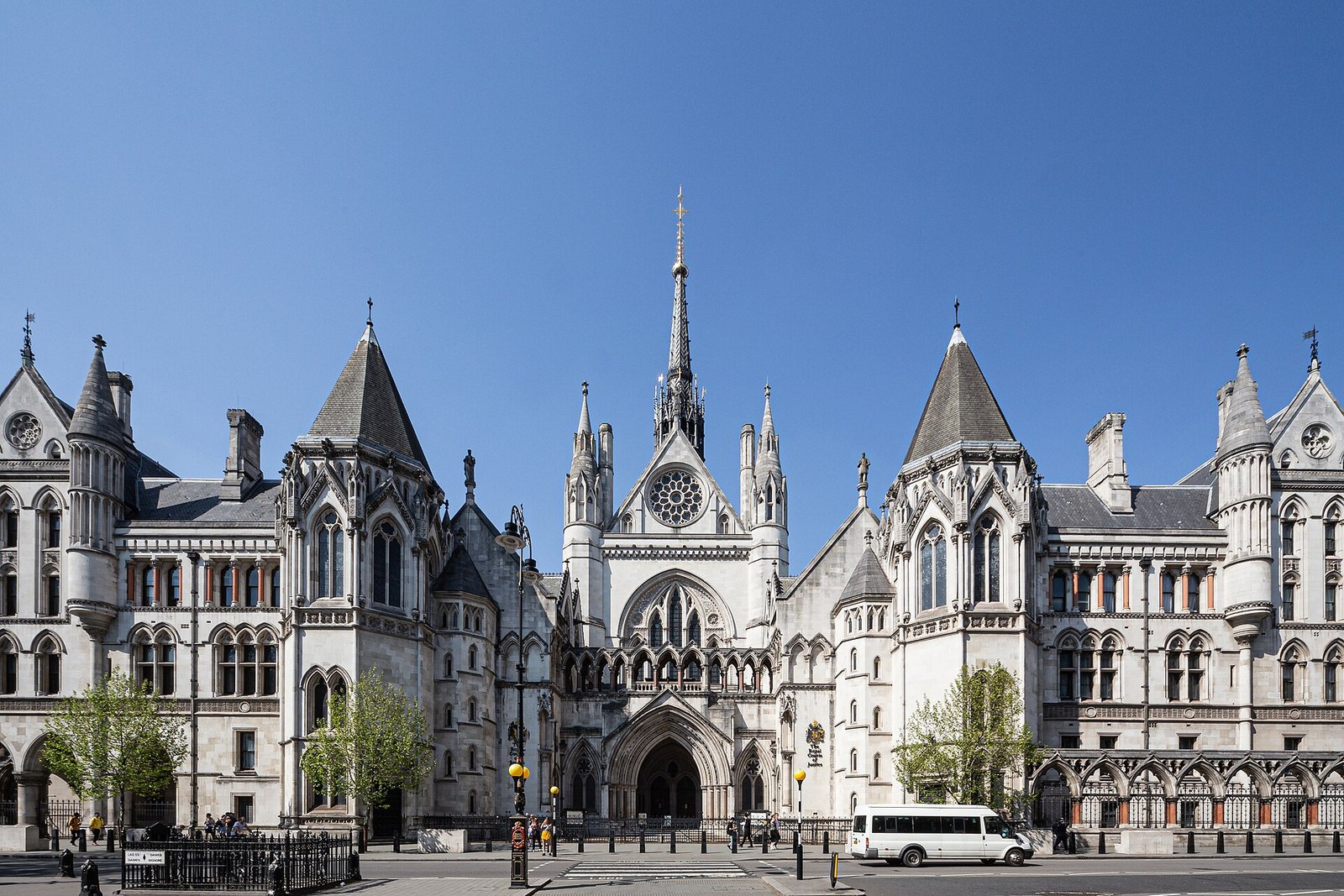
The UK legal framework for business and human rights
There is no single UK statute that imposes a general duty on companies to respect human rights. Instead, business and human rights lawyers work across several overlapping regimes, each with its own enforcer and consequences. The table summarises the main sources.
| Source | What it requires | Who enforces |
|---|---|---|
| Modern Slavery Act 2015, section 54 | An annual slavery and human trafficking statement from commercial organisations with total turnover of £36 million or more that carry on business in the UK | Home Office; the Secretary of State may seek an injunction |
| Proceeds of Crime Act 2002 | Money laundering offences can be engaged by dealing in goods made with forced labour | National Crime Agency, prosecutors |
| Law of tort (negligence) | A parent or buyer may owe a duty of care to people harmed abroad where it controls or assumes responsibility for operations | Claimants in the High Court |
| Procurement Act 2023 | Labour market misconduct, including Modern Slavery Act offences, is a discretionary exclusion ground | Contracting authorities |
| Global Human Rights Sanctions Regulations 2020 | Asset freezes and dealing prohibitions against designated persons | HM Treasury (OFSI), prosecutors |
| OECD Guidelines for Multinational Enterprises | Risk-based due diligence and remediation (non-binding) | UK National Contact Point (complaints and mediation) |
The UN Guiding Principles and OECD Guidelines
The UN Guiding Principles on Business and Human Rights, endorsed in 2011, set the global benchmark: states protect, businesses respect, and victims need access to remedy. The OECD Guidelines for Multinational Enterprises, updated in 2023, translate this into a due diligence process: identify, prevent, mitigate, account and remediate. Neither is legally binding in the UK, but both shape what courts, investors, customers and the government regard as reasonable conduct.
The OECD framework also has teeth of a different kind. Anyone can bring a complaint about a UK multinational to the UK National Contact Point. The NCP runs an initial assessment, offers free mediation if the complaint is accepted and publishes a final statement on every accepted case, including recommendations. Final statements are public and are read by investors and the press, and business and human rights lawyers often advise companies through the process.
Where the Human Rights Act 1998 fits
The Human Rights Act 1998 binds public authorities, not private companies generally. It becomes relevant to a business when the business performs public functions, for example in outsourced detention, care or some housing services. For most companies the practical exposure lies in the other regimes in the table, not the Human Rights Act itself.
Modern slavery statements: the current rules and the 2026 reforms
Section 54 of the Modern Slavery Act 2015 requires each in-scope organisation to publish a statement for every financial year describing the steps it has taken to ensure slavery and human trafficking are not taking place in its business or supply chains, or stating that it has taken no such steps. The statement must be approved by the board and signed by a director, and a link must appear prominently on the website homepage. Section 54 applies across the United Kingdom.
The Home Office updated its statutory guidance, Transparency in supply chains: a practical guide, on 25 March 2025. It organises disclosure around six areas: structure and supply chains, policies, due diligence, risk assessment and management, monitoring and evaluation, and training. It recommends publication within six months of year end and encourages, but does not yet require, upload to the government's modern slavery statement registry.
Reform in Parliament
On 30 June 2026 the government introduced the Immigration and Asylum Bill, Part 5 of which would overhaul section 54. As introduced, it would prescribe mandatory reporting topics, require a declaration of accuracy, put the six-month deadline on a statutory footing, allow electronic submission to be required, extend the duty to larger public authorities and allow regulations to impose civil penalties of up to the higher of £1 million or 1% of turnover, after a warning notice. The £36 million threshold would not change.
The Bill had its Commons second reading on 13 July 2026 and is not yet law. Many details, including the penalty procedure, are left to secondary legislation. Business and human rights lawyers advising boards now treat the six reporting areas in the 2025 guidance as the minimum standard, because they map closely onto the topics the Bill would make compulsory. Our article on writing a modern slavery statement covers drafting in more detail.
A modern slavery statement that describes no steps is lawful today. Under the reform Bill as introduced, a statement that fails to address the prescribed topics without reasonable excuse could attract a financial penalty.
Civil liability: claims against UK parents and buyers
The most significant legal risk for many groups is not regulatory. It is civil litigation in England by people harmed overseas. A run of appellate decisions has made the English courts an accessible forum for these claims and confirmed that a UK company can owe a duty of care for harm caused by subsidiaries or, in some cases, suppliers.
In Vedanta Resources plc v Lungowe [2019] UKSC 20 and Okpabi v Royal Dutch Shell plc [2021] UKSC 3, the Supreme Court held that a parent company may owe a duty of care to those affected by a subsidiary's operations where it takes over or shares management of the relevant activity, or holds itself out through group-wide policies as exercising supervision and control. Published group policies are therefore evidence, not just public relations.
In Begum v Maran (UK) Ltd [2021] EWCA Civ 326, the Court of Appeal refused to strike out a claim by the widow of a worker killed while breaking up a ship at a yard in Chattogram, brought against the English company that arranged the ship's sale. In Limbu v Dyson Technology Ltd [2024] EWCA Civ 1564, the Court of Appeal held that England was the appropriate forum for claims by Nepalese and Bangladeshi migrant workers alleging forced labour at Malaysian supplier factories, as the judiciary's press summary explains.
These were procedural decisions on whether claims could proceed, not findings of liability. But they show the courts will not dismiss supply chain claims at an early stage simply because the harm occurred abroad. Claimant firms, litigation funders and NGOs follow these decisions closely. Our group litigation team advises on defending multi-claimant actions of this kind.
Forced labour goods and money laundering risk
In R (World Uyghur Congress) v National Crime Agency [2024] EWCA Civ 715, decided on 27 June 2024, the Court of Appeal held that the National Crime Agency had erred in law in refusing to investigate imports of cotton goods allegedly produced with forced labour. Two points matter for business.
First, the adequate consideration exemption in section 329(2)(c) of the Proceeds of Crime Act 2002 is personal to the buyer who paid it. Paying a fair price somewhere up the chain does not clean the goods for everyone who later deals with them. Second, the protection for a good-faith purchaser does not help someone who suspects the goods are the product of forced labour. The practical consequence is that a buyer who has real grounds for suspicion and keeps trading may face money laundering exposure, and may need to consider whether to make a suspicious activity report. Our anti-money laundering team advises on that judgement.
When credible evidence of forced labour emerges about a supplier, decide quickly and on legal advice whether to pause shipments, seek explanations, make a report or exit. Carrying on as normal while the issue is debated internally is the option most likely to create criminal and reputational exposure.
EU rules that reach UK companies
Many UK businesses are affected by EU law not because they are established in the EU but because their customers are, or because they sell into the single market. Business and human rights lawyers advising UK exporters now track two EU instruments in particular.
The Corporate Sustainability Due Diligence Directive
The EU's Corporate Sustainability Due Diligence Directive was significantly narrowed by the Omnibus I simplification package agreed in late 2025 and published in 2026. As amended, it applies to EU companies with more than 5,000 employees and more than €1.5 billion worldwide net turnover, and to non-EU companies, including UK groups, with more than €1.5 billion net turnover generated in the EU. Member states must transpose it by 26 July 2028, and companies must comply from 26 July 2029.
The amendments also removed the EU-wide civil liability regime, leaving civil liability to national law, removed the obligation to adopt a climate transition plan, and capped penalties at 3% of worldwide net turnover. Far fewer UK groups are directly in scope than under the original text. Many more will still receive due diligence clauses from in-scope EU customers, as our article on the CSDDD and UK companies explains.
The EU Forced Labour Regulation
Regulation (EU) 2024/3015 prohibits placing on the EU market, or exporting from it, products made wholly or partly with forced labour. It applies from 14 December 2027, regardless of where the forced labour occurred or the company's size. Authorities can order products withdrawn and disposed of at the operator's cost. Due diligence is not a defence in itself, but traceability and cooperation weigh heavily in how authorities prioritise and decide cases. UK suppliers into EU supply chains should expect detailed traceability requests well before that date.
How to build a defensible human rights due diligence programme
A programme that can withstand an NGO report, a customer audit or a letter before claim follows a recognisable sequence. The steps below reflect the UN Guiding Principles and the OECD due diligence model, adapted to UK legal risk.
- Map the business and supply chain. Identify group entities, tier 1 suppliers and, for high-risk inputs, the deeper tiers. Note countries, sectors and the use of labour agents.
- Assess salient risks. Rank risks by severity to people, not to the company: forced labour, recruitment fees, child labour, unsafe buildings, freedom of association and community impacts.
- Set governance. Give the board oversight, appoint an accountable executive, and decide who can suspend a supplier.
- Write contracts that work. Include audit and information rights, a no-recruitment-fees clause, remediation cooperation and proportionate termination rights, rather than broad warranties nobody can monitor.
- Verify and engage. Combine audits with worker voice tools, grievance channels and engagement with credible unions and civil society.
- Remediate. Where harm is found, cooperate in remediation, including repayment of recruitment fees where appropriate, before considering exit.
- Report consistently. Make the modern slavery statement, sustainability report, website and investor materials say the same thing, backed by records.
Documents and evidence to assemble
Business and human rights lawyers start every response in the same place. When a claim or complaint arrives, the company's own records will decide much of the outcome. In parent company cases, the claimant's argument often rests on group policies and internal communications that suggest control. In money laundering and EU forced labour enquiries, traceability data is central. Assemble and maintain:
- group structure charts and the reporting lines for health and safety, procurement and sustainability;
- group policies on human rights, supplier conduct, health and safety and responsible recruitment, with the dates they applied;
- supplier contracts, codes of conduct and audit reports, including corrective action plans and evidence they were closed;
- supply chain maps and traceability records for high-risk raw materials;
- grievance logs, worker complaints and how they were handled;
- board minutes and papers showing how human rights risks were considered;
- each year's modern slavery statement and the evidence behind every factual claim in it.
Mark legal advice clearly and route investigations through lawyers where privilege matters. Our page on corporate investigations explains how to protect privilege when facts are being gathered.
Risks and common mistakes
Publishing policies the group does not follow
After Vedanta and Okpabi, group-wide policies that promise supervision and control can be relied on by claimants to show the parent assumed responsibility. The answer is not to stop writing policies. It is to make sure policies describe what the group actually does, that implementation is resourced, and that monitoring records exist. A policy that says the parent audits every supplier, when it does not, is the worst of both worlds: it helps establish a duty and evidences a breach.
Treating the modern slavery statement as a marketing document
Statements written by communications teams often overstate progress. Everything in the statement is a public representation that may be compared with internal records in litigation, by investors, by customers and, under the reform Bill if enacted, by the Home Office. Each factual claim should be traceable to evidence, and the board should approve the statement with time to read it. The Bill as introduced would add a declaration of accuracy by the signatory.
Cutting and running from a high-risk supplier
Immediate termination can feel like the safe response to an allegation. It often leaves workers worse off and can be criticised under the UN Guiding Principles, which expect companies to use leverage and support remediation first. It may also breach the supply contract. A structured response, with clear escalation steps and a documented decision, is usually more defensible, unless continuing would involve dealing in goods you suspect are criminal property.
Ignoring EU customer requirements because the CSDDD was narrowed
The Omnibus amendments reduced the number of companies directly in scope, but in-scope EU customers must still carry out due diligence on their chains of activities and will pass obligations down by contract. The EU Forced Labour Regulation applies to products, not to companies above a size threshold. A UK supplier that cannot answer traceability questions risks losing EU business, whether or not it is itself subject to the directive.
Responding to an NGO or NCP complaint without legal input
A response to an NGO report, journalist or OECD complaint can become evidence in later litigation. Admissions, inaccurate denials or promises of compensation all carry legal consequences. Engage seriously, because a dismissive response damages reputation and NCP outcomes, but agree the factual narrative and the language with lawyers. Consider whether an internal investigation under privilege is needed before saying anything substantive.
The cross-border angle: Bangladesh, the EU, the Gulf and Asia
Bangladesh is central to many UK supply chains, especially in ready-made garments, leather, footwear and ship recycling. The Rana Plaza collapse in 2013 led to binding building safety arrangements between brands and unions, and Bangladeshi factories now face audits from several directions at once. Local law, including the Bangladesh Labour Act 2006, sets the baseline for wages, hours and safety, and a UK buyer's due diligence should check compliance with it, not just with the buyer's own code.
Ship recycling is a specific risk area. The Hong Kong International Convention for the Safe and Environmentally Sound Recycling of Ships entered into force on 26 June 2025, and the Begum v Maran litigation shows that English companies involved in selling vessels for demolition in Chattogram can face claims here. Shipowners and brokers should review sale structures and the yards they use.
Labour migration corridors are another concern. Workers from Bangladesh and Nepal frequently pay recruitment fees to work in Malaysia and the Gulf, which is a leading indicator of debt bondage. Groups with operations or suppliers in the UAE, Saudi Arabia or Qatar should apply the same responsible recruitment standards there. Where local law or local counsel is needed, TRW & Co works with its Dhaka and Chattogram offices and its offices in Dubai, Singapore and China. Our Bangladesh supply chain page and article on Bangladesh supply chain due diligence go into more detail.
Scotland and Northern Ireland have their own human trafficking legislation, the Human Trafficking and Exploitation (Scotland) Act 2015 and its Northern Ireland counterpart, but section 54 transparency reporting applies UK-wide. Procurement exclusion grounds also refer to equivalent Scottish and Northern Irish offences.
How our business and human rights lawyers help
With a London office and teams in Bangladesh, we combine English law advice with on-the-ground understanding of one of the UK's most important sourcing countries. We act for companies, investors and lenders on prevention, response and disputes.
Modern slavery reporting
Reviewing and drafting section 54 statements against the 2025 guidance and the topics in the reform Bill, and preparing boards to approve them with confidence.
Due diligence programmes
Designing risk-based human rights due diligence aligned with the UN Guiding Principles and OECD Guidelines, including supplier codes, audit rights and grievance mechanisms.
EU customer and market readiness
Assessing CSDDD scope, negotiating due diligence clauses demanded by EU customers and preparing traceability evidence ahead of the Forced Labour Regulation.
Allegations and investigations
Running privileged investigations into forced labour or safety allegations, advising on money laundering reporting and engaging with NGOs, media and the UK National Contact Point.
Litigation defence
Advising on jurisdiction, parent company duty of care and group claims in the High Court, instructing specialist counsel where advocacy in the higher courts is required.
Transactions and finance
Human rights due diligence on acquisitions and investments, with warranties, indemnities and post-completion plans for issues found in the target's supply chain.
Checklist for decision-makers
- Is our modern slavery statement board-approved, signed, linked from the homepage and consistent with our other public reporting?
- Could we meet the mandatory topics in the reform Bill if it is enacted in its current form?
- Do our group policies describe what we actually do, and can we evidence implementation?
- Do we know which suppliers and inputs carry the highest forced labour risk, beyond tier 1?
- Do we have an escalation process for credible allegations, including money laundering assessment?
- Which EU customers will flow CSDDD obligations to us, and can we answer Forced Labour Regulation traceability requests?
- Are our supplier contracts usable in practice, with audit, remediation and termination rights?
- Who speaks for the company if an NGO report or letter before claim arrives?
Business and human rights lawyers add most value before a problem becomes public. To discuss your position, contact our London office at Holborn Gate, 330 High Holborn, London WC1V 7QH, or browse our full list of practice areas.
Frequently asked questions
01Does my company need to publish a modern slavery statement?
If your organisation is a body corporate or partnership that supplies goods or services, carries on business or part of a business in the UK, and has total turnover of £36 million or more, section 54 of the Modern Slavery Act 2015 requires a statement for each financial year. Turnover includes that of subsidiaries. The statement must be board-approved, signed by a director and linked prominently from the website homepage. Overseas companies can be caught if they carry on part of their business in the UK, so non-UK groups should check their position carefully.
02What happens if we publish a weak statement or none at all?
At present, the only sanction is an injunction sought by the Secretary of State, and enforcement has been rare. The practical consequences have been reputational and commercial: customers, investors and NGOs review statements closely. That may change. The Immigration and Asylum Bill introduced in June 2026 would make specific topics compulsory and allow civil penalties after a warning notice. It is not yet law, and details would be set by regulations, but boards should prepare now rather than wait for enactment.
03Can workers abroad sue a UK company in the English courts?
Yes, in some circumstances. The Supreme Court in Vedanta and Okpabi confirmed that a UK parent may owe a duty of care to people affected by a subsidiary's operations where it controls or shares management of the relevant activity, or holds itself out as doing so. The Court of Appeal in Begum v Maran and Limbu v Dyson allowed claims involving Bangladesh and Malaysia to proceed in England. Each case turns on its facts, and permission to proceed is not a finding of liability.
04Can buying goods made with forced labour be a crime in the UK?
It can engage the money laundering offences in the Proceeds of Crime Act 2002 if the goods are criminal property and the buyer knows or suspects it. The Court of Appeal held in 2024 that paying adequate consideration does not change the status of the goods for everyone in the chain, and that good-faith purchaser protection does not apply to someone who suspects forced labour. Businesses with credible evidence of forced labour should take legal advice on reporting and next steps promptly.
05Does the EU Corporate Sustainability Due Diligence Directive apply to UK companies?
Only large ones directly. After the Omnibus I amendments, a non-EU company is in scope if it generates more than €1.5 billion net turnover in the EU, and compliance starts on 26 July 2029, following transposition by 26 July 2028. Far more UK businesses are affected indirectly, because in-scope EU customers will require due diligence cooperation and contractual assurances from suppliers. Check both direct scope and customer contracts.
06What is the UK National Contact Point and should we engage with it?
The UK National Contact Point handles complaints that a multinational has not observed the OECD Guidelines for Multinational Enterprises. It assesses whether to accept a complaint, offers free professional mediation and publishes a final statement on every accepted case, which may include recommendations. Participation is voluntary, but refusing to engage is noted publicly and rarely helps. Treat the process seriously and coordinate responses with legal advisers, because statements made can be relevant to later litigation.
07How should we respond when an NGO report names one of our suppliers?
Acknowledge the report promptly, avoid premature denials and establish the facts through a structured, ideally privileged, enquiry. Assess whether the allegation could make goods criminal property for money laundering purposes, whether contracts give you audit and remediation rights, and what the supplier's workers need. Use your leverage to secure remediation before considering exit. Keep public statements accurate and consistent, and record the decisions you take and why.
Sources and official materials
- Modern Slavery Act 2015, section 54 — Transparency in supply chains duty
- Transparency in supply chains: a practical guide — Home Office statutory guidance
- Modern slavery statement registry — Government registry of statements
- R (World Uyghur Congress) v National Crime Agency [2024] EWCA Civ 715 — Forced labour goods and POCA
- Begum v Maran (UK) Ltd [2021] EWCA Civ 326 — Ship-breaking claim from Chattogram
- Limbu v Dyson: press summary — Forum for migrant worker claims
- UK NCP complaint handling process — OECD Guidelines complaints
- Procurement Act 2023, Schedule 7 — Discretionary exclusion grounds
General information only, current as at 21 October 2026. It is not legal advice and does not create a solicitor–client relationship. It reflects the law of England and Wales unless stated otherwise; Scotland and Northern Ireland have separate legal systems, and the law changes frequently. Check current official sources and take advice on the facts of your matter.