
TRW & Co · Disputes & Arbitration
Debt Recovery Solicitors in London
Debt recovery solicitors London businesses instruct help turn unpaid invoices, loans and guarantees into cash. That means choosing between negotiation, a court claim and insolvency pressure, claiming statutory interest, and enforcing against real assets. With late-payment reform before Parliament in 2026 and new cross-border enforcement routes, getting the route right first time matters more than ever.
Key pointWhether a debt is genuinely disputed decides the route: undisputed debts can be pressed through statutory demands and petitions, but using insolvency tools on a disputed debt risks an injunction and a costs order, so issue a claim and seek summary judgment instead.
At a glance
Statutory late-payment interest
Business-to-business debts carry statutory interest at 8% plus Bank of England base rate unless the contract sets a substantial alternative remedy.
Fixed compensation per invoice
Section 5A of the 1998 Act adds £40, £70 or £100 per qualifying debt depending on size, plus reasonable recovery costs in some cases.
Six-year limitation period
Contract debts must usually be sued within six years of each invoice falling due; acknowledgments and part-payments can affect this.
Insolvency thresholds
A company statutory demand needs a debt over £750; an individual bankruptcy demand needs a debt over £5,000. Neither suits disputed debts.
Reform before Parliament
The Commercial Payments Bill would cap most payment terms at 60 days and strengthen the Small Business Commissioner, with commencement expected no earlier than 2027.
Swipe or scroll →
What debt recovery solicitors London businesses instruct actually do
Debt recovery solicitors London companies instruct are there to turn an unpaid invoice, loan or guarantee into cash at a cost that makes commercial sense. The work runs from a firm letter before claim to court proceedings, insolvency pressure and enforcement against assets, often across borders.
In England and Wales a debt becomes a legal question the moment a customer stops engaging, raises a late dispute, or shows signs of distress. The earlier the creditor organises its documents and chooses a route, the more options remain open. Delay rarely improves recovery prospects.
Typical matters include trade debts between businesses, unpaid fees for professional or technical services, sums due under supply, distribution and software contracts, rent and service charges, director and parent-company guarantees, and balances owed under settlement agreements that were never honoured.
Our London team handles business-to-business recovery as part of our wider commercial litigation practice. We do not act in consumer debt collection at volume, and we do not buy debts.
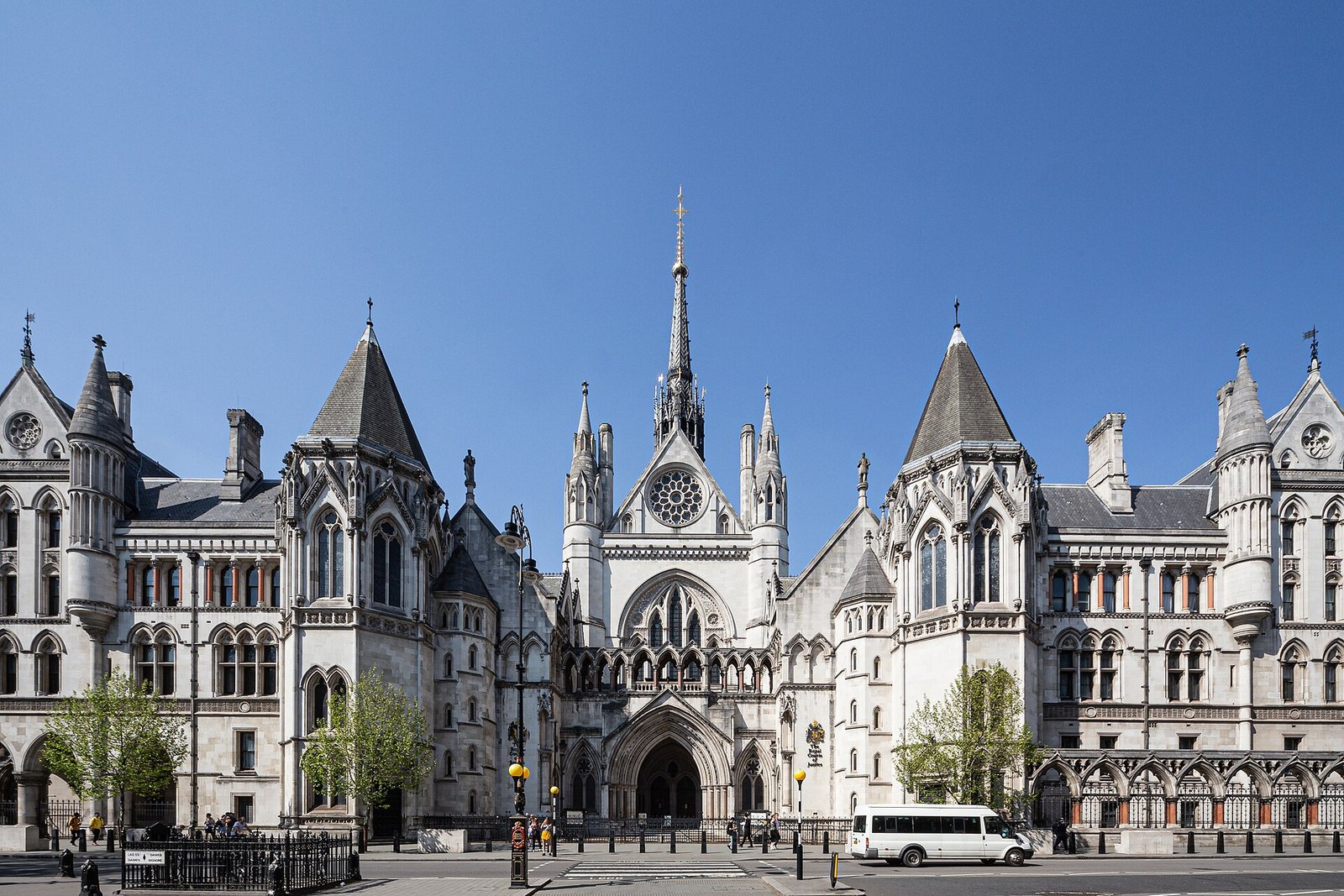
The legal framework for recovering commercial debts
Commercial debt recovery in England and Wales rests on a handful of statutes, the Civil Procedure Rules (CPR) and the insolvency legislation. Knowing which one gives you leverage in a particular case is the core of what debt recovery solicitors London creditors instruct actually do.
Late Payment of Commercial Debts (Interest) Act 1998
Where a business-to-business contract for goods or services does not provide a substantial remedy for late payment, the Late Payment of Commercial Debts (Interest) Act 1998 implies a right to statutory interest. Government guidance confirms the rate is 8% plus the Bank of England base rate.
Section 5A adds a fixed sum for each qualifying debt: £40 for a debt under £1,000, £70 for a debt of £1,000 to under £10,000, and £100 for £10,000 or more. Reasonable recovery costs above that fixed sum can also be claimed in some cases. Our guide to claiming late payment interest works through the calculation.
Limitation
Under section 5 of the Limitation Act 1980, an action founded on simple contract cannot be brought after six years from when the cause of action accrued. Deeds, part-payments and written acknowledgments can change the analysis, so check the date of each invoice rather than the account as a whole. See our note on limitation periods.
Civil Procedure Rules and pre-action conduct
Where the debtor is an individual, including a sole trader, the creditor must follow the Pre-Action Protocol for Debt Claims. It requires a letter of claim with an information sheet and reply form, and gives the debtor 30 days to respond. Business-to-business debts fall under the general Practice Direction on Pre-Action Conduct instead.
Once proceedings are issued, CPR Part 12 allows default judgment if the defendant does not acknowledge service or file a defence. CPR Part 24 allows summary judgment where a defence has no real prospect of success and there is no other compelling reason for a trial.
Insolvency Act 1986
Section 123 of the Insolvency Act 1986 deems a company unable to pay its debts if it ignores a statutory demand for more than £750 for three weeks, or if execution of a judgment is returned unsatisfied. For individuals, the bankruptcy threshold is currently £5,000.
Reform: the Commercial Payments Bill
The Commercial Payments Bill [HL], introduced in the House of Lords in May 2026, would cap most commercial payment terms at 60 days, imply statutory interest that cannot be contracted out of, and give the Small Business Commissioner an adjudication scheme and penalty powers. It was still before Parliament in October 2026, and commencement is expected no earlier than 2027. Draft new contracts with the likely changes in mind.
Scotland and Northern Ireland differ. Scotland has its own court procedures (including simple procedure in the sheriff court) and diligence rules, and Northern Ireland enforces judgments through the Enforcement of Judgments Office. The 1998 Act applies across the UK, with separate regulations in Scotland.
| Route | Best used when | Main advantage | Main risk |
|---|---|---|---|
| Letter before claim | Every case, before issuing | Cheap; many debtors pay or propose terms | Too soft a letter invites delay |
| County Court money claim (online or form N1) | Undisputed or weakly disputed debts | Default judgment possible quickly | Defended claims move to allocation and case management |
| High Court claim (Business and Property Courts) | High-value or complex claims, guarantees, cross-border defendants | Specialist judges; suits urgent interim relief | Higher cost exposure if the claim is defended |
| Statutory demand (company) | Undisputed debt over £750 owed by a company | Strong pressure; can lead to winding up | Misuse on a disputed debt can attract an injunction and costs |
| Statutory demand (individual) | Undisputed debt over £5,000, for example under a guarantee | Bankruptcy leverage over guarantors | Debtor may apply to set aside within 18 days |
| Arbitration | Contract contains an arbitration clause | Award enforceable in New York Convention states | No default judgment; tribunal costs |
Choosing the right route: litigation, insolvency or negotiated terms
The single most important decision is whether the debt is genuinely disputed. If the customer has a real defence or counterclaim, insolvency processes are the wrong tool, and court proceedings with a summary judgment application are usually right.
The courts have long treated a winding-up petition as inappropriate where a debt is disputed on substantial grounds. Presenting one anyway risks an injunction, an adverse costs order and damage to your negotiating position. Our guides to the statutory demand and winding-up petitions explain the threshold.
Track allocation and cost exposure
Defended money claims are allocated to a track. Under CPR 26.9, the small claims track is the normal track for claims up to £10,000, the fast track for claims up to £25,000, and the intermediate track for many claims up to £100,000 that can be tried in three days or less. Larger or more complex claims go to the multi-track.
Track matters because it controls how much of your legal spend you can recover. On the small claims track, recoverable costs are very limited; on the fast and intermediate tracks they are largely fixed. Decide early whether the debt justifies the spend.
When negotiated terms beat judgment
A debtor with a real business and a temporary cash problem may pay more, faster, under a structured plan backed by security or a personal guarantee. A judgment against an insolvent company may be worth nothing. Good debt recovery solicitors London clients rely on will test solvency before recommending a fight.
Before you spend on proceedings, run a quick asset check: filed accounts and charges at Companies House, land registered in the debtor's name at HM Land Registry, and any existing county court judgments. If the debtor has nothing to enforce against, a negotiated plan or an insolvency claim may be the better use of money.
The debt recovery process step by step
Most business-to-business cases our debt recovery solicitors London team runs follow the same core sequence. The timings below are typical rather than fixed; the court controls the timetable once a claim is defended.
- Triage the debt. Confirm the contracting entity, the terms (including any interest, retention-of-title and jurisdiction clauses), the invoices and any disputes raised. Check limitation and the debtor's solvency.
- Send a letter before claim. Set out the sum, interest and fixed compensation, and a deadline. For individual debtors use the protocol information sheet and reply form; for companies a reasonable period, normally 14 days in a simple case, is usual. Our letter before claim guide sets out the content.
- Issue proceedings. Most claims are issued in the County Court, online or on form N1 through the Civil National Business Centre. Higher-value or complex claims may be issued in the High Court.
- Seek judgment. If no acknowledgment or defence is filed in time, request default judgment. If a defence is filed but is weak, apply for summary judgment under CPR Part 24.
- Engage with ADR. Defended small claims of £10,000 or less are referred to the free court mediation service. In larger claims, the court can order the parties to engage in mediation or other ADR.
- Enforce the judgment. Use an order to obtain information, then the most efficient tool: control of goods, a third-party debt order, a charging order or attachment of earnings.
- Escalate through insolvency if needed. An unsatisfied judgment can ground a winding-up or bankruptcy petition, putting the debtor's affairs in the hands of an insolvency practitioner.
Documents and evidence to assemble
Debt claims are won or lost on paperwork. A clear, chronological file handed to your debt recovery solicitors London team on day one lets your solicitor issue fast and makes a summary judgment application credible.
- The contract. Signed agreement, accepted quotation or purchase order, and the terms and conditions incorporated into it, with evidence of how they were incorporated.
- Proof of performance. Delivery notes, signed timesheets, acceptance certificates, emails confirming work was completed.
- Invoices and statements. Each invoice with its due date, plus a running statement of account showing payments and credits.
- Chasers and replies. Every reminder and any reply, especially anything admitting the debt or promising payment.
- Dispute history. Any complaint the debtor raised, when it was raised and how it was answered. Late complaints raised only after chasing are often weak.
- Security documents. Guarantees, debentures, retention-of-title clauses and any personal guarantees given by directors.
Electronic records count. Keep native email files and system exports rather than screenshots wherever possible, because metadata can matter if authenticity is challenged.
Enforcing a judgment: turning paper into cash
A judgment is only as valuable as the creditor's ability to enforce it. Government guidance lists the main tools, and each suits a different debtor profile.
Order to obtain information. A company officer can be ordered to attend court and answer questions about the company's assets and accounts. This is often the best first step when you do not know what the debtor owns.
Control of goods. Enforcement agents can take and sell goods. Judgments for between £600 and £5,000 can be enforced through the County Court or the High Court; judgments over £5,000 must use the High Court route, where High Court Enforcement Officers act.
Third-party debt orders. These freeze money held by a bank or another third party that owes the debtor money, and then direct payment to the creditor. They work well against trading companies with active accounts.
Charging orders. A charge over the debtor's land secures the judgment and, in time, can support an order for sale. Useful against property-owning companies and guarantors.
Attachment of earnings. Deductions from an individual debtor's wages. Relevant mainly to personal guarantors.
Enforcement cannot proceed against an individual who has a Breathing Space moratorium. For assets abroad or at risk of dissipation, see our enforcement of judgments and injunctions pages.
The best recoveries are decided before the claim is issued: by choosing the right debtor, the right route and the right asset to enforce against.
Risks and common mistakes in commercial debt recovery
Using a statutory demand or winding-up petition on a disputed debt
Insolvency procedures are designed for debts that are due and undisputed. If the company shows a dispute on substantial grounds, the court can restrain a petition by injunction and order the creditor to pay costs, sometimes on the indemnity basis. Even a weak-looking dispute deserves careful analysis before you serve a demand. Where the dispute is real, issue a claim and apply for summary judgment instead. That route tests the defence on its merits and produces a judgment you can enforce, and it can later support a petition if the judgment remains unpaid.
Suing the wrong entity
Group trading names, recently restructured businesses and franchise arrangements often hide which company actually contracted. A judgment against a shell is worthless if the assets sit elsewhere in the group. Check the purchase order, the invoices, the bank account the payments came from, and Companies House records before issuing. If a parent company or director guaranteed the debt, consider joining the guarantor from the start rather than suing in sequence, which doubles cost and delay.
Missing limitation on older invoices
Long-running accounts often include invoices approaching the six-year limit for contract claims. Each invoice usually has its own accrual date, so a single statement of account can contain both live and time-barred debts. A written acknowledgment or a part-payment can restart time in some circumstances, but only if it meets the statutory requirements. Do not assume a running account keeps everything alive. Diarise limitation dates and issue protectively if a negotiated plan is taking longer than expected.
Ignoring pre-action requirements
Where the debtor is an individual or sole trader, the Pre-Action Protocol for Debt Claims applies and the court expects its 30-day response period to be respected. Failure can lead to a stay of proceedings, interest penalties or adverse costs, even if you win. For company debtors, the Practice Direction on Pre-Action Conduct still expects a proper letter and a reasonable time to reply. Since the courts confirmed in 2023 that they can order parties to engage in ADR, and the CPR were amended in October 2024, unreasonable refusal to mediate carries more risk than before.
Spending more than the debt can return
Recoverable costs on the small claims, fast and intermediate tracks are limited or fixed, so a creditor can win and still be out of pocket. Model the likely spend against the realistic recovery, taking account of the debtor's solvency and the enforcement route. For smaller debts, a firm letter, the statutory fixed sum and a well-run online claim are often enough. Save heavier litigation spend for debts where the amount, a guarantee, or the precedent for other customers justifies it.
Cross-border debts: Bangladesh, the EU, the Gulf and Asia
Many of our clients sell to, or borrow from, counterparties abroad. A London judgment or award is only the start when the debtor's assets are overseas. Debt recovery solicitors London businesses use for international work should plan enforcement at the contract stage.
European Union. The Hague Judgments Convention 2019 came into force for the UK on 1 July 2025. It eases recognition of qualifying English judgments in EU member states (other than Denmark) and other contracting states, generally for proceedings started after it applied in both states. Exclusive jurisdiction clauses may also bring the 2005 Hague Choice of Court Convention into play.
Bangladesh. Enforcing an English judgment in Bangladesh depends on Bangladeshi civil procedure and the status of the UK under it, and may require fresh proceedings. Our guides on enforcing an English judgment in Bangladesh and enforcing London arbitration awards explain the options, and our Dhaka colleagues handle local steps.
Gulf and Singapore. The DIFC and ADGM courts in the UAE, and the Singapore courts, each have their own routes for recognising English judgments. Arbitration awards benefit from the New York Convention in all of these jurisdictions, which is why many exporters prefer London arbitration clauses.
China. Recognition practice for foreign judgments has developed, but outcomes remain uncertain. An arbitration clause seated in London, Hong Kong or Singapore is often the safer contract choice. Serving proceedings abroad may also require the court's permission, which adds time.
How TRW & Co helps creditors
As debt recovery solicitors London creditors can call on directly, we combine litigation, insolvency and cross-border enforcement in one team. Where advocacy in the higher courts is required, we instruct specialist counsel.
Debt triage and strategy
We review the contract, invoices and dispute history, check limitation and solvency, and recommend the most cost-effective route. You get a clear view of likely spend and recovery before committing.
Letters and pre-action work
We prepare protocol-compliant letters before claim, calculate statutory interest and fixed sums, and respond to spurious disputes. Many debts settle at this stage.
Court proceedings
We issue claims in the County Court or the High Court, apply for default and summary judgment, and run defended claims through to trial where needed.
Insolvency leverage
For undisputed debts we prepare statutory demands and winding-up or bankruptcy petitions, and advise on contentious insolvency claims against office-holders and directors.
Enforcement
We obtain information orders, third-party debt orders and charging orders, instruct enforcement officers, and pursue guarantors.
International recovery
We coordinate enforcement in Bangladesh through our Dhaka office and with trusted local counsel in the EU, Gulf and Asia, and register foreign judgments and awards in England.
Browse all our practice areas or contact the London office at Holborn Gate, 330 High Holborn, London WC1V 7QH (info@trw.co, +880 1779 127165).
Checklist for credit controllers and finance directors
- Confirm the exact legal entity that owes the money and whether anyone guaranteed it.
- Collect the contract, terms, invoices, delivery proof and all correspondence in one file.
- Check the six-year limitation date for each invoice.
- Calculate statutory interest and the fixed sum, unless the contract sets its own rate.
- Check the debtor's filed accounts, charges and property ownership before spending on litigation.
- Decide whether the debt is genuinely disputed: if so, avoid insolvency routes.
- Follow the correct pre-action steps and keep a record of every exchange.
- Plan enforcement before issuing, especially where assets are abroad.
- Review your standard terms for interest, retention of title, jurisdiction and payment terms that will survive the Commercial Payments Bill.
If you need debt recovery solicitors London based and internationally connected, we can review a debt file quickly and tell you whether it is worth pursuing. See also our guide on how to recover unpaid invoices.
Frequently asked questions
01How much interest can I claim on a late commercial invoice?
If your contract does not set its own substantial remedy, the Late Payment of Commercial Debts (Interest) Act 1998 implies statutory interest at 8% plus the Bank of England base rate, running from the due date. You can also claim a fixed sum of £40, £70 or £100 per invoice depending on its size, and in some cases reasonable recovery costs above that. If your contract sets an interest rate, that rate usually applies instead, so check your terms before calculating. Interest can be included in a letter before claim and in the court claim itself.
02Should I serve a statutory demand or issue a court claim?
Serve a statutory demand only where the debt is clearly due and undisputed and exceeds the threshold, which is £750 for a company and £5,000 for an individual. A demand can apply strong pressure, because ignoring it allows a winding-up or bankruptcy petition. If the debtor has raised a genuine dispute, the court may restrain a petition and order you to pay costs. In that case issue a money claim and, if the defence is weak, apply for summary judgment. That route produces an enforceable judgment either way.
03How long does it take to get a judgment for an unpaid invoice?
If the debtor does not respond to a properly served claim, default judgment can often be obtained within weeks of the response deadline passing. If a defence is filed, timing depends on the track and whether a summary judgment application is appropriate. Small claims may be referred to mediation first. Defended multi-track claims can take a year or more to reach trial. Pre-action steps also take time: individual debtors must have 30 days to respond under the Pre-Action Protocol for Debt Claims.
04What if the debtor is based outside England?
You may still be able to sue in England, particularly if your contract has an English jurisdiction clause, though serving abroad can require permission and adds time. The real question is enforcement. The Hague Judgments Convention 2019 now helps with English judgments in the EU for newer proceedings, and arbitration awards are enforceable in New York Convention states, including the UAE, Singapore and China. For Bangladesh, TRW & Co's Dhaka office can advise on local recognition and enforcement steps.
05Can I recover my legal costs?
Usually in part, depending on the track. On the small claims track, recoverable costs are very limited. On the fast and intermediate tracks, costs are largely fixed. On the multi-track, the court assesses costs and a winning party typically recovers a significant proportion, but rarely all. Contractual indemnities for collection costs can improve the position, and the statutory fixed sum under the 1998 Act may help on smaller debts. We give a realistic view of recoverable costs before you commit.
06Is mediation compulsory in debt claims?
For defended small claims of £10,000 or less, the court refers the parties to its free mediation service, and failing to attend can lead to sanctions. For larger claims, the Court of Appeal confirmed in 2023 that courts can order parties to engage in ADR, and the Civil Procedure Rules were amended in October 2024 to reflect that. Refusing a reasonable offer to mediate can therefore hurt you on costs even if you win. Mediation is often worth trying where the debtor is solvent but disputes part of the sum.
07What happens if the debtor company goes into administration or liquidation?
Court proceedings against the company are generally stayed, and you become an unsecured creditor who must submit a proof of debt to the office-holder, unless you hold security or a valid retention-of-title claim. Act quickly to identify your goods if your terms include retention of title. Also look for personal guarantees from directors, and consider whether directors' conduct gives the office-holder claims for wrongful trading or misfeasance that could improve the dividend.
Sources and official materials
- Late Payment of Commercial Debts (Interest) Act 1998 — Statutory interest and fixed sums on business debts
- Late commercial payments: charging interest and debt recovery — GOV.UK guidance on statutory interest and recovery costs
- Pre-Action Protocol for Debt Claims — Pre-action steps where the debtor is an individual
- Make a court claim for money — County Court claims, mediation and enforcement
- Insolvency Act 1986, section 123 — When a company is deemed unable to pay its debts
- Limitation Act 1980, section 5 — Six-year time limit for contract claims
- Commercial Payments Bill [HL] — Parliamentary progress of late-payment reform
General information only, current as at 21 October 2026. It is not legal advice and does not create a solicitor–client relationship. It reflects the law of England and Wales unless stated otherwise; Scotland and Northern Ireland have separate legal systems, and the law changes frequently. Check current official sources and take advice on the facts of your matter.