
TRW & Co · Disputes & Arbitration
Civil Fraud and Asset Recovery Solicitors in London
Civil fraud solicitors London businesses and investors instruct help them trace stolen money, freeze assets before they move and sue fraudsters, facilitators and recipients. English courts offer powerful tools, from worldwide freezing orders to information orders against banks abroad, but they reward speed and candour. The first days after discovery usually decide whether a judgment turns into a recovery.
Key pointFraud postpones limitation: under section 32 of the Limitation Act 1980, time does not run until the fraud was, or with reasonable diligence could have been, discovered. Speed still matters, because assets move far faster than limitation runs.
At a glance
Freezing orders worldwide
The High Court can restrain a respondent from dealing with assets anywhere, under section 37 of the Senior Courts Act 1981 and CPR Part 25.
Fraud postpones limitation
Section 32 of the Limitation Act 1980 delays the start of the limitation period until fraud or deliberate concealment is, or could reasonably have been, discovered.
Information orders abroad
Since 1 October 2022, PD 6B gateway 25 allows applications to serve information orders on non-parties outside England and Wales.
Failure to prevent fraud
Since 1 September 2025, large organisations can be criminally liable if an associate commits fraud to benefit them and reasonable procedures were lacking.
Bank liability narrowed
Philipp v Barclays [2023] UKSC 25 held the Quincecare duty does not apply to a customer's own authorised payment instruction.
Swipe or scroll →
What civil fraud and asset recovery cover in England and Wales
Civil fraud solicitors London victims instruct are asked to do two things at once: prove that money or property was taken dishonestly, and get it back before it disappears. Civil fraud claims are brought by the victim in the civil courts for compensation or the return of property. They run separately from any criminal prosecution, use the civil standard of proof (the balance of probabilities) and give the claimant control over the strategy and timing.
Typical cases include misappropriation by a director or employee, investment and Ponzi-style schemes, bribery of an agent, invoice redirection and authorised push payment scams, sham transactions to strip assets from a company before insolvency, fraudulent misrepresentation to induce a share purchase or loan, and cryptoasset theft. Many are international: the money passes through accounts and companies in several jurisdictions within days.
Fraud becomes a legal question the moment there is credible suspicion. The early days matter most. Evidence can be deleted, assets moved and defendants alerted. A business that confronts a suspect, or reports to the bank, before securing its civil remedies may lose the chance of a successful recovery. The right order of steps, and the urgency of each, is the core of the advice.
Where a fraud is inside a regulated firm or listed company, regulatory and criminal exposure run alongside the civil claim. Our corporate investigations team often works with the asset recovery team from day one.
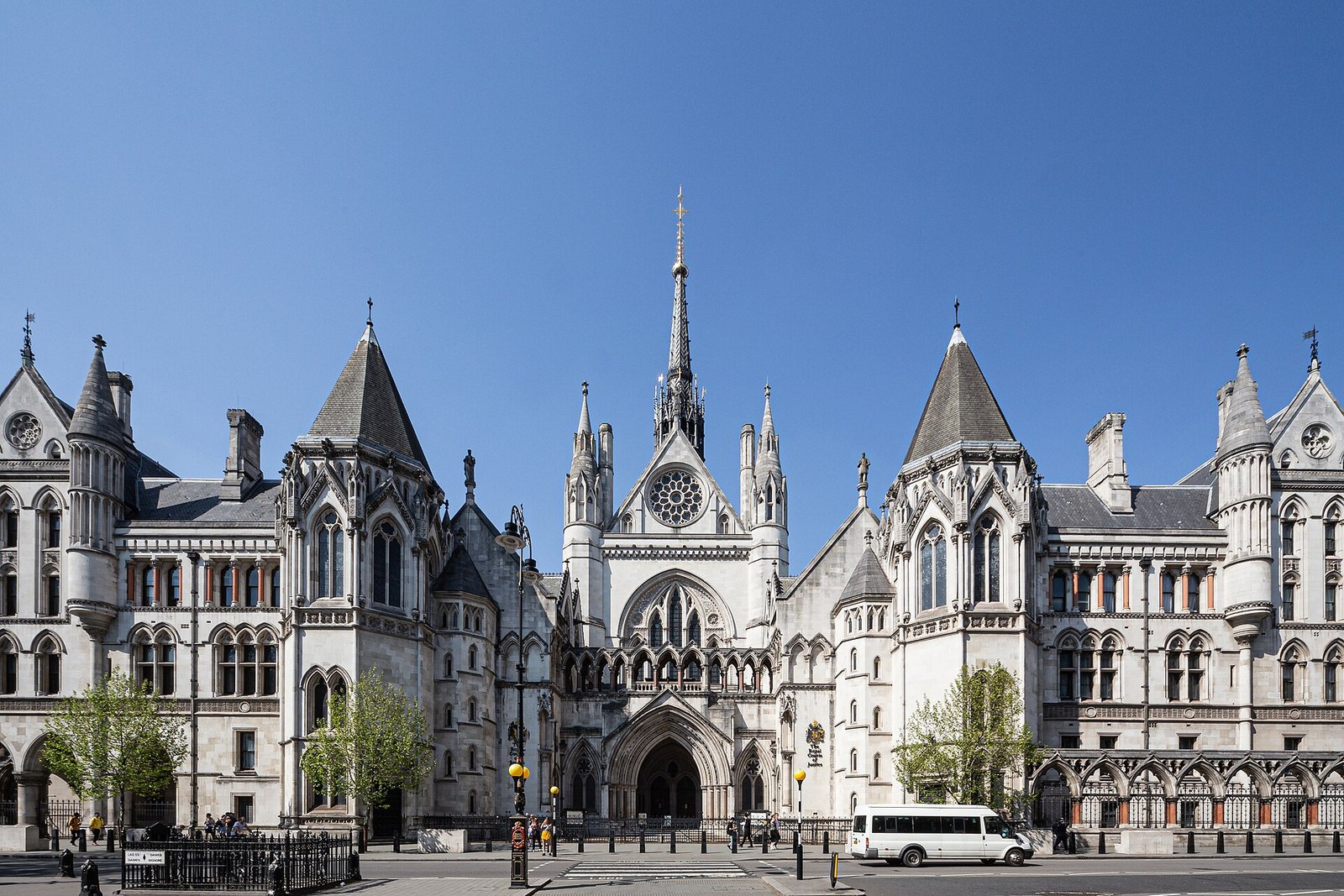
The legal framework: causes of action and the courts
There is no single civil wrong called "fraud". Civil fraud solicitors London clients rely on build the claim from several causes of action, chosen to reach both the wrongdoer and anyone who helped or received the proceeds.
Personal claims against wrongdoers
- Deceit. A false representation made knowingly, or recklessly as to its truth, intended to be relied on and causing loss. Damages cover all loss directly flowing from the deceit.
- Unlawful means conspiracy. Two or more people combining to injure the claimant by unlawful acts. This reaches the organisers and facilitators of a scheme, not only the person who made the representation.
- Breach of fiduciary duty and breach of trust. Directors, trustees, agents and senior employees who misuse company money or take secret profits must account for them.
- Dishonest assistance and knowing receipt. Third parties who dishonestly help a breach of trust, or receive trust property knowing it was misapplied, can be personally liable even if they no longer hold the money.
Proprietary claims and tracing
A proprietary claim asserts that particular assets belong in equity to the victim. Tracing rules allow the claimant to follow misappropriated funds through bank accounts and into substitute assets, such as property or shares bought with the proceeds. A proprietary claim can take priority over unsecured creditors if the defendant becomes insolvent, which is often decisive.
Courts and related regimes
High-value fraud claims are normally issued in the Business and Property Courts, including the Commercial Court and the Business List of the Chancery Division. The court's power to grant injunctions comes from section 37 of the Senior Courts Act 1981, and the procedure for interim remedies is in CPR Part 25.
Two public regimes sit alongside private claims. The Proceeds of Crime Act 2002 allows enforcement authorities to pursue civil recovery and unexplained wealth orders. And since 1 September 2025, large organisations face the corporate offence of failure to prevent fraud under section 199 of the Economic Crime and Corporate Transparency Act 2023, where an associated person commits a specified fraud offence intending to benefit the organisation and it lacked reasonable prevention procedures.
Key decisions for civil fraud solicitors London victims instruct
The first strategic choice is whether to move without notice. A without-notice application lets the claimant obtain a freezing or search order before the defendant knows of the claim. It also carries a strict duty of full and frank disclosure: the applicant must put before the judge every material fact, including those that help the defendant. Breach can lead to the order being discharged.
| Remedy | What it does | Key requirements |
|---|---|---|
| Freezing injunction (domestic or worldwide) | Prevents the respondent from disposing of or dealing with assets up to a stated value | Good arguable case; real risk of dissipation; usually a cross-undertaking in damages |
| Proprietary injunction | Preserves specific assets the claimant says belong to it | Serious issue to be tried; balance of convenience |
| Search order | Permits entry to premises to search for and preserve evidence | Extremely strong prima facie case; serious potential damage; real possibility evidence will be destroyed |
| Norwich Pharmacal order | Requires an innocent third party mixed up in the wrongdoing to disclose information, such as a wrongdoer's identity | Arguable wrong; respondent mixed up in it; order necessary and proportionate |
| Bankers Trust order | Requires a bank to disclose documents tracing the claimant's money | Strong case that funds belong to the claimant; urgency; proportionality |
| Disclosure orders ancillary to a freeze | Requires the respondent to list assets worldwide, often on affidavit | Made alongside a freezing order to make it effective |
Civil, criminal or both
Reporting to the police or the Serious Fraud Office may lead to a prosecution and confiscation, but victims have little control over pace or priorities. A civil claim gives control and the full toolkit of interim relief, at the claimant's cost and risk. Many victims run both, with care over the sequence so that a criminal investigation does not tip off a defendant before civil orders are in place. Private prosecutions are a further option in some cases; our white-collar crime team advises on that route.
Who to sue
The primary fraudster may be insolvent or untraceable. Banks, professional advisers, recipients of funds and corporate vehicles may all be targets, but each requires a distinct legal basis. In Philipp v Barclays Bank UK plc [2023] UKSC 25, the Supreme Court held that the so-called Quincecare duty does not require a bank to second-guess a customer's own authorised payment instruction in an authorised push payment fraud, which narrows claims against paying banks. Consumers and small businesses may instead have rights under the mandatory APP fraud reimbursement regime overseen by the Payment Systems Regulator; see our guide to APP fraud reimbursement.
Insolvency routes to recovery
Where a company has been used as the vehicle for fraud, or stripped of assets, insolvency law adds further tools. A liquidator can ask the court to order anyone knowingly party to fraudulent trading to contribute to the company's assets under section 213 of the Insolvency Act 1986. Section 423 allows the court to unwind transactions at an undervalue entered into to put assets beyond the reach of creditors, and victims, as well as office-holders, can in some circumstances bring those claims.
Office-holders also have statutory powers to obtain information and examine those who dealt with the company. For a creditor, putting a fraudulent debtor company into liquidation can therefore unlock remedies and information that are harder to obtain in ordinary litigation, although the recoveries then belong to the estate for all creditors rather than to the petitioner alone.
In asset recovery, speed is not a tactic. It is usually the difference between a judgment and a recovery.
The asset recovery process step by step
Every fraud is different, but most recoveries follow a recognisable sequence. Civil fraud solicitors London teams aim to compress the first four steps into days, not months.
- Triage and preservation. Secure devices, emails, accounting data and bank records; suspend document deletion; avoid confronting suspects until advised.
- Tracing and intelligence. Map the flow of funds through bank statements, corporate registries, property records and, where lawful, investigators' reports, identifying where value has come to rest.
- Information orders. Seek Norwich Pharmacal or Bankers Trust orders against banks, exchanges or platforms to identify recipients and follow funds, including against foreign parties where the PD 6B gateway permits.
- Freezing and proprietary relief. Apply, usually without notice, for freezing or proprietary injunctions and ancillary disclosure, then serve them on banks and the respondents.
- Return date and claim. Attend the on-notice return date, issue and serve the claim form and particulars of claim, and deal with any jurisdiction challenge.
- Trial or summary judgment. Pursue summary judgment or default judgment where the defence is weak; otherwise progress through disclosure, witness and expert evidence to trial.
- Enforcement and realisation. Enforce through charging orders, third-party debt orders, receivers or insolvency processes, and pursue recognition abroad.
Documents and evidence to assemble
Fraud must be clearly pleaded and properly particularised. A barrister or solicitor cannot plead fraud without reasonably credible material to support it, so early evidence gathering directly shapes what the claim can allege. Civil fraud solicitors London courts see most often are judged on the quality of their evidence at the first hearing.
Financial trail
Bank statements, payment confirmations, SWIFT messages, ledgers and crypto wallet addresses or transaction hashes. These anchor the tracing exercise and the value of any freezing order.
Representations made
The emails, pitch decks, contracts, invoices or messages that contained the false statements, with metadata showing who sent them and when.
Corporate records
Board minutes, authorisation limits, delegated authority policies and registers, which show whether payments were properly approved and who had control.
Witness accounts
Contemporaneous notes from staff who dealt with the fraudster, captured before memories fade or loyalties shift. Keep these privileged by involving lawyers early.
If you discover the fraud through an internal report or whistleblower, do not let managers interview suspects or seize personal devices without legal advice. Mishandled evidence can be excluded, can breach data protection and employment law, and can alert others in the scheme.
Risks and common mistakes
Fraud litigation is high-stakes for both sides. The following risks arise repeatedly and are worth understanding before any application is made.
Failing in the duty of full and frank disclosure
An applicant without notice must present the case fairly, including points the absent respondent would make. Omitting material facts, overstating evidence or failing to explain weaknesses can lead the court to discharge the injunction on the return date, sometimes with an inquiry into damages and adverse costs. The safest approach is to identify the best defence points and address them openly in the evidence. Careful drafting of the supporting affidavit or witness statement is one of the most important pieces of work in the case.
Underestimating the cross-undertaking in damages
Most freezing orders require the applicant to undertake to pay any loss the respondent or third parties suffer if the order turns out to have been wrongly granted. The court may require that undertaking to be fortified, for example by a payment into court or a bank guarantee. Claimants should assess this exposure, and whether insurance or funding can support it, before applying. A foreign claimant with no assets in England may face particular scrutiny.
Assuming limitation has expired
Ordinary contract and tort claims are generally subject to six-year limitation periods in England and Wales. But under section 32 of the Limitation Act 1980, where the action is based on the defendant's fraud, or relevant facts were deliberately concealed, time does not run until the claimant discovered, or could with reasonable diligence have discovered, the fraud or concealment. Section 21 removes the limitation period altogether for certain claims against trustees for fraud or to recover trust property. Scotland has a separate prescription regime. Our guide to limitation periods explains the general rules.
Alerting the defendant too early
Sending a letter before claim, reporting to the counterparty's bank, or confronting an employee before freezing relief is in place can trigger an immediate transfer of assets. The pre-action protocol expectations that apply in ordinary disputes are relaxed where giving notice would defeat the purpose of urgent relief. Plan the sequence carefully, and brief internal teams on confidentiality until orders have been served.
Treating cryptoassets as unreachable
English courts have shown themselves willing to grant interim relief over cryptoassets, to make orders against persons unknown, and to require exchanges to disclose information about account holders. Success depends on fast blockchain analysis, identifying the exchange where assets were cashed out, and acting before the funds are moved again. Exchanges outside England may still respond to orders, or be served out of the jurisdiction with the court's permission. Our cryptoassets team assists on these matters.
Cross-border angle: Bangladesh, the Gulf, Singapore, China and the EU
Most significant frauds cross borders. English courts can grant worldwide freezing orders against respondents subject to their jurisdiction, but the order binds third parties abroad only if recognised locally, so parallel applications in the countries where assets sit are often needed. Since 1 October 2022, gateway 25 in Practice Direction 6B has allowed claimants to seek permission to serve information orders on non-parties outside England and Wales, where the information concerns the identity of a defendant or what has become of the claimant's property.
Bangladesh
Funds connected to Bangladesh frequently pass through UK property, accounts and companies. Recovering them can involve English proprietary claims and freezing orders, information orders against UK banks, and coordination with proceedings and authorities in Bangladesh. Enforcing an English judgment in Bangladesh depends on Bangladeshi procedure and on whether the judgment comes from a reciprocating jurisdiction, so local advice is essential. TRW & Co's Dhaka headquarters works with the London office on these matters; see our guide to Bangladesh-linked asset recovery in the UK and our UK–Bangladesh disputes practice.
The Gulf, Singapore, China and the EU
The UAE, Singapore and EU jurisdictions all have mechanisms for interim relief and recognising foreign judgments, though procedure and attitudes differ. The Hague 2019 Judgments Convention, in force for the UK since 1 July 2025, assists enforcement of English judgments in EU member states other than Denmark, as well as in Ukraine and Uruguay, for proceedings commenced from that date. Civil fraud solicitors London clients engage should coordinate local counsel in each asset jurisdiction from the outset, so that orders can be obtained and served in a coordinated sequence.
How TRW & Co helps
TRW & Co's London office is authorised and regulated by the Solicitors Regulation Authority. We act for companies, investors, liquidators and individuals in civil fraud and asset recovery, and for respondents facing freezing orders or fraud allegations. Where advocacy in the higher courts is required, we instruct specialist counsel.
Urgent response
We help secure evidence, coordinate forensic accountants and investigators, and plan the first applications so that assets are protected before the defendant is alerted.
Interim relief
We prepare and present applications for freezing, proprietary and search orders, and for Norwich Pharmacal and Bankers Trust disclosure, with full and frank disclosure built in.
Claims and trial
We plead and run claims in deceit, conspiracy, breach of fiduciary duty, dishonest assistance and knowing receipt through to summary judgment or trial.
Defending respondents
We advise respondents on compliance, living and legal expense allowances, applications to vary or discharge orders, and answering fraud allegations.
Enforcement and insolvency
We pursue recovery through charging orders, receivers and insolvency processes, working with our contentious insolvency team.
Cross-border coordination
We coordinate parallel proceedings with our Dhaka, Dubai and Singapore offices and local counsel elsewhere, so orders are obtained and served in sequence.
For a wider view of the firm's work, see our practices, or read our article on freezing injunctions.
Checklist for decision-makers
When fraud is suspected, civil fraud solicitors London businesses consult will usually want the following in hand at the first meeting.
- A short chronology: when the loss occurred, when it was discovered, and by whom.
- All payment records showing amounts, dates, accounts and beneficiaries.
- The communications containing the alleged misrepresentations.
- A list of everyone internally who knows of the suspicion, and a confidentiality instruction.
- Confirmation that document deletion has been suspended and devices preserved.
- Any information on the suspects' assets, companies and jurisdictions.
- Insurance policies that may respond, including crime and fidelity cover, and their notification requirements.
- A decision-maker with authority to approve urgent applications and the cross-undertaking.
- Any regulatory reporting obligations and their deadlines.
- Early contact with lawyers; contact our London office to discuss urgent steps.
Civil fraud solicitors London victims trust should give a clear early view on what can realistically be frozen, where, and at what cost and risk. That is where we start.
Frequently asked questions
01How quickly can a freezing injunction be obtained?
In urgent cases the High Court can hear a without-notice application within days, and sometimes the same day, provided the evidence is ready. The applicant must show a good arguable case, a real risk that assets will be dissipated, and must give full and frank disclosure of all material facts. Most of the time goes into preparing the evidence and the draft order. The order is then served on the respondent and on banks holding assets, and a return date is fixed for the respondent to be heard.
02What is the difference between a civil fraud claim and a criminal prosecution?
A civil claim is brought by the victim to recover money or property, decided on the balance of probabilities, and controlled by the claimant. A prosecution is brought by the state or, sometimes, a private prosecutor, requires proof beyond reasonable doubt, and aims at punishment, although confiscation and compensation orders can follow conviction. The two can run in parallel. The order of steps matters, because a police investigation can alert suspects before civil freezing orders are in place.
03Can I recover money from the fraudster's bank or the recipient?
Possibly, but each target needs a legal basis. Recipients who still hold traceable proceeds may face proprietary claims, and those who received funds knowing they were misapplied may be liable in knowing receipt. Banks are harder targets: the Supreme Court in Philipp v Barclays held that a bank need not second-guess a customer's own authorised payment instruction. Consumers and small businesses may have rights under the mandatory APP fraud reimbursement regime instead.
04Is there a time limit for bringing a civil fraud claim?
Most contract and tort claims in England and Wales must be brought within six years. In fraud cases, section 32 of the Limitation Act 1980 postpones the start of that period until the claimant discovered, or could with reasonable diligence have discovered, the fraud or deliberate concealment. Section 21 disapplies limitation for certain claims against trustees involving fraud or the recovery of trust property. Scotland has its own prescription rules. Limitation in fraud cases is fact-specific, so take advice promptly.
05Can stolen cryptocurrency be frozen and recovered?
English courts have granted interim relief over cryptoassets, made orders against persons unknown, and required exchanges to disclose information about account holders. Recovery depends on tracing the assets on-chain to an identifiable exchange or wallet, acting before they are moved again, and enforcing the orders where the exchange operates. Where an exchange is outside England, permission to serve out of the jurisdiction may be needed. Speed and specialist tracing evidence are critical.
06What happens if I am served with a freezing order?
Read it immediately and comply strictly. Breach is contempt of court, which can lead to imprisonment, fines or asset seizure. Most orders allow a sum for ordinary living expenses and reasonable legal costs, and require disclosure of assets within a short deadline. You can apply to vary or discharge the order, for example if the applicant failed to give full and frank disclosure or there is no real risk of dissipation. Take legal advice before dealing with any affected asset.
07Who pays the legal costs of a fraud claim?
The general rule in England and Wales is that the losing party pays a proportion of the winner's costs, but recovery is rarely complete and depends on the defendant having assets. Claimants often fund cases privately, through insurance, through third-party litigation funding, or by agreement with insolvency practitioners where the victim is an insolvent company. We discuss realistic budgets and funding options at the outset, so that strategy matches the likely recovery.
Sources and official materials
- Senior Courts Act 1981, section 37 — High Court power to grant injunctions and appoint receivers
- Civil Procedure Rules Part 25 — Interim remedies, including freezing and search orders
- Limitation Act 1980, section 32 — Postponement of limitation for fraud, concealment or mistake
- Failure to prevent fraud: Home Office guidance — Guidance on the ECCTA corporate offence in force from 1 September 2025
- Proceeds of Crime Act 2002, Part 5 — Civil recovery of the proceeds of unlawful conduct
- Philipp v Barclays Bank UK plc [2023] UKSC 25 — Supreme Court on the Quincecare duty and APP fraud
- Serious Fraud Office — Investigates and prosecutes serious or complex fraud
General information only, current as at 21 October 2026. It is not legal advice and does not create a solicitor–client relationship. It reflects the law of England and Wales unless stated otherwise; Scotland and Northern Ireland have separate legal systems, and the law changes frequently. Check current official sources and take advice on the facts of your matter.