
TRW & Co · Disputes & Arbitration
Group Litigation and Class Action Lawyers in the UK
Class action lawyers UK businesses and claimant groups instruct deal with Group Litigation Orders, representative actions and opt-out collective proceedings in the Competition Appeal Tribunal. With the first opt-out win at trial in Kent v Apple, funding still unsettled after PACCAR and a 2026 government consultation on reform, the choice of mechanism and funding now shapes exposure as much as the merits.
Key pointEngland has no general opt-out class action: outside competition claims, most group litigation is opt-in, and Lloyd v Google limits representative damages claims. The mechanism and the enforceability of the funding should be tested before anyone argues the merits.
At a glance
Opt-out only for competition
Opt-out collective proceedings are available only for competition claims in the Competition Appeal Tribunal, under section 47B of the Competition Act 1998.
GLOs are opt-in
Group Litigation Orders under CPR 19.21 to 19.26 manage claims with common issues; each claimant joins a register and is bound by common-issue rulings.
Lloyd v Google limits damages
Representative actions under CPR 19.8 cannot usually recover damages that need individual assessment, after the Supreme Court's 2021 decision in Lloyd v Google.
Funding still unsettled
PACCAR made percentage-based funding agreements vulnerable; reversing legislation was recommended in June 2025 but omitted from the May 2026 King's Speech.
Reform consultation in 2026
A July 2026 government consultation proposed a stricter certification test, regulated damages-based agreements, leniency immunity and Tribunal fees for collective actions.
Swipe or scroll →
What group litigation and class actions cover in England and Wales
Group litigation is the umbrella term for claims in which many claimants, sometimes thousands or millions, pursue the same or similar complaints against one or more defendants. Businesses facing these claims, and organisations considering bringing them, look for class action lawyers UK practitioners who understand that England has no single class action procedure. Instead it has several mechanisms, each with its own rules on who is bound, how claims are funded and what the court must approve.
The main subjects are competition damages, consumer and data claims, shareholder claims over misleading disclosures, product liability, environmental and human rights claims against parent companies, and claims arising from financial mis-selling. Many involve claimants overseas suing English-domiciled companies, which has made London an important forum for mass claims.
For a defendant, a group claim becomes a legal question long before anything is issued. Claimant firms and funders often run public "book-building" campaigns, and a regulatory decision, a data incident or a critical report can prompt one within weeks. Early decisions about communications, document preservation and insurance notification shape how the claim later unfolds.
For a claimant group, the key questions are which mechanism is available, whether claims share enough common ground to be managed together, and whether the case can be funded. Experienced class action lawyers UK clients rely on will answer those questions before anyone signs up claimants.
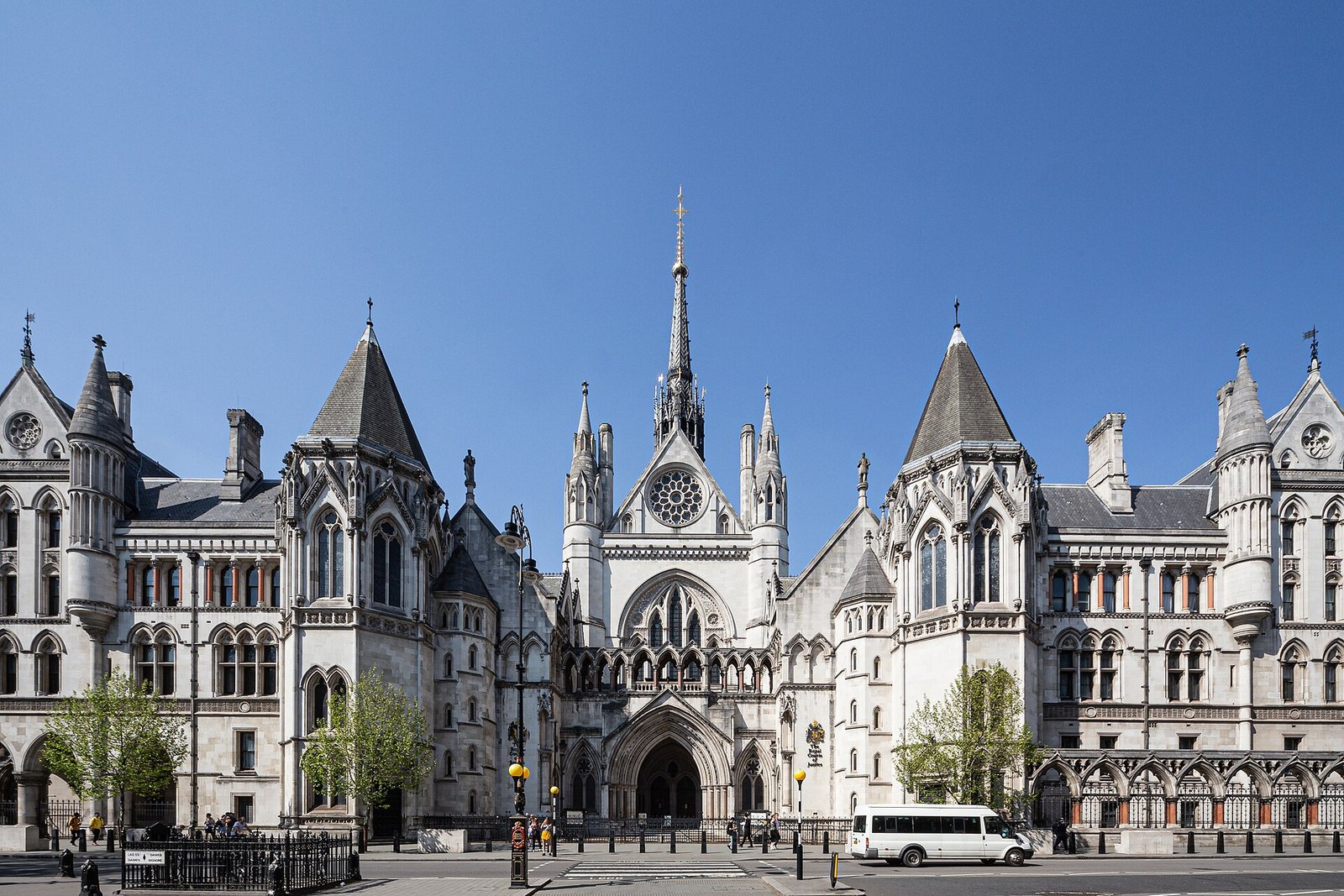
The procedural mechanisms compared
For class action lawyers UK claimants and defendants instruct, the choice of mechanism decides almost everything else: whether claimants must opt in, how damages are assessed, what the funder can recover and how much control the court exercises over settlement.
| Mechanism | Where | Opt-in or opt-out | Typical use | Key constraint |
|---|---|---|---|---|
| Group Litigation Order (CPR 19.21 to 19.26) | High Court and County Court | Opt-in: each claimant issues a claim and joins a group register | Product liability, environmental, shareholder and financial claims | Every claimant must be identified; costs are usually shared across the group |
| Representative action (CPR 19.8) | High Court | Effectively opt-out for those with the "same interest" | Declarations of common liability; some claims where loss is uniform | Lloyd v Google limits its use where damages need individual assessment |
| Collective proceedings, opt-out (Competition Act 1998, section 47B) | Competition Appeal Tribunal | Opt-out for UK-domiciled class members | Consumer and business competition damages claims | Competition claims only; the Tribunal must certify the class and approve the representative |
| Collective proceedings, opt-in | Competition Appeal Tribunal | Opt-in | Business claimants with identifiable losses | Requires class members to sign up |
| Multiple claims managed together | High Court | Opt-in | Large numbers of claimants issued together, with lead or test cases | Relies on active case management rather than a formal order |
Rules in the Civil Procedure Rules were renumbered in April 2023, so older material refers to GLOs under CPR 19.10 to 19.15 and representative actions under CPR 19.6. The current text is on legislation.gov.uk.
The legal framework and leading decisions
Group Litigation Orders
A court may make a GLO where there are, or are likely to be, a number of claims giving rise to common or related issues of fact or law. The order sets up a group register, a managing court, a cut-off date for joining, and arrangements for lead solicitors and test claims. Judgments on GLO issues bind every claimant on the register. Costs are normally shared between group members in proportion to their claims, which makes funding and after-the-event insurance arrangements critical.
Representative actions after Lloyd v Google
In Lloyd v Google LLC, the Supreme Court refused to allow a representative claim for damages for alleged data misuse on behalf of millions of iPhone users. It held that compensation required proof of what had happened to each individual, so the class did not share the "same interest" in damages. The court did indicate that a two-stage approach, with common liability issues decided first, could be workable.
Since then the Court of Appeal allowed a representative claim to proceed in Commission Recovery Ltd v Marks & Clerk LLP, concerning alleged undisclosed commissions. Representative actions remain available, but the claim must be framed carefully around a genuinely common interest.
Competition collective proceedings
The Consumer Rights Act 2015 introduced opt-out collective proceedings in the Competition Appeal Tribunal under section 47B of the Competition Act 1998. The Tribunal must authorise a class representative and certify that the claims raise the same, similar or related issues and are suitable for collective proceedings. In Mastercard v Merricks, the Supreme Court held that certification should not become a mini-trial and that difficulties in quantifying loss do not by themselves prevent certification.
The regime has now produced results in both directions. The first two opt-out claims to reach trial, Le Patourel v BT and Gutmann v First MTR, were dismissed. In October 2025 the Tribunal gave judgment for the class in Kent v Apple, the first opt-out claim to succeed at trial; Apple said it would appeal. The Merricks claim itself settled, and the Tribunal approved a £200m settlement in 2025. Our competition colleagues cover these claims in more depth on the competition litigation page.
Parent company and overseas claims
English-domiciled parent companies can be sued in England for harm caused by overseas subsidiaries where the parent assumed responsibility for the relevant operations. The Supreme Court allowed such claims to proceed in Vedanta Resources v Lungowe and Okpabi v Royal Dutch Shell. The largest claim of this kind, Município de Mariana v BHP, concerning a 2015 dam collapse in Brazil, resulted in a High Court liability finding against BHP in late 2025.
Funding, costs and the reform agenda
Group claims are expensive to run, and almost all are funded by third-party litigation funders, insurers or law firms on a conditional basis. Funding is therefore central to the advice class action lawyers UK claimants and defendants receive.
PACCAR and litigation funding agreements
In R (PACCAR Inc) v Competition Appeal Tribunal, the Supreme Court held that funding agreements that pay the funder a percentage of damages are damages-based agreements. That made many existing agreements unenforceable unless they met strict statutory conditions, and such agreements are not permitted at all in opt-out competition claims. Funders have since moved to returns based on a multiple of their outlay.
The Civil Justice Council recommended legislation to reverse PACCAR and introduce light-touch regulation of funding in June 2025, and the government said it would legislate when parliamentary time allowed. However, the May 2026 King's Speech did not include that legislation, so the position remains unresolved. Our note on litigation funding in the UK tracks it.
The 2026 consultation on collective actions
In July 2026 the Department for Business and Trade published a consultation on reforms to opt-out collective actions, regulatory appeals and Competition Act enforcement, which closed on 25 September 2026. Proposals reported include a stricter certification test with a cost-benefit element, allowing damages-based agreements with safeguards, immunity from private claims for leniency applicants, more emphasis on ADR, and fees for bringing claims in the Tribunal. The government has not extended opt-out claims beyond competition law, but has asked the Law Commission to look at consumer class actions. The SRA is consulting separately on solicitors' use of litigation funding.
In English group litigation, the mechanism, the funding and the class definition are decided before the merits. Get those wrong and the merits may never be heard.
How a group action unfolds
The process depends heavily on the mechanism, but most High Court group claims, and the strategy class action lawyers UK defendants adopt, follow a broadly similar arc.
- Trigger and assessment. A regulatory decision, incident, disclosure or investigation prompts potential claims. Both sides assess the legal theory, the likely class and the size of the exposure.
- Funding and book-building. Claimant firms secure funding and after-the-event insurance and sign up claimants, or a proposed class representative prepares a Tribunal application.
- Pre-action correspondence. Letters of claim are exchanged, often on behalf of a lead group, with requests for documents and proposals on case management.
- Choosing or challenging the mechanism. Claimants apply for a GLO or certification, or issue a representative claim; defendants consider jurisdiction challenges, strike-out and resistance to certification.
- Case management. The court or Tribunal sets a cut-off date, identifies common issues and lead or test cases, and decides the order in which liability and quantum will be tried.
- Disclosure and expert evidence. Large-scale disclosure, data analysis and expert economic, technical or scientific evidence are common and often the most expensive phase.
- Trial of common issues. Liability or common issues are tried first, sometimes followed by later trials on quantum or individual issues.
- Settlement and distribution. Most group claims settle. In opt-out Tribunal proceedings, any collective settlement needs Tribunal approval, including how money is distributed and what the funder receives.
Documents and evidence
Group claims put pressure on records and data in a way that ordinary litigation rarely does. Both sides should plan for scale from the start.
- Regulatory material. Infringement decisions, enforcement notices, ombudsman determinations and published reports, which may establish or support liability.
- Customer and transaction data. The data needed to define the class, estimate its size and calculate aggregate damages.
- Corporate records. Board papers, policies, group-wide standards and audit material, which matter in parent company liability claims.
- Public statements. Annual reports, prospectuses and market announcements, which are central to shareholder claims under section 90 or 90A of FSMA.
- Funding and insurance documents. Litigation funding agreements, after-the-event insurance and any security for costs arrangements, which defendants routinely scrutinise.
- Claimant records. For opt-in claims, evidence of each claimant's eligibility and loss, which must be collected in a consistent, verifiable format.
Risks and common mistakes
These are the problems class action lawyers UK clients instruct see most often derailing group actions or inflating their cost.
Choosing the wrong mechanism
Claimants sometimes pursue a representative action where damages need individual assessment, inviting the same objection that defeated Lloyd v Google. Others assume opt-out proceedings are available outside competition law, which they are not. A mismatch between the mechanism and the claim can waste years and large sums. The right choice depends on whether loss is uniform, whether claimants can be identified, and whether a competition infringement is in play. The decision should be made with funding and limitation in mind.
Weak funding arrangements
After PACCAR, funding agreements drafted as a percentage of damages may be unenforceable, and defendants and the Tribunal now examine funding terms closely. Class representatives in competition claims have faced challenges about whether they are truly independent of the funder and whether the funder's return is fair to the class. Funding documents should be reviewed by lawyers independent of the funder, and the class representative should be able to show real control over the litigation.
Defendants responding piecemeal
A defendant that answers each early claim individually may make inconsistent statements, waive privilege by accident or settle on terms that set a benchmark for thousands of others. Group exposure should be managed centrally from the first letter, with one narrative, consistent document preservation and early notification to insurers. Public statements, including to regulators and investors, should be reviewed with the litigation in mind.
Overlooking limitation for later claimants
Issuing a GLO or a representative claim does not necessarily protect people who have not yet joined. In opt-in mechanisms each claimant's limitation position is usually assessed separately, and late joiners may be out of time. In competition claims, special limitation rules apply under Schedule 8A to the Competition Act 1998. Claimant firms need a clear cut-off strategy, and defendants should identify which parts of the class are already time-barred.
Treating settlement as a simple payment
Settling a group claim involves more than agreeing a figure. In opt-out Tribunal proceedings, settlement needs approval, and the Tribunal will scrutinise distribution to class members and the return to the funder, as the Merricks settlement showed. In opt-in claims, the defendant needs to know who is bound and how future claims will be handled. Releases, distribution mechanisms, confidentiality and regulatory notifications all need to be agreed.
If your business is the subject of a book-building campaign, act before a claim form arrives. Preserve documents, notify insurers, set one communications line, and assess whether the proposed class and funding are open to challenge.
Cross-border group claims
For class action lawyers UK defendants instruct, a distinctive feature of English group litigation is the number of claims brought by overseas claimants against English-domiciled companies. Parent company cases, such as those involving mining and extractive operations in Africa and South America, have tested how far English courts will take jurisdiction over harm that happened abroad.
For businesses with supply chains in Bangladesh, the same principles are relevant. Claims about factory safety, labour conditions or environmental harm can be framed against an English-domiciled buyer or parent where it set standards, audited suppliers or controlled the relevant operations. Our business and human rights team, working with TRW & Co colleagues in Dhaka, advises on supply chain due diligence that reduces that exposure.
Foreign law often governs the underlying claim, as Brazilian law did in the BHP case, which means expert evidence on foreign law is needed. Claimants in the EU can use the collective redress procedures adopted across member states, and some defendants face parallel claims in several jurisdictions at once. Coordinating strategy across those proceedings, including what is said in each, is part of the work. Our UK-Bangladesh disputes team handles claims with a Bangladesh dimension.
How our class action lawyers UK team helps
TRW & Co's London office is authorised and regulated by the Solicitors Regulation Authority. We advise businesses facing group claims and organisations considering whether collective action is viable. We do not promise outcomes; we give a frank view of mechanism, merit, funding and cost.
Early exposure assessment
For defendants, we assess the likely class, legal theories, limitation and quantum, and recommend a response to book-building and pre-action letters before positions harden.
Mechanism and certification
We advise on whether a GLO, representative claim or Tribunal collective proceedings fit the claim, and on challenging or supporting certification, class definition and the representative's suitability.
Funding scrutiny
We review litigation funding and insurance arrangements after PACCAR, for claimants structuring a claim and for defendants testing enforceability, independence and security for costs.
Data, consumer and financial claims
Mass claims arising from data incidents, consumer practices and financial products, with input from our data protection and banking disputes colleagues.
Shareholder and securities claims
Claims under sections 90 and 90A FSMA over misleading prospectuses and market disclosures, including reliance issues and coordination between institutional claimants.
Settlement design
Group settlements, distribution mechanisms, releases and Tribunal approval. We use mediation where it adds value, through our mediation and ADR practice.
Where advocacy in the higher courts or the Tribunal is required, we instruct specialist counsel. Group claims often connect to wider commercial litigation, and the full range of our work is on our practices. Our guide to opt-out collective actions explains the Tribunal regime in more depth.
Checklist for decision-makers
Before a group claim is launched or answered, the board, general counsel and insurers should agree answers to these questions.
- Which mechanism is realistically available: GLO, representative action, Tribunal collective proceedings or managed multiple claims?
- Can the class be defined clearly, and is loss uniform or individual?
- Is there a regulatory decision or published finding that helps establish liability?
- How is the claim funded, are the funding terms enforceable after PACCAR, and what will the funder take?
- What are the limitation positions across the class, including for late joiners?
- Have insurers been notified, documents preserved and a single communications line set?
- Are there parallel proceedings or regulatory processes abroad that will interact with the English claim?
- What would a settlement need to cover, and who must approve it?
- How might the 2026 reform proposals change the economics of the claim if they are implemented?
To discuss a potential or threatened group claim, contact our London office. Our class action lawyers UK team can assess the mechanism, funding and exposure at an early stage, and explain where the regime is heading.
Frequently asked questions
01Does England have US-style class actions?
Not in general. Opt-out collective proceedings, where people are included automatically unless they leave the class, are only available for competition claims in the Competition Appeal Tribunal. Other group claims in the High Court usually proceed on an opt-in basis, through a Group Litigation Order or by managing many individual claims together. Representative actions under CPR 19.8 can operate on an opt-out basis, but Lloyd v Google limits their use where damages require individual assessment. Juries do not decide these claims and the loser usually pays costs.
02What is a Group Litigation Order?
A GLO is a court order under CPR 19.21 to 19.26 for managing claims that raise common or related issues of fact or law. It creates a group register, appoints a managing court and lead solicitors, sets a cut-off date for joining, and allows test claims to be selected. Decisions on the common issues bind everyone on the register. Each claimant must still bring an individual claim, and costs are usually shared across the group, which makes funding and insurance arrangements important.
03What did the Supreme Court decide in Lloyd v Google?
It refused permission for a representative claim seeking damages for millions of iPhone users over alleged tracking of their browsing data. The court held that damages for data misuse required proof of what had happened to each person, so the class did not share the same interest needed for a representative action seeking compensation. It suggested a bifurcated approach, deciding common liability issues first and individual damages later, could be possible. The decision remains the leading authority on representative damages claims.
04How are group claims funded?
Usually by third-party litigation funders, with after-the-event insurance covering the risk of paying the defendant's costs. Since the PACCAR decision in 2023, funding agreements that give the funder a percentage of damages may be treated as damages-based agreements and be unenforceable unless they meet strict conditions, so most now use a multiple of the funder's outlay. Legislation to reverse PACCAR was recommended by the Civil Justice Council but was not included in the May 2026 King's Speech.
05Our company is the target of a claimant sign-up campaign. What should we do?
Act early. Preserve relevant documents, notify your insurers, and set a single, reviewed line for statements to customers, regulators, investors and the press. Assess the legal theory, the likely size of the class, limitation and which mechanism the claimants are likely to use. Early analysis often shows weaknesses in class definition or funding that can be raised at certification or case management. Avoid settling individual claims in ways that set a benchmark for the rest of the group.
06Can overseas claimants sue an English company in London?
Yes, where the defendant is domiciled in England and the court accepts jurisdiction. The Supreme Court allowed claims against English parent companies over harm caused by overseas subsidiaries to proceed in Vedanta v Lungowe and Okpabi v Shell, and in late 2025 the High Court found BHP liable in the Município de Mariana claim about a Brazilian dam collapse. Whether a parent is liable depends on its actual involvement in the relevant operations, and foreign law often governs the claim.
07Is the collective actions regime likely to change?
Possibly. In July 2026 the Department for Business and Trade consulted on reforms to opt-out collective actions in the Competition Appeal Tribunal, including a stricter certification test, permitting damages-based agreements with safeguards, leniency immunity from private claims, more ADR and new Tribunal fees. The consultation closed on 25 September 2026 and the government's response is awaited. The Law Commission has been asked to look at consumer class actions, and the SRA is consulting on litigation funding.
Sources and official materials
- Civil Procedure Rules, Part 19 — Representative parties and Group Litigation Orders
- Competition Act 1998, section 47B — Collective proceedings in the Competition Appeal Tribunal
- Lloyd v Google LLC [2021] UKSC 50 — Limits of representative actions for damages
- Mastercard v Merricks [2020] UKSC 51 — Certification of opt-out collective proceedings
- R (PACCAR Inc) v Competition Appeal Tribunal [2023] UKSC 28 — Litigation funding agreements as damages-based agreements
- Vedanta Resources v Lungowe [2019] UKSC 20 — Parent company duty of care and jurisdiction
- Competition Appeal Tribunal — Collective proceedings, judgments and case register
General information only, current as at 21 October 2026. It is not legal advice and does not create a solicitor–client relationship. It reflects the law of England and Wales unless stated otherwise; Scotland and Northern Ireland have separate legal systems, and the law changes frequently. Check current official sources and take advice on the facts of your matter.