
TRW & Co · Tax, Private Wealth & Family
Contentious Probate Solicitors in London
Contentious probate solicitors London families instruct handle disputes over wills and estates: challenges to validity, Inheritance Act claims for reasonable provision, broken promises of inheritance and disputes with executors or trustees. Key deadlines run from the grant of probate, and evidence fades quickly, so early advice on merits, costs and settlement shapes the outcome.
Key pointInheritance Act and rectification claims must normally be issued within six months of the first grant, which can issue without the claimant knowing. Checking for a grant and diarising that date is the first step in any dispute.
At a glance
Six-month claim limit
Inheritance Act and rectification claims must normally be issued within six months of the first grant of representation unless the court gives permission to proceed late.
Caveats last six months
A caveat blocks a grant for six months and can be extended, but it must have a genuine basis and can be challenged by a warning.
Four classic grounds
Wills are challenged mainly for lack of capacity, want of knowledge and approval, undue influence or invalid execution, with forgery and revocation less common.
Adult children not guaranteed
In Ilott v The Blue Cross the Supreme Court confirmed adult children have no automatic right to provision and limited claims to maintenance.
Reform recommended
The Law Commission's 2025 report recommends a new Wills Act, a Mental Capacity Act test for capacity and easier inference of undue influence; it is not yet law.
Swipe or scroll →
What contentious probate covers in England and Wales
Contentious probate solicitors London families turn to deal with disputes about who inherits and how an estate is run. The classic case is a challenge to the validity of a will, but the field is wider: claims for reasonable financial provision under the Inheritance Act, disputes over the meaning of a will, promises that someone would inherit a farm or a house, and complaints that executors or trustees have mismanaged the estate.
These disputes usually arise at an emotional moment, often between siblings, step-families or a surviving partner and adult children. They also tend to turn on events that happened years earlier: how a will was prepared, the testator's health, who was present, and what was said. Evidence fades quickly, and several key deadlines run from the date of the grant rather than the date of death.
The aim of good advice is to identify early whether there is a real claim, protect the estate while that is investigated, and push towards a proportionate resolution. Most cases settle, but they settle better when each side knows the strength of the evidence. That is the core work of contentious probate solicitors London clients instruct.
The legal framework and the courts
A will must comply with section 9 of the Wills Act 1837: it must be in writing, signed by the testator (or by someone in their presence and at their direction), and the signature must be made or acknowledged in the presence of two witnesses present at the same time. Beyond formalities, the courts require the testator to have had capacity, to have known and approved the contents, and to have acted free from undue influence or fraud.
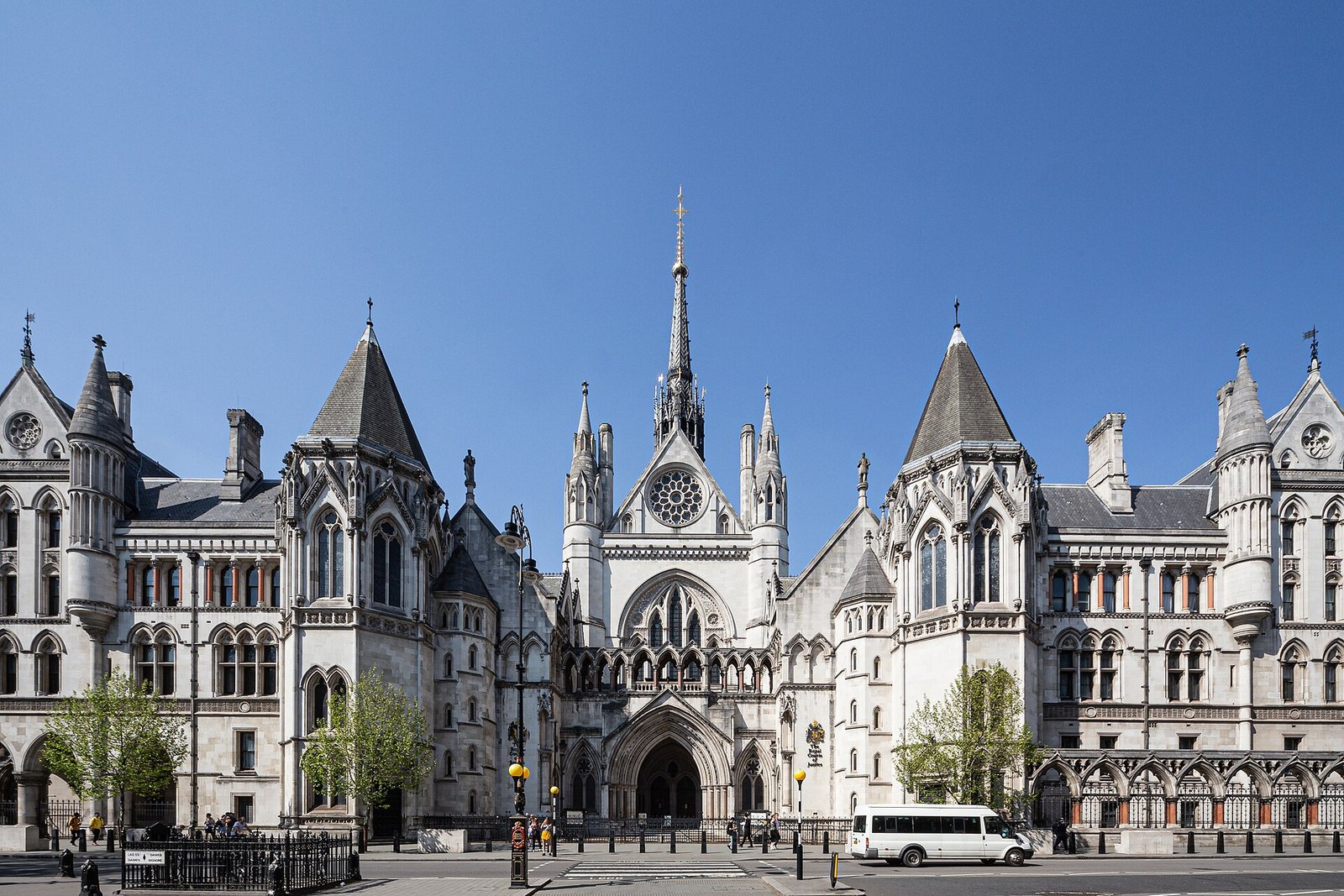
Probate claims, meaning claims about whether a will should be admitted to proof, follow Part 57 of the Civil Procedure Rules. In London they are usually heard in the Property, Trusts and Probate List of the Business and Property Courts, part of the Chancery Division of the High Court. Lower-value cases can be dealt with in the County Court at Central London. Where advocacy in the higher courts is required, we instruct specialist counsel.
Claims for financial provision are governed by the Inheritance (Provision for Family and Dependants) Act 1975. Rectification of a will for clerical error or misunderstanding of instructions sits in section 20 of the Administration of Justice Act 1982. Executors can be replaced or removed under section 50 of the Administration of Justice Act 1985, and trustee claims engage the Trustee Acts and the Limitation Act 1980.
Scotland and Northern Ireland
Scotland has its own rules: will challenges proceed in the Court of Session or sheriff court, and a spouse or children can claim fixed "legal rights" rather than discretionary provision. Northern Ireland has a separate Inheritance (Provision for Family and Dependants) Order and its own court structure, so cross-border estates need advice on which system applies.
Grounds for challenging a will
A challenge to validity seeks to set aside the will so that an earlier will, or the intestacy rules, apply instead. The grounds most commonly argued are summarised below.
| Ground | What must be shown | Practical notes |
|---|---|---|
| Lack of testamentary capacity | The testator did not understand the nature of a will, the extent of their property, or the claims of those they should consider, or a disorder of the mind affected their decisions (the test in Banks v Goodfellow) | Capacity is presumed for a rational, properly executed will; medical records and the will-drafter's notes are key |
| Want of knowledge and approval | The testator did not know and approve the contents of the will | Suspicious circumstances, such as a beneficiary arranging the will, shift the burden to those propounding it |
| Undue influence | Coercion overpowered the testator's own wishes; persuasion or affection is not enough | Burden on the challenger and hard to prove; the Law Commission has recommended reform |
| Lack of due execution | The section 9 formalities were not met | Witness evidence and the attestation clause matter; a presumption of due execution can apply |
| Forgery or fraud | The signature is not genuine, or the testator was deceived about facts | Serious allegation requiring cogent evidence, often handwriting experts |
| Revocation | The will was revoked by a later will, destruction with intent, or marriage | A missing original will can raise a presumption of revocation |
The Law Commission's 2025 report on modernising wills law recommends adopting the Mental Capacity Act 2005 test for capacity, allowing undue influence to be inferred on reasonable grounds, and ending automatic revocation by marriage. These remain recommendations while the government reviews them; current cases are decided on the existing law. Our guide to contesting a will explains the grounds in more depth.
Inheritance Act claims, estoppel and trust disputes
Inheritance Act claims
The 1975 Act does not ask whether the will is valid. It asks whether the will or intestacy makes reasonable financial provision for the applicant. Eligible applicants include a spouse or civil partner, a former spouse who has not remarried, a cohabitant who lived with the deceased as a couple for the two years before death, children, people treated as a child of the family, and anyone being maintained by the deceased. The deceased must have died domiciled in England and Wales.
A surviving spouse is judged by a more generous standard; everyone else is limited to provision for their maintenance. The Supreme Court in Ilott v The Blue Cross [2017] UKSC 17 confirmed that adult children have no automatic entitlement and that the testator's wishes carry weight. A claim must be issued within six months of the first grant unless the court gives permission. Our guide to Inheritance Act claims covers the factors the court weighs.
Proprietary estoppel and promises
Where someone relied to their detriment on a promise that they would inherit, typically by working on a family farm or business for little pay, they may claim through proprietary estoppel. In Guest v Guest [2022] UKSC 27 the Supreme Court set out how the court chooses a remedy. These claims are not tied to the six-month limit, but delay still harms them.
Executor, trustee and construction disputes
Beneficiaries may challenge delay, conflicted decisions, poor investment or a refusal to account. The court can order an account, replace executors, or appoint an independent administrator pending suit. Construction claims ask the court to decide what an ambiguous will means. Disputes over long-term will trusts are handled with our trusts solicitors.
Limitation periods for estate claims
Outside the six-month limits, the Limitation Act 1980 sets the framework. A beneficiary's claim to a share of a deceased person's personal estate is generally subject to a twelve-year period, while many claims for breach of trust have a six-year period. There is no limitation period for claims based on fraud by a trustee or to recover trust property the trustee still holds. Contentious probate solicitors London clients consult will check which period applies before advising on strategy, because the answer can decide whether a claim is viable at all. Our guide to limitation periods explains the general rules.
How a contentious probate dispute runs
The sequence below reflects how contentious probate solicitors London-based typically structure a dispute, from first concern to resolution.
- Act quickly on deadlines. Identify whether a grant has issued and when, and diarise the six-month limits for Inheritance Act and rectification claims. Where validity is disputed and no grant has issued, consider entering a caveat.
- Obtain the will file and records. Send a Larke v Nugus request to the solicitor or will-writer who prepared the will, asking for their notes and account of the instructions. Request medical and care records where capacity is in issue.
- Assess the merits. Review witness evidence, earlier wills and the estate's value. Instruct a retrospective capacity expert or handwriting expert where needed, and assess whether the cost of litigation is proportionate to what is at stake.
- Send a letter of claim. Set out the claim, the evidence and proposals under the Practice Direction on Pre-Action Conduct. Courts expect parties to explore settlement and can penalise unreasonable refusal to engage in ADR.
- Mediate or negotiate. Most disputes resolve at mediation or through without-prejudice and Part 36 offers. Settlements can be documented in a deed of variation or a court order, with inheritance tax advice built in.
- Issue proceedings if needed. A probate claim under CPR Part 57 requires the parties to lodge testamentary documents and file written evidence about them. Inheritance Act claims proceed under Part 57 as well, with evidence of needs and resources.
- Trial and costs. Cases that do not settle go to trial, where witnesses are cross-examined. Costs generally follow the event, although the court has a discretion where the deceased or the beneficiaries caused the litigation.
A caveat lasts six months and can be extended, but it is a holding step, not a claim. Entering one without a genuine basis can lead to costs, and an executor can force the issue by issuing a warning that requires the caveator to set out their interest.
Evidence that wins or loses a will dispute
Will disputes are evidence-driven. The earlier evidence is secured, the better the prospects of an informed settlement.
The will file
Attendance notes, instructions, earlier drafts and any capacity assessment by the drafter. Professionally prepared wills are harder to challenge where the "golden rule" of obtaining a medical opinion for an elderly or ill testator was followed.
Medical and care records
GP and hospital notes, care home records and prescriptions around the date of the will. A retrospective expert opinion is often needed to interpret them against the legal test.
Witnesses and family evidence
Statements from attesting witnesses, carers, friends and professionals who saw the testator. Contemporaneous emails, letters and diaries carry more weight than recollection years later.
Financial records
Bank statements and lifetime gifts can reveal influence or dependency, and are essential in Inheritance Act claims where needs, resources and the size of the estate are central.
Risks and common mistakes
Contentious probate solicitors London clients consult see the same avoidable problems again and again.
Missing the six-month deadline
The six-month limits for Inheritance Act and rectification claims run from the first grant, which may issue without the claimant knowing. The court can allow a late claim, but it considers the length of and reasons for the delay, whether negotiations were under way and whether the estate has been distributed. Late applicants face an uphill task. Anyone who thinks they may have a claim should take advice promptly and, where appropriate, ask the personal representatives to agree a standstill so that time does not become the issue.
Alleging undue influence without evidence
Undue influence means coercion, not persuasion, and the challenger must prove it. It is a serious allegation and an unsuccessful claim can carry heavy costs. Suspicions are often better framed as a lack of knowledge and approval, where suspicious circumstances in the preparation of the will shift the burden onto those who rely on it. Choosing the right legal ground at the outset shapes the evidence needed and the risk taken.
Assuming costs come out of the estate
Historically, losing parties sometimes had their costs paid from the estate where the testator's conduct caused the dispute or there were reasonable grounds for investigation. Those exceptions are now applied narrowly, and the usual rule that the loser pays applies in most cases. In Inheritance Act claims, costs can quickly eat into a modest estate. Budgeting, early offers and mediation are therefore central to strategy, not optional extras.
Executors taking sides
Executors of a disputed will should generally remain neutral in Inheritance Act claims and avoid spending estate funds on one beneficiary's case. If they distribute while a claim is threatened, they may be personally liable. In validity disputes, an executor who propounds the will acts in a representative capacity but still needs to act reasonably. Where conflict makes their position untenable, an independent administrator may be the right answer.
Leaving asset protection too late
Where there is a risk that estate assets will be sold or moved abroad, it may be necessary to apply for an administrator pending suit, an injunction or, in serious cases, a freezing order. Delay makes those remedies harder to obtain. Our injunctions team works with the probate disputes team where urgent protection is needed.
Most will disputes settle. The ones that settle well are those where each side has seen the will file, the medical records and a realistic view of costs before positions harden.
Cross-border inheritance disputes
International families create international disputes. The first question is jurisdiction and governing law: English courts generally apply the law of the deceased's domicile to movable property and the law of the place where land is situated to immovable property. An Inheritance Act claim is only available where the deceased died domiciled in England and Wales, so domicile itself can be the battleground.
For British Bangladeshi families, a dispute can span a London house and land in Bangladesh, with different laws applying to each. In Bangladesh, inheritance between Muslims is generally governed by Islamic personal law with fixed shares, and land disputes are heard in the local civil courts. TRW & Co's offices in Dhaka, Chattogram and Sylhet can advise on and run the Bangladeshi side. See our pages on UK–Bangladesh succession and managing a land dispute in Bangladesh from the UK.
Disputes touching the Gulf, Singapore, China or EU states raise similar issues: whether forced heirship applies, whether an English judgment will be recognised locally, and whether parallel proceedings are needed. Contentious probate solicitors London-based should also consider where any settlement will need to be enforced, and draft it so that it can be implemented in each country where assets sit, including transfers of title that require local formalities. We coordinate with local counsel where foreign law governs part of the estate, and with our international private client team on tax consequences of any settlement.
How TRW & Co's contentious probate solicitors London team helps
TRW & Co's London office is authorised and regulated by the Solicitors Regulation Authority. We act for claimants, beneficiaries and executors, and we aim for a proportionate route to resolution.
Early case assessment
We review the will, the will file and the estate, identify the strongest ground and the deadlines, and give a candid view of merits and likely costs before you commit to litigation.
Will validity claims
We conduct challenges to and defences of wills on capacity, knowledge and approval, undue influence, execution and forgery, including caveats, Larke v Nugus requests and expert evidence.
Inheritance Act and estoppel claims
We bring and defend claims for reasonable financial provision and promises of inheritance, with a strong focus on mediation and structured settlements. Our mediation and ADR work supports this.
Executor and trustee disputes
We advise beneficiaries and personal representatives on accounts, removal and replacement of executors, administration pending suit and claims for breach of duty, coordinating with our probate solicitors.
Where a dispute involves alleged dishonesty or misappropriated estate assets, our civil fraud and asset recovery lawyers can assist with tracing and recovery.
Checklist before acting on a will dispute
Whether you are challenging a will or defending one, contentious probate solicitors London-based will want answers to these questions early.
- Has a grant issued, and if so, on what date? When do the six-month limits expire?
- Do you have a copy of the will and any earlier wills, and who has the originals?
- Who prepared the will, and has the will file been requested?
- What was the testator's health at the time, and what records exist?
- Which ground of challenge, or which Inheritance Act category, applies to you?
- What is the net value of the estate, and what would a realistic outcome be worth after costs?
- Are any assets abroad, and does foreign law govern them?
- Is there a risk that assets will be distributed or moved before the dispute is resolved?
To discuss a dispute in confidence, contact our London office at info@trw.co or on +880 1779 127165, Holborn Gate, 330 High Holborn, London WC1V 7QH. You can also browse our practice areas.
Frequently asked questions
01How long do I have to contest a will?
It depends on the claim. Inheritance Act claims and rectification claims must be issued within six months of the first grant of representation, unless the court gives permission. Challenges to validity, such as lack of capacity or undue influence, have no fixed statutory deadline before a grant, but delay makes them harder and the estate may be distributed. Claims by beneficiaries to recover their share of an estate are generally subject to a twelve-year limit under the Limitation Act 1980. Taking advice promptly is the safest course.
02Who can bring an Inheritance Act claim?
The Inheritance (Provision for Family and Dependants) Act 1975 allows claims by a spouse or civil partner, a former spouse or civil partner who has not remarried, someone who lived with the deceased as a couple for the two years before death, a child, a person treated as a child of the family, and anyone who was being maintained by the deceased. The deceased must have died domiciled in England and Wales. Applicants other than a spouse can only claim provision for their maintenance.
03What is a caveat and should I enter one?
A caveat is a notice to the Probate Registry that stops a grant being issued for six months, and it can be extended. It is useful where there is a genuine concern about validity and time is needed to investigate. It is not a claim in itself, and the applicant for the grant can issue a warning, requiring you to set out your interest. Entering a caveat without proper grounds can lead to a costs order, so take advice first.
04What is a Larke v Nugus request?
It is a request to the solicitor or will-writer who prepared a disputed will for a statement of the circumstances in which it was made: who gave instructions, who was present, the testator's apparent understanding, and the drafter's notes. It takes its name from a Court of Appeal case and is a standard first step in validity disputes. The response often shows whether a challenge on capacity or knowledge and approval is realistic, which helps avoid unnecessary litigation.
05Who pays the costs in a will dispute?
The general rule is that the losing party pays the winner's costs. In probate cases there are narrow exceptions where the testator or residuary beneficiaries caused the litigation, or where the circumstances reasonably called for investigation, but courts apply them sparingly. In Inheritance Act claims the court has a wide discretion. Because costs can be large relative to the estate, early offers, Part 36 offers and mediation are central to managing risk.
06Can I challenge a will on the basis of undue influence?
Yes, but it is one of the hardest grounds to prove. You must show the testator was coerced into making the will, not simply persuaded or influenced by affection. The burden is on the person alleging it, and the allegation is serious. Often the same facts are better put as a lack of knowledge and approval, where suspicious circumstances shift the burden to those relying on the will. The Law Commission has recommended reform, but the current law still applies.
07Can a will dispute involve property in Bangladesh?
Yes. English courts generally apply the law of the place where land is situated to succession to that land, so a Bangladeshi property may be governed by Bangladeshi law, including personal law on inheritance shares, regardless of an English will. Disputes over that land are usually decided by courts in Bangladesh. TRW & Co's offices in Bangladesh can advise on that side while the London office deals with English assets and any Inheritance Act claim.
Sources and official materials
- Inheritance (Provision for Family and Dependants) Act 1975 — Claims for reasonable financial provision
- Wills Act 1837, section 9 — Formal requirements for a valid will
- Civil Procedure Rules Part 57 — Probate claims and Inheritance Act procedure
- Stop a probate application — HMCTS guidance on caveats
- Ilott v The Blue Cross [2017] UKSC 17 — Supreme Court on adult children's claims
- Administration of Justice Act 1982, section 20 — Rectification of wills
- Law Commission: Wills — 2025 report and draft Bill
General information only, current as at 21 October 2026. It is not legal advice and does not create a solicitor–client relationship. It reflects the law of England and Wales unless stated otherwise; Scotland and Northern Ireland have separate legal systems, and the law changes frequently. Check current official sources and take advice on the facts of your matter.