
TRW & Co · UK–Bangladesh Corridor
London Arbitration for Bangladesh Contracts
Bangladesh arbitration lawyers London businesses instruct draft dispute clauses, run London-seated arbitrations and enforce awards against Bangladeshi counterparties. Bangladesh is a New York Convention state, and its Arbitration Act 2001 enforces foreign awards as court decrees on limited refusal grounds, so a London award is often the most reliable route to recovery.
Key pointSince 1 August 2025, a London seat makes English law govern the arbitration agreement unless the parties expressly choose otherwise, even where the main contract is governed by Bangladeshi law.
At a glance
New York Convention party
Bangladesh acceded on 6 May 1992 and the Convention entered into force there on 4 August 1992, so London awards are enforceable as foreign awards.
Award enforced as decree
Section 45 of Bangladesh's Arbitration Act 2001 enforces foreign awards as court decrees; section 46 lists the limited grounds for refusal.
Arbitration Act 2025 live
Amendments to the Arbitration Act 1996 came into force on 1 August 2025, adding summary disposal, a disclosure duty and a new governing law rule.
Third-party court support
English courts can now make section 44 orders, such as preserving assets or evidence, against third parties as well as the arbitrating parties.
Treaty backstop
The UK and Bangladesh signed a bilateral investment treaty in 1980, which may protect UK investors if state interference affects an arbitration.
Swipe or scroll →
Why Bangladesh arbitration lawyers London businesses instruct favour a London seat
Supply contracts, construction and energy projects, loans, joint ventures and share sales between UK and Bangladeshi parties often end up in dispute. Bangladesh arbitration lawyers London businesses rely on help them choose and draft the dispute clause, run the arbitration under English law and, crucially, turn an award into money against assets in Bangladesh.
London is a natural seat for these contracts. The parties often already choose English law. The English courts support arbitration and interfere rarely. And because Bangladesh is a party to the New York Convention, a London award can be enforced there under a clearer framework than an English court judgment, which may need fresh proceedings in Dhaka.
The clients we advise include UK buyers of Bangladeshi garments and goods, contractors and equipment suppliers on Bangladeshi infrastructure and power projects, lenders and trade finance providers, investors in Bangladeshi companies, and Bangladeshi exporters and groups contracting with UK and international counterparties.
TRW & Co is headquartered in Dhaka and its London office is authorised and regulated by the Solicitors Regulation Authority. We can conduct a London-seated arbitration and plan Bangladeshi enforcement with the same team. Where advocacy in the higher courts is required, we instruct specialist counsel. For arbitration generally, see our international arbitration page.
The English framework after the Arbitration Act 2025
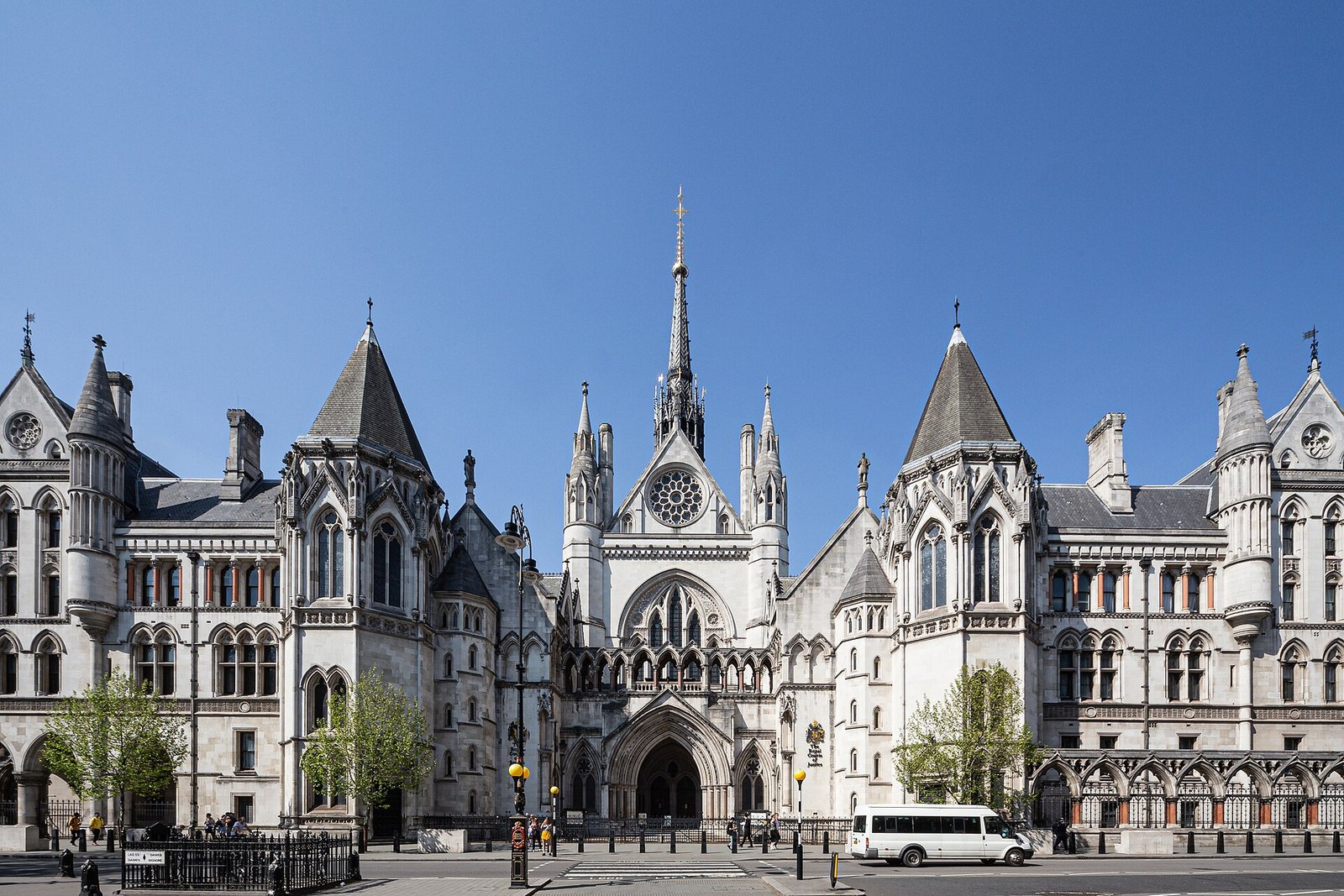
A London-seated arbitration is governed by the Arbitration Act 1996, as amended by the Arbitration Act 2025. The 2025 Act received Royal Assent on 24 February 2025 and its amendments came into force on 1 August 2025. They do not apply to arbitrations commenced before that date.
The key changes for Bangladesh contracts
- Law of the arbitration agreement. New section 6A provides that, unless the parties expressly choose a law for the arbitration agreement itself, it is governed by the law of the seat. A general choice of law for the main contract does not count as that express choice. For a contract governed by Bangladeshi law with a London seat, the arbitration agreement will now usually be governed by English law.
- Summary disposal. Section 39A gives tribunals a default power, on application, to dispose summarily of a claim, defence or issue that has no real prospect of success, unless the parties agree otherwise.
- Arbitrator disclosure. Arbitrators now have a statutory duty to disclose circumstances that might reasonably give rise to justifiable doubts about their impartiality, judged by what they know or ought reasonably to know.
- Court support against third parties. The court's powers under section 44, such as preserving evidence or assets, can now be exercised against third parties, which helps where Bangladeshi counterparties route funds through UK banks or affiliates.
- Jurisdiction challenges. Challenges under section 67 that a tribunal lacked jurisdiction are now more restricted where the objecting party took part in the arbitration: new grounds or evidence are generally not allowed and evidence is not reheard unless the court considers it necessary.
- Emergency arbitrators. The Act now recognises emergency arbitrators appointed under institutional rules, and gives their orders a route to court enforcement.
Our article on the Arbitration Act 2025 sets out the changes in more detail. The supervisory court for most commercial arbitrations is the Commercial Court, part of the Business and Property Courts.
The Bangladeshi framework: the Arbitration Act 2001 and the New York Convention
Bangladesh acceded to the New York Convention on 6 May 1992, and it entered into force for Bangladesh on 4 August 1992. Its domestic implementing law is the Arbitration Act 2001. The Act mainly governs arbitrations seated in Bangladesh, but section 3(2) applies its provisions on foreign awards, sections 45 to 47, to arbitrations seated abroad.
Under section 45, a foreign arbitral award is binding and is enforced on application to the court as if it were a decree of a Bangladeshi court under the Code of Civil Procedure. Section 46 sets out limited grounds on which recognition and enforcement may be refused, modelled on the Convention, such as incapacity of a party, invalidity of the arbitration agreement, lack of proper notice, excess of jurisdiction, irregular composition of the tribunal, non-arbitrability and conflict with public policy.
Two features of Bangladeshi practice deserve attention. First, the extent to which Bangladeshi courts will grant interim relief in support of a foreign-seated arbitration has been uncertain, and reported decisions have at times declined it. Second, enforcement proceedings can be lengthy and the award debtor may resist on public policy or procedural grounds. Both points make early planning by Bangladesh arbitration lawyers London clients appoint essential: identify assets, consider security, and keep the record clean.
When a state is involved
Where the counterparty is a Bangladeshi state entity, treaty protection may also be relevant. The United Kingdom and Bangladesh signed a bilateral investment treaty in 1980. In Saipem v Bangladesh (ICSID Case No. ARB/05/07, award of 30 June 2009), an investment treaty tribunal found that Bangladesh's courts had acted unlawfully in revoking the authority of an ICC tribunal, under Italy's treaty with Bangladesh. The case is a reminder that interference with an arbitration can itself become a treaty claim, heard under the ICSID system.
| Option | Strengths | Weaknesses | Enforcement in Bangladesh |
|---|---|---|---|
| London-seated LCIA arbitration | Experienced institution; fees based on hourly rates; strong English court support | Cost for low-value claims; parties must budget for tribunal fees | As a foreign award under sections 45 and 46 of the Arbitration Act 2001 |
| London-seated ICC arbitration | Global institution; award scrutiny; familiar to Bangladeshi state bodies and lenders | Ad valorem fees can be significant on large claims | As a foreign award under sections 45 and 46 |
| Singapore-seated SIAC arbitration | Regional neutrality; time zone closer to Dhaka | Singapore law of the seat; less natural if the contract is under English law | As a foreign award under sections 45 and 46 |
| Dhaka-seated arbitration (including BIAC) | Local familiarity; may be required by some public sector counterparties | Greater scope for local court involvement; set-aside risk in Bangladesh | As a domestic award under the Arbitration Act 2001 |
| English High Court litigation | Freezing injunctions; disclosure; appeals | Service out of the jurisdiction needed; enforcement uncertainty | Depends on reciprocity rules for foreign judgments; may need a fresh suit |
Drafting the arbitration clause
Most of the value of London arbitration is won or lost in the clause. Bangladesh arbitration lawyers London deal teams consult should check the following points before signature.
Seat, rules and institution
State the seat expressly as London, England, and name the institution and rules, for example the LCIA Arbitration Rules 2020 or the ICC Arbitration Rules 2021. Use the institution's model clause as the starting point rather than improvising.
Governing law of the contract and of the clause
If the main contract is governed by Bangladeshi law, decide whether you want English law to govern the arbitration agreement; under section 6A that is the default for a London seat unless you expressly choose otherwise. Say so clearly either way.
Tribunal and language
Specify the number of arbitrators, the language (usually English) and, if helpful, required qualifications. A sole arbitrator suits mid-sized supply disputes; three arbitrators may suit projects and finance.
Multi-party and multi-contract structures
Projects often involve guarantees, sub-contracts and parent company support. Use consistent clauses across the contract suite and consider consolidation and joinder provisions so related disputes can be heard together.
Pre-arbitration steps and interim relief
Tiered clauses requiring negotiation or mediation first can help, but set clear time limits so they do not delay urgent claims. Preserve the right to seek interim relief from the English courts and, where useful, from other courts with jurisdiction over assets. Our article on English law and London arbitration in Bangladesh contracts includes drafting examples.
An award is only as good as the assets it can reach. In UK–Bangladesh disputes, enforcement planning should start when the contract is signed, not when the award is issued.
Running a London arbitration against a Bangladeshi party
- Review the clause and the claim. Confirm the seat, rules, governing law, any pre-arbitration steps and limitation, and identify the counterparty's assets in Bangladesh, the UK and elsewhere.
- Secure the position. Consider emergency arbitrator relief or an application to the English court under section 44, including against third parties holding assets, and preserve documents.
- Commence the arbitration. File the request or notice of arbitration under the chosen rules and serve it in the manner the rules and contract require.
- Constitute the tribunal. Nominate arbitrators with relevant experience, review disclosures, and agree the procedural timetable.
- Exchange cases and evidence. Prepare statements of case, documents, witness statements and expert reports, including evidence of Bangladeshi law where relevant.
- Use summary disposal where justified. Where a defence has no real prospect of success, consider an application under section 39A to shorten the proceedings.
- Hearing and award. Attend the hearing, in person or remotely, and obtain a reasoned award dealing with interest and costs.
- Enforce. Apply to enforce in Bangladesh under section 45 of the Arbitration Act 2001, and in parallel in England or other New York Convention states where the debtor holds assets.
Acting for the Bangladeshi party
Bangladeshi exporters, contractors and groups are often respondents in London arbitrations started by UK or international buyers and lenders. Ignoring the proceedings is rarely wise: a tribunal can proceed in a party's absence, and a default award is still enforceable under the New York Convention in the UK, the Gulf, the EU and Singapore, where many Bangladeshi groups hold receivables. Bangladesh arbitration lawyers London respondents instruct should assess jurisdiction objections promptly, because section 73 of the Arbitration Act 1996 requires objections to be raised promptly and the amended section 67 limits new grounds later, and then focus on the merits, counterclaims and settlement.
Costs, security and funding
Tribunals in London usually order the losing party to pay a substantial part of the winner's costs, and can order security for costs in appropriate cases. Budget for institutional fees, arbitrators' fees, experts and translation of Bengali documents. Third-party funding and after-the-event insurance are available in the London market for strong claims, and early, realistic advice from Bangladesh arbitration lawyers London funders trust about enforcement prospects in Bangladesh is often decisive for whether a funder will commit.
Documents and evidence to assemble
- The signed contract, all amendments and the full set of related agreements, including guarantees.
- Correspondence showing performance, breach, notices and any attempts to settle.
- Evidence of authority of the Bangladeshi signatory, such as board resolutions, which matters for enforcement.
- Invoices, delivery records, inspection reports and payment history.
- Information on the counterparty's assets, bank relationships and group structure.
- For enforcement in Bangladesh, the duly authenticated original award or certified copy, the arbitration agreement and certified translations where required; apostille has been available for UK documents since the Apostille Convention entered into force for Bangladesh on 30 March 2025.
Keep the procedural record bulletproof. Most grounds for refusing enforcement in Bangladesh, such as lack of proper notice or a party being unable to present its case, turn on how the arbitration was run. Serve every notice properly, record the counterparty's participation or refusal, and give it fair opportunities to respond.
Risks and common mistakes
An ambiguous or pathological clause
Clauses that refer to a non-existent institution, combine incompatible rules, or say that disputes go to arbitration "or" the courts invite satellite litigation in both countries. A Bangladeshi party may start a suit in Dhaka and argue the clause is invalid, while the UK party starts the arbitration. Time and money are spent on jurisdiction rather than merits. Use an institutional model clause, name the seat, and have Bangladesh arbitration lawyers London and Dhaka offices both review the clause before signing a significant contract.
Parallel proceedings in Bangladesh
A counterparty facing a London arbitration sometimes files proceedings in Bangladesh to restrain the arbitration or to claim on the merits there. The English court can grant anti-suit relief in support of a London arbitration agreement, and Bangladeshi courts can stay suits in favour of arbitration. The right response depends on the stage reached and where the assets are. Responding quickly in both jurisdictions, with consistent arguments, prevents a local judgment from undermining the award.
Winning an award with nothing to enforce against
A London award against a Bangladeshi company with no assets outside Bangladesh must be enforced in Bangladesh, which takes time and may face public policy objections. If the company has UK receivables, bank accounts or affiliates, early interim relief may make enforcement much easier. Investigate assets before commencing, consider security such as guarantees or letters of credit at contract stage, and choose the order in which to pursue enforcement across jurisdictions.
Overlooking section 6A when the contract is under Bangladeshi law
Before 1 August 2025, English courts often treated the law of the main contract as governing the arbitration agreement. Under the new section 6A, a London seat now points to English law for the arbitration agreement unless the parties expressly chose otherwise. That affects arguments about validity, scope and who is bound. Parties with older contracts should check whether their arbitration began before or after 1 August 2025, and new contracts should state the position expressly.
Treating a state entity like a private company
Contracts with Bangladeshi ministries, utilities or state-owned enterprises raise questions of authority, approvals, sovereign immunity from execution and, sometimes, a requirement for a local seat. Check that the entity had authority to agree to arbitration, that required approvals were obtained, and whether a waiver of immunity is included. Consider whether the investment is protected by a bilateral investment treaty, which may provide a separate route if local courts interfere.
Enforcement beyond Bangladesh and the wider region
Many Bangladeshi groups hold assets or receivables in the Gulf, Singapore, China, the EU and the UK. A London award can be enforced in any New York Convention state, so an enforcement map often has several jurisdictions. In England, Convention awards are enforced under the Arbitration Act 1996 with limited refusal grounds. Our enforcement of judgments and injunctions teams handle recognition, freezing orders and third-party debt orders.
Where a court judgment rather than an award is involved, the routes are different. Our articles on enforcing a London arbitration award in Bangladesh and enforcing an English judgment in Bangladesh compare the two, and our UK–Bangladesh disputes page covers litigation strategy.
How TRW & Co helps
Clause drafting
We draft and review arbitration clauses for supply, project, finance and investment contracts, checking seat, rules, governing law and enforceability in both countries.
Conducting arbitrations
We conduct LCIA, ICC and ad hoc London arbitrations for claimants and respondents, from the request through to the award, instructing specialist counsel for advocacy where appropriate.
Interim relief
We seek emergency arbitrator orders and English court support, including orders against third parties under the amended section 44, to preserve assets and evidence.
Bangladeshi law evidence
Our Dhaka office provides analysis and expert input on Bangladeshi law questions arising in London proceedings, coordinated with the case team.
Enforcement in Bangladesh
We prepare and pursue applications under the Arbitration Act 2001 and respond to resistance on public policy and procedural grounds.
Investment and state disputes
We advise investors and contractors on disputes with Bangladeshi state entities, including treaty protection and immunity issues. See also investing in Bangladesh.
Checklist for decision-makers
- Use an institutional model clause with an express London seat and named rules.
- Decide expressly which law governs the arbitration agreement.
- Align dispute clauses across all related contracts and guarantees.
- Map the counterparty's assets and take security where possible.
- Check the authority of the Bangladeshi signatory and any required approvals.
- Run the arbitration with enforcement grounds in mind, especially notice and fair opportunity.
- Plan enforcement in Bangladesh and other jurisdictions before the award is issued.
To discuss a clause or a dispute with Bangladesh arbitration lawyers London and Dhaka can both reach, contact our London office or see our practice areas.
Frequently asked questions
01Can a London arbitration award be enforced in Bangladesh?
Yes. Bangladesh has been a party to the New York Convention since 1992, and its Arbitration Act 2001 applies the foreign award provisions to arbitrations seated abroad. Under section 45, a foreign award is enforced on application to the court as if it were a decree of a Bangladeshi court. Section 46 sets out limited grounds for refusal modelled on the Convention, including invalidity of the agreement, lack of proper notice, excess of jurisdiction and public policy. Enforcement can still be contested and take time, so asset planning matters.
02Is arbitration better than English court litigation for a Bangladesh contract?
Often, for enforcement reasons. An English court judgment is not automatically enforceable in Bangladesh, and depending on reciprocity rules may require a fresh suit there. A London award benefits from the New York Convention framework. Litigation still has advantages where the defendant has assets in England, where urgent freezing injunctions are needed or where disclosure is critical. Many contracts combine a London arbitration clause with the right to seek interim relief from the English courts.
03What did the Arbitration Act 2025 change?
The amendments, in force from 1 August 2025, introduce a default rule that the law of the seat governs the arbitration agreement unless the parties expressly choose otherwise, a power for tribunals to dispose summarily of issues with no real prospect of success, a statutory duty on arbitrators to disclose relevant circumstances, court powers under section 44 against third parties, tighter rules on section 67 jurisdiction challenges and recognition of emergency arbitrators. They do not apply to arbitrations commenced before 1 August 2025.
04Which institution should we choose: LCIA, ICC or SIAC?
All three are credible. The LCIA charges on an hourly basis and is closely associated with London seats. The ICC is widely used by lenders, contractors and state entities and scrutinises draft awards, with fees linked to the amount in dispute. SIAC suits parties wanting a Singapore seat closer to Dhaka. The choice depends on the value of likely disputes, the counterparty's familiarity, the need for emergency relief and budget. Use the chosen institution's model clause and name London as the seat if you want English supervision.
05Can a Bangladeshi court stop a London arbitration?
A Bangladeshi party may ask its courts to restrain the arbitration or hear the dispute locally, and courts there have power to stay suits in favour of arbitration. The English court, as the supervisory court of a London seat, can grant anti-suit relief to protect the arbitration agreement. The Saipem case, in which a treaty tribunal held Bangladesh responsible for its courts' interference with an ICC arbitration, shows that serious interference can also have treaty consequences. Act quickly and consistently in both jurisdictions.
06Can we get interim relief before or during the arbitration?
Yes. Under institutional rules you can usually apply to an emergency arbitrator before the tribunal is formed, and the Arbitration Act 2025 now recognises such appointments. The English court can make orders under section 44, including against third parties, to preserve evidence or assets in England. Interim relief in Bangladesh in support of a foreign-seated arbitration has been less certain, so where assets are in Bangladesh it is wise to plan security at contract stage and take local advice early.
07What documents are needed to enforce an award in Bangladesh?
Typically the duly authenticated original award or a certified copy, the original arbitration agreement or a certified copy, and certified translations if the documents are not in a language the court accepts. Since 30 March 2025, UK public documents can be authenticated by apostille for use in Bangladesh. Supporting evidence of service and of the debtor's participation helps answer procedural objections. Bangladeshi counsel will advise on the competent court, filing requirements and the likely timetable.
Sources and official materials
- Arbitration Act 1996 — Law of London-seated arbitrations and enforcement of Convention awards
- Arbitration Act 2025 — Amendments in force from 1 August 2025
- LCIA Arbitration Rules 2020 — Rules of the London Court of International Arbitration
- ICC Arbitration Rules 2021 — Rules of the ICC International Court of Arbitration
- New York Convention — Recognition and enforcement of foreign arbitral awards
- Commercial Court — Supervisory court for London commercial arbitrations
- ICSID — Investment treaty arbitration, including Saipem v Bangladesh
General information only, current as at 21 October 2026. It is not legal advice and does not create a solicitor–client relationship. It reflects the law of England and Wales unless stated otherwise; Scotland and Northern Ireland have separate legal systems, and the law changes frequently. Check current official sources and take advice on the facts of your matter.