
TRW & Co · Real Estate & Construction
Construction Dispute Solicitors in London
Construction dispute solicitors London employers, contractors and consultants instruct resolve payment, delay, defects and building safety claims. Statutory adjudication can force payment within weeks, the Technology and Construction Court enforces decisions swiftly, and the Building Safety Act has extended liability for residential defects by decades, so early advice on notices and records shapes every outcome.
Key pointMost payment adjudications are won or lost on whether a valid payment or pay less notice was served in time, not on the value of the work. A payment calendar and template notices protect more money than any later argument.
At a glance
Right to adjudicate
Under section 108 of the Construction Act, any party to a construction contract can refer a dispute to adjudication at any time, with a decision due within 28 days of referral.
Pay now, argue later
If no valid pay less notice is served in time, the notified sum is generally payable; a true value adjudication can follow only after payment.
Specialist court
The Technology and Construction Court hears substantial construction claims and enforces adjudicators' decisions, usually by summary judgment.
Longer building safety exposure
The Building Safety Act 2022 gave Defective Premises Act claims a 30-year retrospective and 15-year prospective limitation period.
Limitation in contract
Contract claims generally expire six years after breach, or twelve years for a deed, even if a defect is discovered much later.
Swipe or scroll →
What construction disputes cover in England and Wales
Construction projects generate disputes about money, time, quality and responsibility, and the law gives the industry its own fast-track tools to resolve them. Employers, contractors, subcontractors, consultants and funders instruct construction dispute solicitors London practitioners when an interim payment is withheld, a final account stalls, a delay claim is rejected or a defect appears years after completion.
The typical caseload covers payment and valuation disputes, extension of time and loss and expense claims, termination, defective work and design, professional negligence by architects and engineers, bonds and parent company guarantees, collateral warranties and, increasingly, building safety claims about fire safety and cladding. Many disputes arise on standard forms such as JCT and NEC, and on bespoke amendments that change how risk falls.
A disagreement becomes a legal question earlier than most project teams assume. Contract notices, payment notice deadlines and time-bar clauses start to run during the project, not at the end of it. The right construction dispute solicitors London teams can bring in will look first at what must be served, by whom and by when, because a missed notice can cost more than any later argument can recover.
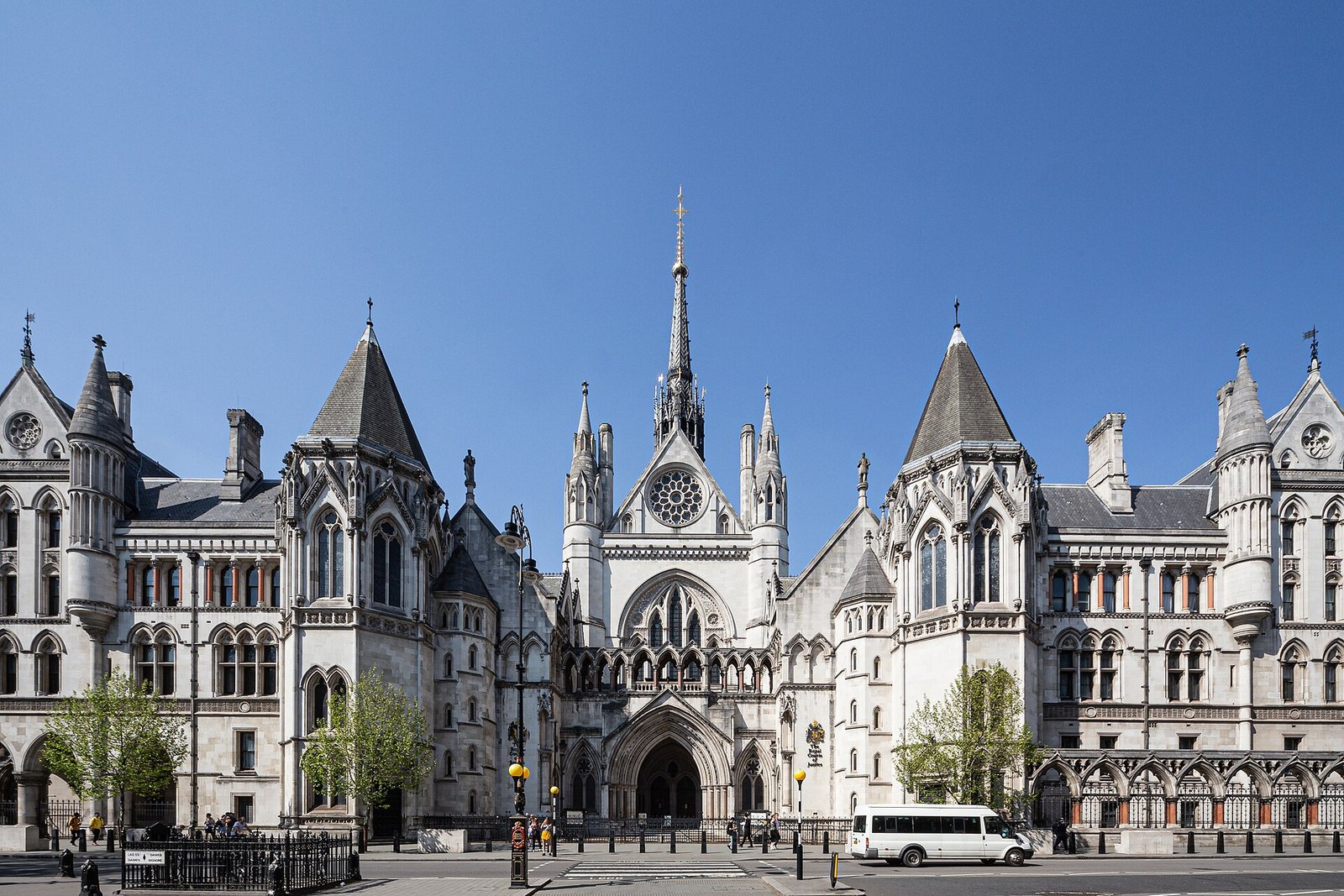
The legal and procedural framework
The starting point is Part II of the Housing Grants, Construction and Regeneration Act 1996, usually called the Construction Act. It applies to "construction contracts" as the Act defines them and gives every party a statutory right to adjudication and a set of payment rules. Some operations are excluded, such as certain process plant and power generation work, and contracts with residential occupiers fall outside the main rules.
Section 108 requires the contract to let a party refer a dispute to adjudication at any time, with the adjudicator appointed and the dispute referred within 7 days of the notice of adjudication, and a decision within 28 days of referral. That period can be extended by 14 days with the referring party's consent, or longer if both parties agree. If the contract does not comply, the adjudication provisions of the Scheme for Construction Contracts (England and Wales) Regulations 1998 are implied instead.
Payment rules after the 2011 amendments
Amendments made by the Local Democracy, Economic Development and Construction Act 2009, in force in England and Wales from 1 October 2011, strengthened the payment regime. The payer (or the payee, in default) issues a payment notice stating the sum considered due, and a payer who intends to pay less must serve a pay less notice in time. Where the parties have not agreed the period, the Scheme requires the pay less notice no later than seven days before the final date for payment.
Courts, protocols and limitation
Substantial construction claims are heard in the Technology and Construction Court (TCC), a specialist list within the Business and Property Courts, which also enforces adjudicators' decisions. Before issuing, parties must normally follow the Pre-Action Protocol for Construction and Engineering Disputes: a letter of claim, a response, and usually a pre-action meeting to narrow the issues.
Limitation runs from the Limitation Act 1980: six years for a simple contract and twelve years for a contract executed as a deed, with separate rules for latent damage in negligence. Building safety claims now have much longer periods, discussed below. Scotland and Northern Ireland have their own adjudication schemes and courts, so cross-border UK projects need separate checks.
| Forum | Speed | Binding effect | Confidential? | Best suited to |
|---|---|---|---|---|
| Statutory adjudication | Decision within 28 days of referral, unless extended | Temporarily binding until finally determined by litigation, arbitration or agreement | Generally private | Interim payment, valuation, extension of time and discrete technical issues |
| TCC litigation | Typically a year or more to trial | Final, subject to appeal with permission | Public hearings and judgments | Complex defects, final accounts, multi-party and building safety claims |
| Arbitration | Depends on the tribunal and rules | Final; limited grounds of challenge | Usually confidential | International projects, FIDIC contracts and cases needing enforcement abroad |
| Mediation or expert determination | Days to weeks | Mediation binds only if settled; expert determination binds per the contract | Confidential | Settling final accounts and narrow valuation or technical questions |
Payment disputes and the "pay now, argue later" rule
Most construction adjudications concern money. If a valid payment application or notice is not answered by a timely pay less notice, the notified sum generally becomes payable by the final date for payment. Where no final date is agreed, the Scheme sets it at 17 days from the date payment becomes due. Contractors use "smash and grab" adjudications to recover notified sums where the paying party has missed its deadline.
The Court of Appeal confirmed in S&T (UK) Ltd v Grove Developments Ltd [2018] EWCA Civ 2448 that an employer who loses a notified-sum adjudication can start a "true value" adjudication, but only after paying the notified sum first. The practical rule is pay now, argue later: the cash moves immediately and the valuation dispute is decided afterwards.
For employers, the lesson is process discipline: a calendar of payment cycles, named people responsible for notices and template notices that set out the basis of any deduction. For contractors, it is equally important that applications comply with the contract's timing and form requirements, because a defective application can undermine a smash-and-grab claim. Our guide to payment notices and pay less notices explains the mechanics in more detail.
Map every payment date in the contract on day one: due date, payment notice, pay less notice and final date for payment. Most expensive payment adjudications are lost on a deadline, not on the merits, and a one-page payment calendar owned by a named person is the cheapest protection available.
Key decisions: choosing the right route
Good construction dispute solicitors London clients rely on will match the forum to the dispute rather than defaulting to the most aggressive option. The right choice depends on the amount in dispute, the evidence available, cash-flow pressure, the relationship and whether the other side can pay.
Adjudication or litigation?
Adjudication is quick and enforceable, but its speed favours the party that has prepared. A responding party may receive a large referral with little warning and have only days to answer. For complex delay or defects claims, a 28-day timetable can produce rough justice, and it may be better to adjudicate a narrow issue or proceed directly to the TCC. Adjudication decisions remain open to final determination later.
Arbitration clauses and the Arbitration Act 2025
Many international and some domestic contracts refer final disputes to arbitration, often under LCIA, ICC or other institutional rules. The Arbitration Act 2025 came into force on 1 August 2025, introducing a default rule on the law governing the arbitration agreement, an express power for summary disposal and a codified duty of arbitrator disclosure. Our international arbitration team covers London-seated construction arbitrations.
Settlement routes
Mediation is widely used in construction, frequently after pleadings or an adjudication decision has clarified the issues. Courts now have power to order parties to engage in ADR and can penalise unreasonable refusal in costs. Expert determination suits narrow valuation or technical questions, and many projects use dispute boards on larger schemes. See our mediation and ADR page for how these fit together.
How a construction dispute typically runs
Every dispute is different, but most follow a recognisable path. Construction dispute solicitors London teams that run this process well keep the commercial aim in view throughout.
- Early review. We read the contract, amendments, notices and correspondence, identify time bars and limitation, and give a written view on merits, quantum and recoverability.
- Preserve and protect. Issue a document hold, serve any contractual notices and preserve programme data, site records and native files before they are archived or lost.
- Choose the forum. Decide between adjudication, pre-action protocol and TCC proceedings, arbitration or a negotiated route, with a budget for each.
- Build the case. Collate contemporaneous records, take witness statements and instruct experts on delay, quantum or defects as needed.
- Adjudicate or plead. Serve the notice of adjudication and referral, or the letter of claim and then the claim form and particulars, keeping the claim focused.
- Enforce or challenge. If a paying party does not comply, enforce the decision in the TCC, usually by summary judgment. Challenges are confined to jurisdiction and serious breaches of natural justice.
- Final determination or settlement. Pursue mediation, without prejudice negotiations or final proceedings to resolve the dispute for good.
Documents and evidence to assemble
Construction disputes are won on records. Witness recollection rarely survives cross-examination without contemporaneous documents, and experts can only be as good as the data they receive. Start with the contract set: the signed agreement, contract particulars, amendments, specification, drawings and the employer's requirements and contractor's proposals.
Next come the project records: programmes and native scheduling files, progress reports, site diaries, meeting minutes, early warnings and compensation events under NEC, relevant events and notices under JCT, instructions and variations, and payment applications, notices and certificates. For defects, gather design and as-built information, inspection reports, test results and photographs, and identify who designed what.
Collect the security package too: performance bonds, parent company guarantees, collateral warranties and third-party rights schedules, and the insurance policies, including professional indemnity cover. These documents decide who can be sued and who will pay. Our article on collateral warranties and third-party rights explains why they matter so much after practical completion.
Building safety claims after the Building Safety Act 2022
The Building Safety Act 2022 transformed liability for defective residential buildings. It extended limitation under the Defective Premises Act 1972: claims that accrued before 28 June 2022 now have a 30-year retrospective period, and claims accruing on or after that date have 15 years. Section 38 of the Building Act 1984 and other routes add further exposure.
The Act also created remediation contribution orders, made by the First-tier Tribunal against landlords, developers and associated companies, and building liability orders, made by the High Court to extend liability across corporate groups. In URS Corporation Ltd v BDW Trading Ltd [2025] UKSC 21, the Supreme Court rejected any general rule that remediation costs are irrecoverable because a developer chose to incur them, and held that the retrospective extension applies to negligence and contribution claims that depend on Defective Premises Act liability.
For developers, contractors and consultants, the result is a long tail of potential claims and contribution actions, and construction dispute solicitors London defendants instruct now spend as much time on contribution and insurance recovery as on the primary claim. Our building safety team advises on remediation, recovery and contribution claims, and our article on remediation contribution orders and building liability orders explains the new tribunal and court powers.
In construction, the notice you serve on a Tuesday afternoon can matter more than the expert report you commission a year later.
Risks and common mistakes
The same avoidable errors recur across projects of every size. These are the ones construction dispute solicitors London businesses instruct see most often.
Missing a payment or pay less notice
A pay less notice that is late, unclear or sent to the wrong address can leave the paying party liable for the full notified sum, even where the work is plainly overvalued. The money must then be paid before any true value adjudication can recover it, which can damage cash flow and leverage at a critical point. Build a payment calendar, use template notices that state the basis of calculation, and check the contract's notice clause for the correct recipient and method. Where a deadline has been missed, take advice immediately on whether the application itself was valid before conceding the sum.
Ignoring contractual time bars
Many amended JCT contracts and the NEC form contain conditions precedent that require notice of delay or compensation events within a set period. Missing the period may bar the claim entirely, regardless of its merits. Project teams often focus on getting the work done and treat paperwork as a later task. The fix is simple but needs discipline: train site and commercial staff on the notice provisions, set up a register of potential events, and serve protective notices when in doubt. Our JCT or NEC guide sets out how the two forms differ.
Being ambushed in adjudication
A referring party can prepare for months and then serve a substantial referral, leaving the responding party a short window to answer. Responding parties lose cases they could have won because evidence was scattered or experts were not lined up. If a dispute is brewing, prepare as if adjudication is imminent: gather records, identify witnesses and approach experts early. When a notice arrives, consider jurisdictional points straight away and reserve your position clearly, because taking part without reservation can waive later objections to the adjudicator's jurisdiction.
Suing the wrong entity or an empty shell
Construction groups often contract through special purpose vehicles that may have few assets once a project is finished. Before investing in a claim, check who the contracting party is, its financial position, whether there is a parent company guarantee, bond or collateral warranty, and what insurance responds. For residential building safety claims, building liability orders can sometimes extend liability to associated companies. Adjudication against an insolvent company raises its own issues; the Supreme Court confirmed in Bresco v Lonsdale [2020] UKSC 25 that an insolvent company may adjudicate, but enforcement may be stayed.
Letting limitation run quietly
Defects claims often surface years after practical completion. Limitation in contract runs from breach, not discovery, so a claim under a simple contract may expire six years after the relevant breach, even if the defect has only just appeared. Deeds give twelve years, latent damage rules may help in negligence, and the Defective Premises Act now offers longer periods for dwellings. Where time is short, negotiate a standstill agreement or issue protective proceedings. Do not assume an ongoing negotiation stops the clock: unless the parties agree otherwise in writing, it does not.
Cross-border construction disputes
English law and London seats are common choices for international infrastructure and energy projects, including those in South Asia and the Gulf. Many use FIDIC forms with a dispute avoidance or adjudication board before arbitration, and the sequence of steps in the contract must be followed precisely to preserve rights.
For projects in Bangladesh, TRW & Co's Dhaka head office works alongside our London team on contracts that combine Bangladeshi local law issues, such as permits and land, with English-law dispute clauses. A London arbitration award is generally the more portable outcome than a court judgment; our guide to enforcing a London arbitration award in Bangladesh explains the practical route, and our UK–Bangladesh disputes page covers wider cross-border strategy.
Singapore has its own statutory security of payment regime, and Gulf projects often involve local mandatory law and onshore courts alongside offshore arbitration centres. Our offices in Singapore and Dubai can coordinate with local counsel where the project or assets sit outside England, so that the strategy accounts for where any award will ultimately be enforced. For overseas parties, instructing construction dispute solicitors London courts and tribunals know well also helps with service, interim relief and enforcement planning in England.
How our construction dispute solicitors London team helps
TRW & Co's London office is authorised and regulated by the Solicitors Regulation Authority. We act for employers, contractors, subcontractors and consultants, and we work closely with our non-contentious construction colleagues so that dispute lessons feed back into contract drafting. Where advocacy in the higher courts is required, we instruct specialist counsel.
Payment and notice strategy
Reviewing payment provisions, preparing compliant notices and advising before deadlines expire. We help clients avoid the procedural losses that drive most payment adjudications.
Adjudication
Preparing and responding to notices, referrals and responses, including jurisdictional challenges. We manage experts and evidence on the tight statutory timetable.
TCC litigation and enforcement
Pre-action protocol steps, TCC proceedings and summary judgment applications to enforce or resist adjudicators' decisions. We keep the costs budget in step with the value at stake.
Construction arbitration
London-seated arbitrations under institutional rules, including FIDIC-based claims on international projects, with enforcement planning from the outset.
Building safety and defects
Defective Premises Act claims, contribution claims against contractors and consultants, and remediation order proceedings, coordinated with insurers.
Settlement and ADR
Without prejudice negotiations, mediation and final account settlements that close out projects with clear releases and agreed payment terms.
For a wider view of disputes support, see our commercial litigation page or browse all our practices.
Checklist for decision-makers
Before deciding how to handle a construction dispute, a board or project director should be able to answer each of these questions:
- Is this a "construction contract" within the Construction Act, and are any operations excluded?
- What payment, delay and dispute notices does the contract require, and have any deadlines already passed?
- Which forum does the contract specify: adjudication, TCC litigation, arbitration or a tiered dispute clause?
- Do we have the records to prove the claim or defence, including native programme files and site data?
- Who is the right defendant, and is there a bond, guarantee, collateral warranty or insurance behind it?
- When does limitation expire, and do we need a standstill agreement or protective proceedings?
- What is the realistic recovery after costs, and what settlement would we accept today?
- Does any building safety legislation extend the period or the parties that can be pursued?
Construction dispute solicitors London businesses instruct should help you answer these quickly and in writing. To discuss a live dispute, contact our London office or email info@trw.co.
Frequently asked questions
01How long does construction adjudication take?
The adjudicator must be appointed and the dispute referred within 7 days of the notice of adjudication, and the decision is due within 28 days of referral. The referring party can agree a 14-day extension, and both parties can agree longer. In practice the whole process, from notice to decision, often takes around five to six weeks. Preparation before the notice is served can take much longer, which is why the referring party often has the advantage. If the losing party does not pay, enforcement proceedings in the TCC are typically dealt with on an expedited basis.
02Is an adjudicator's decision final?
No. It is binding on an interim basis until the dispute is finally determined by litigation, arbitration or agreement, and the parties can agree to accept it as final. In the meantime the courts will enforce it, usually by summary judgment, even if the adjudicator made errors of fact or law. Successful challenges to enforcement are generally limited to lack of jurisdiction or a serious breach of natural justice. A party that disagrees with the decision should comply, then pursue final determination in court or arbitration if the economics justify it.
03What is a smash and grab adjudication?
It is an adjudication to recover a notified sum where the paying party failed to serve a valid payment notice or pay less notice in time. Because the Construction Act makes the notified sum payable by the final date for payment, the adjudicator does not need to decide the true value of the work. The Court of Appeal confirmed in S&T v Grove that the paying party can then bring a true value adjudication, but must pay the notified sum first. Contractors use smash and grab claims to protect cash flow; employers avoid them through strict payment administration.
04Can a residential homeowner be forced into adjudication?
Generally not. Contracts with a residential occupier for work on the dwelling they occupy or intend to occupy are excluded from the Construction Act's adjudication and payment rules. Such a contract can still include an adjudication clause, but whether it binds a consumer depends on consumer protection law and whether the term is fair. Homeowners usually pursue defects through negotiation, mediation, the courts or any warranty scheme. Developers and contractors working on residential projects for commercial clients remain within the Act.
05How long do I have to bring a construction defects claim?
It depends on the cause of action. A claim for breach of a simple contract generally must be issued within six years of the breach, and within twelve years if the contract was executed as a deed. Negligence claims have special latent damage rules based on knowledge, subject to a longstop. For dwellings, the Building Safety Act 2022 extended Defective Premises Act claims to 30 years for causes of action that accrued before 28 June 2022 and 15 years after. Take advice early, because each defendant may have a different limitation date.
06Should we choose JCT or NEC to avoid disputes?
Neither form prevents disputes; each allocates risk and process differently. JCT contracts are widely used in building work and rely on relevant events, extensions of time and loss and expense claims. NEC contracts emphasise early warnings, programme management and compensation events, often with strict notice periods. Disputes on either form usually arise from bespoke amendments, poor administration or missed notices rather than the base form. Choose the form your team can administer well, and review amendments carefully before signing.
07Can we use arbitration instead of the TCC?
Yes, if the contract contains an arbitration agreement or the parties agree. Arbitration is private, the parties can choose arbitrators with construction expertise, and awards are generally easier to enforce abroad than court judgments, which matters on international projects. It can be expensive, and appeal rights are limited. The right to adjudicate still applies alongside an arbitration clause for construction contracts within the Act. The Arbitration Act 2025, in force since 1 August 2025, modernised the framework for London-seated arbitrations.
Sources and official materials
- Housing Grants, Construction and Regeneration Act 1996 — Construction Act: adjudication and payment rules
- Scheme for Construction Contracts (England and Wales) Regulations 1998 — Default adjudication and payment provisions
- Pre-Action Protocol for Construction and Engineering Disputes — Steps before issuing a TCC claim
- Technology and Construction Court — Court information and TCC guide
- Building Safety Act 2022 — Extended liability, remediation and building liability orders
- URS Corporation Ltd v BDW Trading Ltd — Supreme Court decision on building safety recovery
- Arbitration Act 2025 — Reforms to London-seated arbitration
General information only, current as at 21 October 2026. It is not legal advice and does not create a solicitor–client relationship. It reflects the law of England and Wales unless stated otherwise; Scotland and Northern Ireland have separate legal systems, and the law changes frequently. Check current official sources and take advice on the facts of your matter.