
TRW & Co · Disputes & Arbitration
Urgent Injunction and Freezing Order Solicitors in London
Injunction solicitors London businesses turn to act when hours matter: freezing assets before they leave the jurisdiction, stopping misuse of confidential information, restraining foreign proceedings brought in breach of a London clause, or defending an order already served. Since the revised CPR Part 25 took effect in 2025, the procedure is simpler, but the duties on applicants remain demanding.
Key pointThe strongest freezing order can be discharged on the return date if the applicant failed to tell the court a material fact; full and frank disclosure, a realistic limit and an approved cross-undertaking matter as much as the merits.
At a glance
Power comes from section 37
The High Court grants injunctions under section 37 of the Senior Courts Act 1981 wherever just and convenient, with procedure in the revised CPR Part 25.
Freezing order core test
The applicant needs a good arguable case, assets within reach and a real risk of unjustified dissipation, plus full and frank disclosure on any without-notice application.
Cross-undertaking in damages
Applicants usually promise to compensate the respondent and third parties if the order proves wrongly granted, and may have to fortify that promise with security.
Breach is contempt
Breaching an injunction is contempt of court; a superior court can impose a fixed term of imprisonment of up to two years, as well as fines.
Foreign assets need local steps
Worldwide freezing orders bind the respondent personally, but banks abroad are usually affected only if the order is recognised or mirrored locally.
Swipe or scroll →
What urgent injunctions cover in England and Wales
Injunction solicitors London businesses call in a crisis are asked to stop something happening before it causes irreparable harm: assets being moved offshore, confidential information being used by a competitor, a former director soliciting clients, a defamatory publication, or a counterparty suing in the wrong country. An injunction is a court order requiring a person to do, or more often not to do, a specific act. Breach is contempt of court, which can lead to a fine, sequestration of assets or imprisonment.
Most urgent injunctions are interim: they hold the position until trial or a further order. Some are granted within hours, without the other side being told, where notice would defeat the purpose. Others are heard on short notice at a contested hearing. Final injunctions are granted at the end of a trial as part of the judgment.
The decision to seek an injunction is a commercial one as much as a legal one, and the timing of the first call to injunction solicitors London businesses trust often shapes the result. It is expensive, front-loaded and carries a cross-undertaking that can expose the applicant to damages if the order turns out to have been wrongly granted. Equally, a business that waits may find the assets gone or the information disclosed. Good advice weighs both risks quickly.
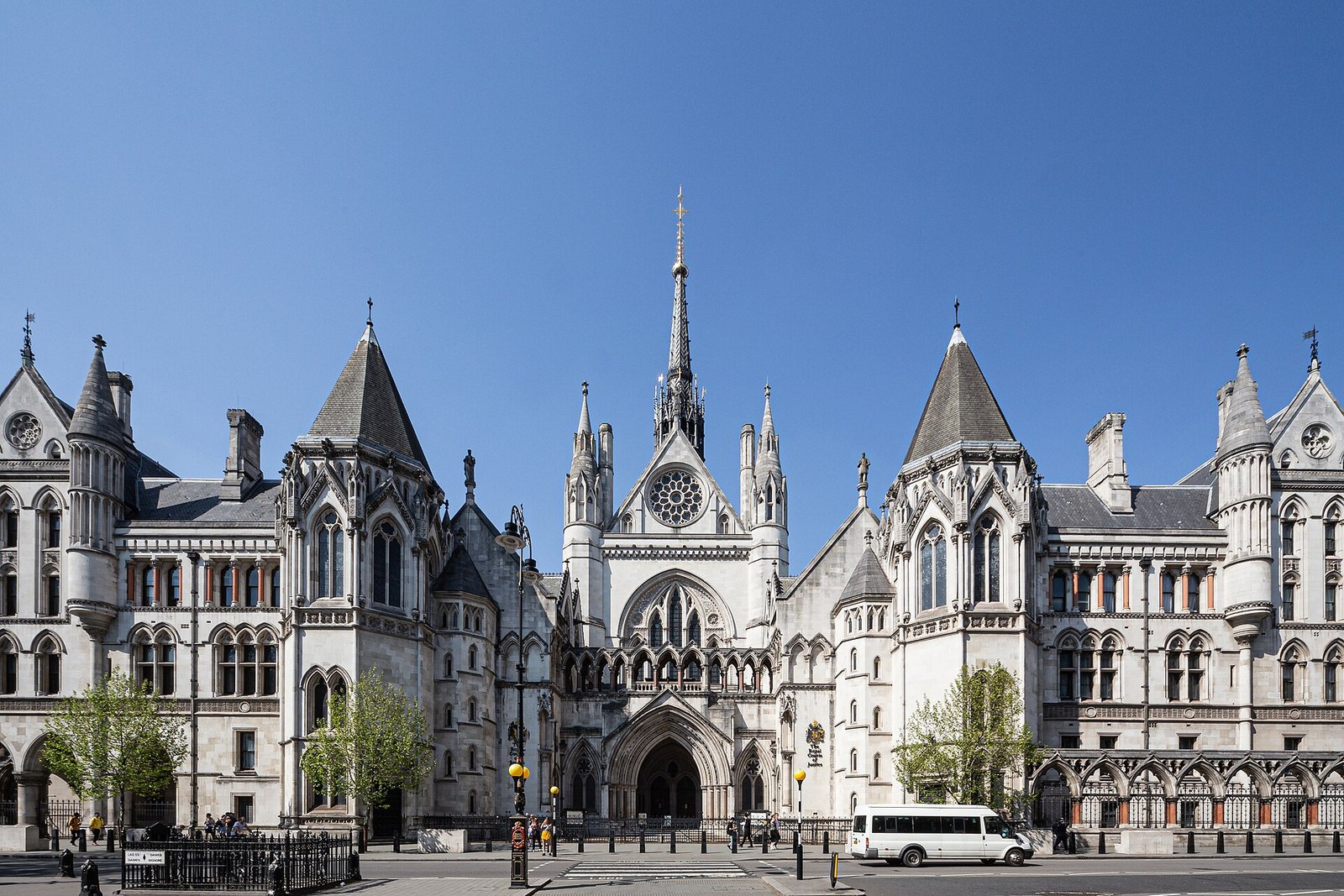
The legal framework for injunctions and freezing orders
The High Court's power to grant injunctions comes from section 37 of the Senior Courts Act 1981, which allows an injunction wherever it appears just and convenient. Procedure is in Part 25 of the Civil Procedure Rules, which was replaced with a revised Part 25 in April 2025 as part of a simplification of the rules. The revised rules refer to model forms of freezing and search orders, which the court expects applicants to follow unless there is a good reason to depart from them.
Other statutes supply specific powers. Section 7 of the Civil Procedure Act 1997 underpins search orders to preserve evidence. Section 25 of the Civil Jurisdiction and Judgments Act 1982 lets the English court grant interim relief in support of proceedings abroad. Section 44 of the Arbitration Act 1996 gives the court supporting powers in arbitration, which since the Arbitration Act 2025 can also be exercised against third parties. Section 12 of the Human Rights Act 1998 raises the bar for injunctions that would restrain publication.
Committal for breach is governed by CPR Part 81. Under section 14 of the Contempt of Court Act 1981, a superior court can commit a person to prison for contempt for a fixed term of up to two years.
The main types of order
| Order | What it does | Core test |
|---|---|---|
| Prohibitory interim injunction | Restrains conduct such as breach of a restrictive covenant, misuse of confidential information or breach of contract | Serious issue to be tried; damages not an adequate remedy; balance of convenience favours relief |
| Mandatory interim injunction | Requires a positive act, such as returning documents or restoring access to systems | Higher degree of assurance that the applicant will succeed at trial |
| Freezing injunction (domestic or worldwide) | Prevents the respondent disposing of or dealing with assets up to a stated value | Good arguable case; assets within the order; real risk of unjustified dissipation; just and convenient |
| Proprietary injunction | Preserves specific property or traceable proceeds the applicant claims to own | Serious issue that the property belongs to the applicant; balance of convenience |
| Search order | Permits entry to premises to search for and preserve evidence | Extremely strong prima facie case; very serious potential damage; clear evidence of incriminating material and a real possibility of destruction |
| Disclosure orders (Norwich Pharmacal, Bankers Trust) | Require third parties such as banks or platforms to disclose information identifying wrongdoers or tracing funds | Wrongdoing arguably committed; respondent mixed up in it; order necessary and proportionate |
| Anti-suit injunction | Restrains a party from pursuing proceedings abroad in breach of an exclusive jurisdiction or arbitration clause | Breach of the agreement shown with a high degree of probability; no strong reason to refuse |
The prohibitory test derives from American Cyanamid v Ethicon, decided by the House of Lords in 1975. In UniCredit Bank GmbH v RusChemAlliance LLC [2024] UKSC 30, the Supreme Court confirmed the court's willingness to grant an anti-suit injunction to hold a party to an arbitration agreement, even where the seat was outside England.
How injunction solicitors London clients choose the right order
The first question is what harm you are trying to prevent and how quickly it will occur. Injunction solicitors London clients instruct begin by mapping the threat: is it the loss of assets that will satisfy a future judgment, the misuse of information, a breach of contract that damages the business, or proceedings launched in a hostile forum?
With or without notice?
An application without notice is justified only where there is real urgency or where notice would allow the respondent to defeat the order, for example by moving assets. The applicant must then give full and frank disclosure of every material fact, including those that help the respondent. If disclosure is inadequate, the court can discharge the order, even if it would otherwise have been justified, and award costs against the applicant. Where time allows, short informal notice is often the better course, because it reduces the risk of a damaging discharge application.
Scope and value of a freezing order
A freezing order should be limited to the value of the claim plus a sensible allowance for interest and costs. A worldwide order is available where assets in England are insufficient, but it carries extra safeguards, including limits on enforcing it abroad without permission. The order usually allows the respondent to spend reasonable sums on living expenses and legal advice, and to deal with assets in the ordinary course of business, unless the evidence justifies tighter terms. Our article on freezing injunctions explains the order in more detail.
Persons unknown and online wrongdoing
Injunctions can be granted against persons unknown, such as the anonymous operators of a fraudulent website or wallet holders in a crypto theft. In Wolverhampton City Council v London Gypsies and Travellers [2023] UKSC 47, the Supreme Court confirmed that the court can, in appropriate cases, grant injunctions against "newcomers" who are not yet identified, subject to procedural safeguards. In commercial fraud cases, such orders are often combined with disclosure orders against exchanges and banks.
The application process step by step
- Triage the threat. Establish what is at risk, how soon, and what evidence exists. Decide whether the application must be made without notice and whether it is so urgent that an out-of-hours judge is needed.
- Prepare the evidence. Draft witness evidence setting out the claim, the risk, the assets or conduct to be restrained and every material fact that could assist the respondent. Freezing and search order applications are supported by sworn evidence.
- Draft the order and undertakings. Adapt the model order, define the assets or conduct precisely, and set out the cross-undertaking in damages and any undertaking to issue proceedings promptly.
- Issue and hear the application. File the application notice, draft order and evidence, and present the application. Where advocacy in the higher courts is required, we instruct specialist counsel.
- Serve and notify third parties. Serve the order personally where possible, with a penal notice, and notify banks and other third parties holding assets so the order bites immediately.
- Return date. A without-notice order is listed for a further hearing, usually within days, at which the respondent can argue that it should be discharged or varied.
- Police compliance. Review asset disclosure, pursue cross-examination where disclosure is inadequate, and consider committal proceedings under CPR Part 81 for serious breaches.
Documents and evidence to assemble
Speed matters, but the quality of evidence decides the outcome. Injunction solicitors London courts hear from must present a fair and complete picture. Gather, as far as time allows:
- The contract, articles, employment contract or other source of the right being protected, with any exclusive jurisdiction or arbitration clause.
- Evidence of the wrongdoing: emails, messages, bank statements, forensic reports or witness accounts.
- Evidence of the risk: previous dishonesty, offshore structures, recent asset transfers, statements of intent to move money, or the speed at which information could be misused.
- Asset information: property registers, Companies House filings, bank details, vessel or aircraft registrations and known foreign holdings.
- Evidence of the applicant's ability to honour the cross-undertaking, such as accounts or a bank guarantee if fortification is likely to be ordered.
- Anything that points the other way, including correspondence in which the respondent disputes liability.
The duty of full and frank disclosure is the most common reason without-notice orders are set aside. Before the hearing, list every point the respondent would raise if present, and address each in the evidence. A shorter, candid affidavit is safer than a long one that leaves out an awkward fact.
If you are served with an injunction
Being served with a freezing or other injunction is alarming, but there are clear steps to take, and injunction solicitors London respondents instruct will usually advise on them the same day. Comply immediately: breach, even while you challenge the order, can be contempt. Read the exceptions carefully, especially those for living expenses, legal costs and ordinary business dealings. Diarise any deadline for asset disclosure, which is often short.
Then assess whether the order can be challenged. Grounds include material non-disclosure, absence of a real risk of dissipation, an excessive limit, or a weak underlying claim. The respondent can apply to vary the order, for example to release funds for a specific transaction, or to discharge it on the return date. Where the order caused loss and is later discharged, the respondent may seek an inquiry into damages under the cross-undertaking.
An injunction obtained in haste can be lost on the return date if the applicant did not tell the court the whole story.
Risks and common mistakes
Delay that undermines urgency
Courts are sceptical of applicants who wait weeks after learning of a threat and then claim the matter is urgent. Delay can be fatal to a without-notice application and can weigh against relief in the balance of convenience. If you need time to gather evidence, record why. Send a clear letter where notice would not defeat the purpose, so you can show the respondent was warned and the matter was being progressed promptly.
Underestimating the cross-undertaking
Most interim injunctions require the applicant to undertake to compensate the respondent, and sometimes third parties, for loss caused if the order is later found to have been wrongly granted. For a freezing order over a trading business, that exposure can be large. The court may order fortification, such as a payment into court or a bank guarantee. Boards should approve the undertaking knowing its potential value, and check whether litigation funders or insurers will support it.
Drafting an order that is too wide or too vague
An injunction must be clear enough for the respondent to know exactly what is prohibited. Vague wording invites dispute and makes committal for breach harder to prove. Overbroad orders, such as a freezing limit far above the realistic claim, risk discharge and costs. Injunction solicitors London courts trust draft orders that track the model forms and explain any departures, with precise definitions of assets, information or conduct.
Ignoring the respondent's foreign assets
A worldwide freezing order binds the respondent personally but does not automatically bind banks abroad. Third parties outside England are generally affected only if the order is recognised locally. Applicants who rely on the English order alone may find that assets in Dubai, Singapore or Dhaka are moved regardless. Parallel applications in the countries where assets sit, coordinated with local counsel, are often essential.
Seeking to stop publication without addressing free speech
Where an injunction would restrain publication, section 12 of the Human Rights Act 1998 requires the court to consider freedom of expression, and the applicant must generally show it is likely to establish at trial that publication should not be allowed. For defamation, interim injunctions are rarely granted where the publisher says it will defend the statement as true. Claims based on confidential or private information are more likely to succeed. See our defamation and reputation page.
Cross-border injunctions: Bangladesh, the Gulf, Singapore and beyond
Injunction solicitors London clients instruct in cross-border cases must plan beyond England from day one. London is a popular forum for freezing relief because of the court's willingness to grant worldwide orders and to act in support of foreign proceedings under section 25 of the Civil Jurisdiction and Judgments Act 1982. But an English order is a starting point, not an end point, when the assets are abroad.
Bangladesh. Bangladeshi courts have their own interim powers, including temporary injunctions and attachment before judgment under the Code of Civil Procedure 1908. Where a respondent holds assets in Bangladesh, we coordinate with TRW & Co's Dhaka office so that any English order is supported by a local application where appropriate. Our UK–Bangladesh disputes team handles the overlap.
The Gulf, Singapore and China. Singapore courts grant Mareva-type freezing orders and can act in aid of foreign proceedings in some circumstances. In the UAE, onshore precautionary attachment and the separate regimes of the DIFC and ADGM courts must be considered. Interim relief in mainland China follows Chinese procedure and is usually sought there. In arbitration, emergency arbitrator provisions in institutional rules may offer a faster route than any court.
The EU. English interim orders no longer circulate under EU rules, so recognition in EU member states depends on local law. Parallel local applications are common where significant assets are held in the EU. Once judgment is obtained, our enforcement of judgments team takes over.
How TRW & Co helps
TRW & Co's London office is authorised and regulated by the Solicitors Regulation Authority. Our injunction solicitors London team prepares and conducts urgent applications for applicants and acts for respondents seeking to vary or discharge orders. We work closely with our civil fraud and asset recovery and commercial litigation colleagues.
Freezing and proprietary orders
We prepare domestic and worldwide freezing applications and proprietary injunctions, with evidence that meets the full and frank disclosure standard. We notify banks and third parties promptly so the order bites.
Confidential information and covenants
We seek and resist injunctions to protect trade secrets, client relationships and restrictive covenants, including springboard relief. We coordinate with our restrictive covenants colleagues on employee cases.
Disclosure and tracing orders
We apply for Norwich Pharmacal and Bankers Trust orders against banks, exchanges and platforms to identify wrongdoers and follow funds, including service out where the rules allow.
Anti-suit and arbitration support
We seek anti-suit injunctions where a counterparty sues abroad in breach of a London clause, and section 44 relief in support of arbitration, including against third parties.
Respondent defence
We act for respondents served with injunctions, advising on immediate compliance, asset disclosure, variation for business needs and discharge applications, and on claims under the cross-undertaking.
Committal and compliance
We monitor compliance with orders, pursue cross-examination on asset disclosure and bring committal applications under CPR Part 81 where breaches are serious.
See our full list of practice areas, or contact us about an urgent matter.
Checklist for decision-makers
- What exactly is at risk, and how quickly could the harm occur?
- Would notice to the respondent defeat the purpose of the order? If not, give short notice.
- Have you identified every fact that helps the respondent, and is it in the evidence?
- Has the board approved the cross-undertaking, and can you offer fortification if asked?
- Do you know where the respondent's assets are, including outside England?
- Is there an arbitration or foreign jurisdiction clause that affects which court should act?
- Who will serve the order, and which banks and third parties must be notified immediately?
- Have you planned the return date and the substantive claim that must follow?
Experienced injunction solicitors London businesses rely on will run through this list in the first hour of instruction, because the answers decide whether to apply, where and on what terms.
Frequently asked questions
01How quickly can I get an injunction in London?
In a genuine emergency, the High Court can hear an application the same day, and a duty judge is available out of hours. Most urgent commercial applications are prepared and heard within a few days, because the evidence and draft order must be right. Speed depends on how quickly the facts and documents can be assembled. A without-notice order is then reviewed at a return date, usually within days, when the respondent can be heard.
02What is a freezing injunction and when will the court grant one?
A freezing injunction prevents a respondent from disposing of or dealing with assets up to a stated value, so that a future judgment is not rendered worthless. The applicant must show a good arguable case on the underlying claim, that the respondent has assets, and a real risk that the respondent will dissipate them in an unjustified way. The order normally allows ordinary living expenses, legal costs and ordinary business dealings. It can be limited to assets in England or extend worldwide.
03What is a cross-undertaking in damages?
It is a promise by the applicant to compensate the respondent, and often third parties such as banks, for any loss caused by the injunction if the court later decides it should not have been granted. The court may require it to be backed by security, known as fortification. Because the exposure can be substantial, the applicant's board should understand and approve the undertaking before the application is made.
04Can I get an injunction against someone whose identity I do not know?
Yes, in appropriate cases. English courts grant injunctions against persons unknown, such as the operators of a fraudulent website or the holders of a crypto wallet that received stolen funds, provided the defendants are described clearly enough to identify who is bound. These orders are often combined with disclosure orders against banks, exchanges or platforms to identify the wrongdoers, after which the claim can proceed against named defendants.
05I have been served with a freezing order. What should I do?
Comply immediately, even if you believe the order is wrong, because breach is contempt of court. Read the exceptions for living expenses, legal costs and business dealings, and diarise the deadline for disclosing your assets. Then take advice on whether to apply to vary the order, for example to release funds for a transaction, or to discharge it on the return date on grounds such as non-disclosure or the absence of a real risk of dissipation.
06Can the English court stop proceedings started abroad?
Yes. Where a party sues abroad in breach of an exclusive English jurisdiction clause or an arbitration agreement, the English court can grant an anti-suit injunction restraining it from continuing. The order acts on the party personally, not on the foreign court. The Supreme Court's 2024 decision in UniCredit v RusChemAlliance confirmed the court's willingness to protect arbitration agreements in this way. Applications should be made promptly, before the foreign proceedings advance.
07Can I get an injunction in support of a London arbitration?
Yes. Section 44 of the Arbitration Act 1996 lets the court grant interim injunctions and other supporting orders, and since the Arbitration Act 2025 it is clear these powers can be exercised against third parties. Where the tribunal or an emergency arbitrator can act effectively, the court will usually expect the parties to use those routes first, but it remains available in urgent cases, particularly where assets need to be frozen.
Sources and official materials
- Senior Courts Act 1981, section 37 — High Court power to grant injunctions
- Civil Procedure Rules Part 25 — Interim remedies procedure
- Civil Jurisdiction and Judgments Act 1982, section 25 — Interim relief in support of foreign proceedings
- Arbitration Act 1996, section 44 — Court powers in support of arbitration
- UniCredit Bank GmbH v RusChemAlliance LLC [2024] UKSC 30 — Anti-suit injunctions and arbitration agreements
- Wolverhampton City Council v London Gypsies and Travellers [2023] UKSC 47 — Injunctions against persons unknown
- Commercial Court — Court hearing many urgent commercial applications
General information only, current as at 21 October 2026. It is not legal advice and does not create a solicitor–client relationship. It reflects the law of England and Wales unless stated otherwise; Scotland and Northern Ireland have separate legal systems, and the law changes frequently. Check current official sources and take advice on the facts of your matter.