
TRW & Co · Disputes and arbitration
How Civil Litigation Works in England and Wales
The civil litigation process UK businesses most often face is the one in England and Wales under the Civil Procedure Rules. A claim moves from pre-action letters to issue, defence, allocation, disclosure, evidence, trial and enforcement, with ADR expected throughout. Knowing the stages, tracks and cost rules helps you decide whether, when and how to litigate.
Key pointMost of the leverage in an English commercial claim is won before trial, through thorough pre-action preparation, early document preservation and well-timed Part 36 offers, which is why many claims settle after disclosure rather than at a hearing.
At a glance
Governed by the CPR
Civil claims in England and Wales follow the Civil Procedure Rules and practice directions, with separate systems in Scotland and Northern Ireland.
Pre-action first
Parties should exchange letters and key documents and consider ADR before issuing; defendants normally have 14 days, or up to three months in complex cases.
Four tracks
Claims are allocated to the small claims, fast, intermediate or multi-track, broadly by value and complexity, which shapes procedure and costs recovery.
Loser usually pays
The unsuccessful party generally pays the winner's costs, but recovery is rarely complete because of budgets, proportionality and assessment.
ADR can be ordered
Since 1 October 2024, the CPR confirm the court can order or encourage ADR, and unreasonable refusal can lead to costs consequences.
Swipe or scroll →
The short answer: how a civil claim moves through the courts
The civil litigation process UK businesses most often meet is the one in England and Wales, governed by the Civil Procedure Rules (CPR). In outline, a claim moves through pre-action correspondence, issue and service of a claim form, a defence, allocation to a track, case management, disclosure, witness and expert evidence, trial and judgment, followed by costs and, if needed, enforcement. Settlement can happen at any point, and most claims do settle.
The rules are designed around the "overriding objective" of dealing with cases justly and at proportionate cost. That shapes almost every step: the court expects parties to exchange information before issuing, to consider alternative dispute resolution (ADR), and to keep cost and effort in proportion to what is at stake.
Scotland and Northern Ireland have separate court systems and procedural rules. This guide covers England and Wales, which is also the forum most international parties choose when they agree English law and the jurisdiction of the English courts.
For a business deciding whether to sue, the most useful way to think about the civil litigation process UK courts follow is as a series of decision points. At each stage, new information emerges about the strength of the case and the other side's appetite to fight, and each stage is an opportunity to settle on better terms.
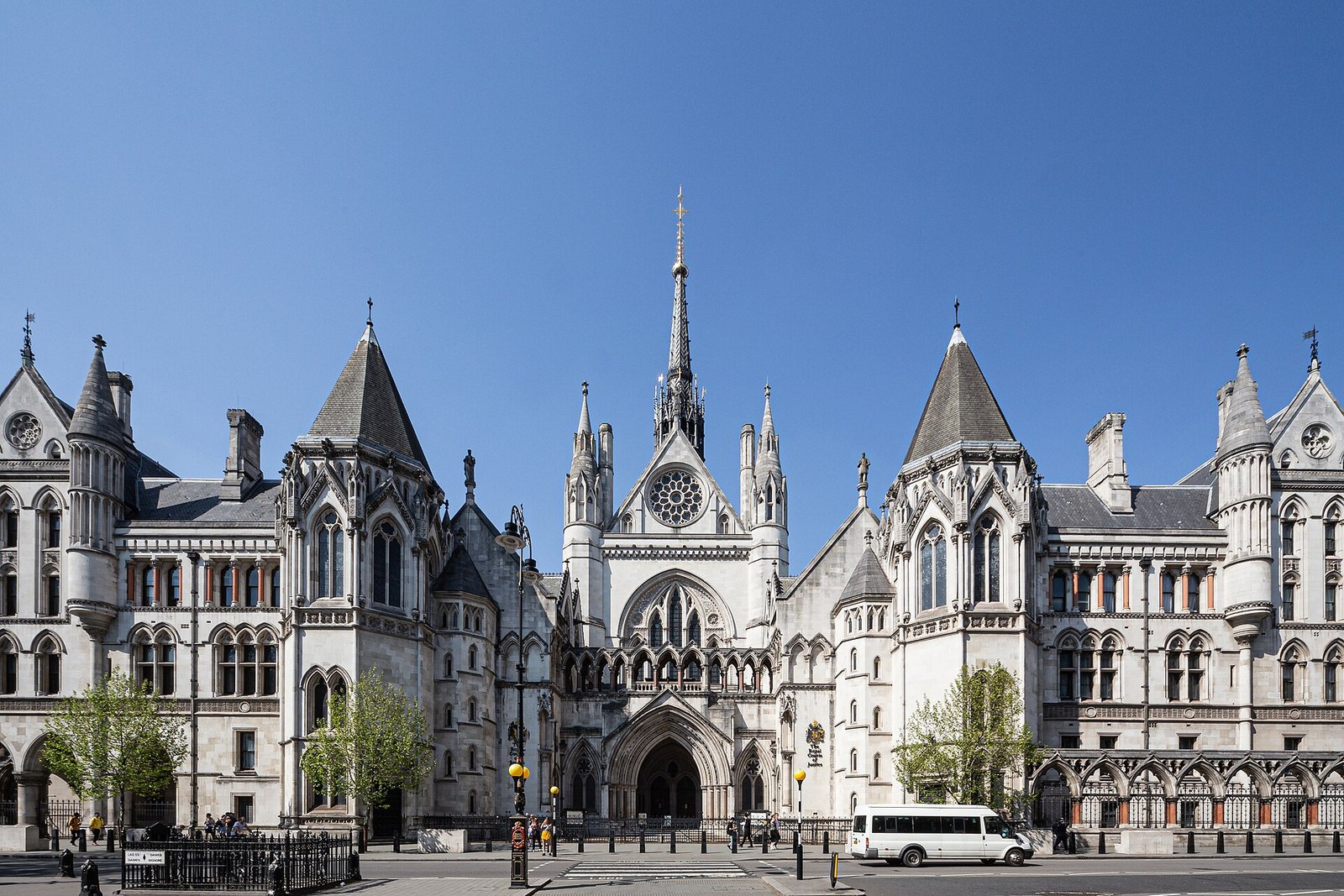
The rules and the courts
The Civil Procedure Rules and their practice directions set out the procedure. Before a claim is issued, the Practice Direction on Pre-Action Conduct and Protocols and any specific pre-action protocol apply.
Lower-value claims are issued in the County Court, often online. Claims worth more than £100,000, or that are complex, can be issued in the High Court. In London, most substantial commercial disputes go to the Business and Property Courts, which include the Commercial Court, the Technology and Construction Court and the specialist chancery lists. Those courts apply additional practice directions on disclosure and trial witness statements.
Time limits come from the Limitation Act 1980. The basic period for claims in contract and in tort is six years, though many exceptions apply; see our guide to limitation periods in the UK.
The civil litigation process UK claimants follow, stage by stage
- Pre-action conduct. The claimant sends a letter before claim setting out the basis of the claim, the facts and what it wants. The defendant should respond within a reasonable time, which the Practice Direction describes as 14 days in a straightforward case and no more than three months in a very complex one. Key documents are exchanged and ADR is considered.
- Issue and service. The claimant issues a claim form, with particulars of claim served with it or shortly afterwards. The claim form must generally be served within four months of issue if the defendant is in the jurisdiction.
- Response. The defendant acknowledges service and files a defence, with or without a counterclaim. Short extensions can be agreed. If the defendant does nothing, the claimant can usually request default judgment.
- Allocation and case management. The parties complete directions questionnaires and the court allocates the claim to a track. On the multi-track, a case management conference sets the timetable and, in many cases, approves costs budgets.
- Disclosure. Each party discloses relevant documents, including electronic material. In the Business and Property Courts, a specific disclosure regime asks the parties to identify issues and choose a disclosure model for each.
- Evidence. Witness statements are exchanged, and expert reports are served if the court gives permission.
- Trial and judgment. The judge hears evidence and submissions and gives judgment, either at the end of the hearing or later in writing.
- Costs and enforcement. The court decides who pays costs and how much, and the winning party enforces if the judgment is not paid.
The single biggest driver of cost and duration in the civil litigation process UK courts run is disclosure. Before you issue, map where your documents are, who holds them and how they will be preserved. A litigation hold sent early is cheap; finding out at the case management conference that key emails were deleted is not.
Evidence to gather before you start
The documents that matter most are usually the contract and any variations, the key correspondence and meeting notes, invoices and payment records, and anything showing what each side knew at the time. Identify the people who can give witness evidence while their memories are fresh, and consider whether the case will turn on technical or valuation questions that need an expert. A short chronology prepared at the outset saves time at every later stage of the civil litigation process UK courts will expect you to follow.
It is also worth writing down, early and honestly, the weaknesses in your own case. The other side will find them in disclosure, and an early view of the risks makes settlement decisions far easier.
Tracks, timing and cost expectations
Allocation determines how much procedure the case receives and, for lower-value claims, how much of its legal costs a winning party can recover. Since 1 October 2023 the fixed recoverable costs regime has extended to most fast track claims and to the new intermediate track.
| Track | Typical claim value | Procedure and costs |
|---|---|---|
| Small claims | Generally up to £10,000 | Simplified procedure, limited costs recovery, often decided on the papers or at a short hearing |
| Fast track | £10,000 to £25,000 | Standard directions, short trial, fixed recoverable costs in most cases |
| Intermediate track | £25,000 to £100,000 (suitable cases) | Streamlined procedure, short trial, fixed recoverable costs by complexity band |
| Multi-track | Over £100,000, or complex claims of any value | Tailored case management, costs budgeting in many cases, costs assessed rather than fixed |
Choosing the right court and track at the outset is a strategic decision, not just an administrative one. Over-valuing a claim to reach the multi-track can backfire if the court later allocates it differently, and claims that are really about a principle or a commercial relationship may be better suited to a quicker, cheaper route.
On timing, a straightforward undefended debt can reach judgment in weeks. A defended multi-track commercial claim commonly takes a year or more to reach trial, and complex cases considerably longer, depending on court listing and the volume of evidence. Interim applications, such as for an injunction or security for costs, add time and cost.
On cost, the general rule is that the loser pays the winner's costs, but a winning party rarely recovers everything it has spent. Costs budgets, proportionality and the detailed assessment process all reduce recovery. For that reason, many claimants consider litigation funding or insurance, and both sides should think early about settlement offers under Part 36 of the CPR, which can shift costs and interest consequences if the other side fails to beat the offer at trial.
Defending a claim: the other side of the process
For a defendant, the civil litigation process UK courts operate moves quickly once a claim form arrives. The deadlines for acknowledging service and filing a defence are short, and missing them can lead to default judgment. Setting aside a default judgment is possible, but it requires a prompt application and a real prospect of a successful defence, and it usually costs the defendant money even when it succeeds.
A good defence does more than deny the claim. It sets out the defendant's version of events, identifies which allegations are admitted, denied or not known, and raises any counterclaim or set-off. Statements of case are verified by a statement of truth, so they must be accurate. Inconsistencies between the defence and later evidence are a common source of damage at trial.
Defendants also have strategic tools of their own. They can apply to strike out a hopeless claim or for summary judgment, seek security for costs against certain claimants (for example, some companies or claimants resident outside the jurisdiction), and make their own Part 36 offers. Using these tools early can change the economics of the dispute for both sides.
Settlement and ADR along the way
The court can now order parties to engage in ADR. Following the Court of Appeal's decision in Churchill v Merthyr Tydfil County Borough Council [2023] EWCA Civ 1416, the CPR were amended with effect from 1 October 2024 to make clear that the court may order or encourage ADR, and that an unreasonable refusal to engage can be taken into account on costs.
In practice, ADR is now built into the civil litigation process UK judges manage. Directions questionnaires ask about it, case management conferences consider it, and the court may build a window for mediation into the timetable before trial.
Mediation is the most common form, but early neutral evaluation, expert determination and structured negotiation are also used. Mediation can take place before issue or at any stage afterwards, and a mediated settlement is private. Our guide to mediation in commercial disputes covers when and how to use it.
An illustrative scenario
The following scenario is illustrative only and does not describe any real client or matter.
A UK distributor claims that a supplier delivered defective components, causing losses of several hundred thousand pounds. Its solicitors send a detailed letter before claim with supporting documents and propose mediation. The supplier responds within the time requested, denies liability and blames the distributor's storage.
After a failed mediation, the distributor issues in the Business and Property Courts. The claim is allocated to the multi-track. At the case management conference the court approves costs budgets, gives permission for a single expert in each relevant discipline, and sets a timetable that leads to a trial listing some way ahead.
Following disclosure, the supplier's documents show that it had received earlier quality complaints. The distributor makes a Part 36 offer. The supplier accepts it before trial, and the claim settles with the supplier paying the distributor's costs up to the date of acceptance. That is a typical arc: most of the work, and most of the leverage, comes from good pre-action preparation and disclosure.
Risks and common mistakes
Issuing without following pre-action steps
Unless limitation or urgency requires it, issuing without a proper letter before claim and response period invites a costs penalty and a stay while the protocol is completed. The court looks at whether the parties complied in substance, not at minor technical lapses. Where limitation is close, issue to protect the position and then seek a stay to complete pre-action steps.
Missing the limitation deadline or service window
Limitation runs from when the cause of action accrues, which is not always obvious, and the clock does not stop for negotiations unless the parties sign a standstill agreement. Once a claim form is issued, it must also be served in time. Late service can be fatal if limitation has since expired. Diary both dates as soon as a dispute emerges.
Under-estimating disclosure and privilege
Disclosure obligations extend to adverse documents and to electronic material such as messaging apps. Internal communications created during a dispute may or may not be privileged, depending on their purpose and who created them. Set up clear channels for legal advice and read our guide to legal professional privilege before investigations or board discussions begin.
Winning a judgment that cannot be enforced
A judgment is only as valuable as the defendant's ability to pay. Asset tracing should begin before issue, not after trial. Where there is a real risk of dissipation, a freezing injunction may be appropriate, and where assets are overseas, the enforcement route in that country should shape the strategy from the outset.
The cross-border angle
English courts remain a popular forum for international commercial disputes, and English judgments are generally enforceable in many countries, either through reciprocal arrangements, the Hague Choice of Court and Judgments Conventions or local common law procedures. Since Brexit, the EU Brussels regime no longer applies to new UK proceedings, so jurisdiction and enforcement in EU states depend on those conventions and national rules.
Service of proceedings on a defendant outside England and Wales raises its own issues. Depending on the country and the contract, the claimant may need the court's permission to serve abroad, and service through official channels can take months. A contractual clause appointing an agent for service in England can remove that delay entirely.
For Bangladesh, enforcement of a UK judgment depends on Bangladeshi procedural law rather than automatic registration; see our guide to enforcing a UK judgment in Bangladesh. Where a counterparty's assets are in Bangladesh, the Gulf or Asia, it may be better to choose arbitration from the outset, because arbitral awards benefit from the New York Convention.
What to do next: a checklist
Whether you are considering a claim or have just received one, the early steps in the civil litigation process UK practitioners recommend are much the same. Use this checklist to structure the first few weeks.
- Confirm the limitation date and whether a standstill agreement is needed.
- Preserve documents across email, shared drives and messaging apps.
- Check the contract for dispute resolution, jurisdiction and notice clauses.
- Assess the defendant's assets and the enforcement route.
- Prepare a full letter before claim and a realistic ADR proposal.
- Budget for the realistic track and think early about settlement offers.
- Consider funding, insurance and security for costs.
Our commercial litigation solicitors in London act for claimants and defendants across the civil litigation process UK courts apply, including contract disputes, debt recovery and enforcement of judgments. Where advocacy in the higher courts is required, we instruct specialist counsel. To discuss a dispute, please contact our London office.
Frequently asked questions
01How long does civil litigation take in England and Wales?
It depends heavily on value, complexity and whether the claim is defended. An undefended debt claim can reach default judgment within weeks of service. Defended small claims and fast track cases are usually resolved more quickly than multi-track claims. A defended multi-track commercial claim commonly takes a year or more to reach trial, and complex cases with substantial disclosure and expert evidence take longer. Many cases settle earlier, often after disclosure or mediation.
02Do I need to send a letter before claim before suing?
In almost all cases, yes. The Practice Direction on Pre-Action Conduct and Protocols expects the claimant to set out the claim and the defendant to respond before proceedings are issued, and specific protocols apply to some types of claim, such as debt, construction and professional negligence. Failing to comply can lead to costs sanctions or a stay of proceedings. Where limitation is about to expire, you can issue to protect your position and then ask for a stay.
03Who pays the legal costs in UK civil litigation?
The general rule in England and Wales is that the unsuccessful party pays the successful party's costs, but the court has a wide discretion and will consider conduct, partial success and settlement offers. On the small claims track recoverable costs are very limited, and fixed recoverable costs apply to most fast track and intermediate track claims. On the multi-track, costs are usually assessed, and a winning party typically recovers only part of what it spent.
04What is the difference between the County Court and the High Court?
The County Court handles most civil claims, including all lower-value money claims. Claims worth more than £100,000, or that are complex or of public importance, can be started in the High Court. In London, substantial commercial disputes are commonly issued in the Business and Property Courts, which include the Commercial Court and specialist lists with judges experienced in commercial, financial, technology and property disputes.
05Can the court force us to mediate?
The court can now order parties to engage in ADR. After the Court of Appeal's decision in Churchill v Merthyr Tydfil County Borough Council, the Civil Procedure Rules were amended from 1 October 2024 to confirm the court's power to order or encourage ADR, provided this does not impair the very essence of a party's right to a fair trial. An unreasonable refusal to engage can also be reflected in costs orders at the end of the case.
06What happens if the losing party does not pay a judgment?
The winning party can enforce. Options include taking control of goods through enforcement agents, a third-party debt order against money owed to the debtor such as bank balances, a charging order over property, an attachment of earnings order for individuals, and insolvency proceedings. Where assets are overseas, the judgment may need to be recognised in that country first. Asset tracing before and during the claim makes enforcement far more effective.
Sources and official materials
- Civil Procedure Rules — Rules and practice directions for civil claims
- Practice Direction: Pre-Action Conduct and Protocols — Expected steps before issuing a claim
- CPR Part 36: Offers to settle — Settlement offers and their costs consequences
- Limitation Act 1980 — Time limits for bringing civil claims
- Business and Property Courts — Specialist courts for commercial claims
- Churchill v Merthyr Tydfil CBC [2023] EWCA Civ 1416 — Court power to order ADR
- Make a court claim for money (GOV.UK) — Issuing lower-value money claims online
General information only, current as at 21 October 2026. It is not legal advice and does not create a solicitor–client relationship. It reflects the law of England and Wales unless stated otherwise; Scotland and Northern Ireland have separate legal systems, and the law changes frequently. Check current official sources and take advice on the facts of your matter.